




Frenzy over 2027 and the Push for Jonathan
By edentu OROSO
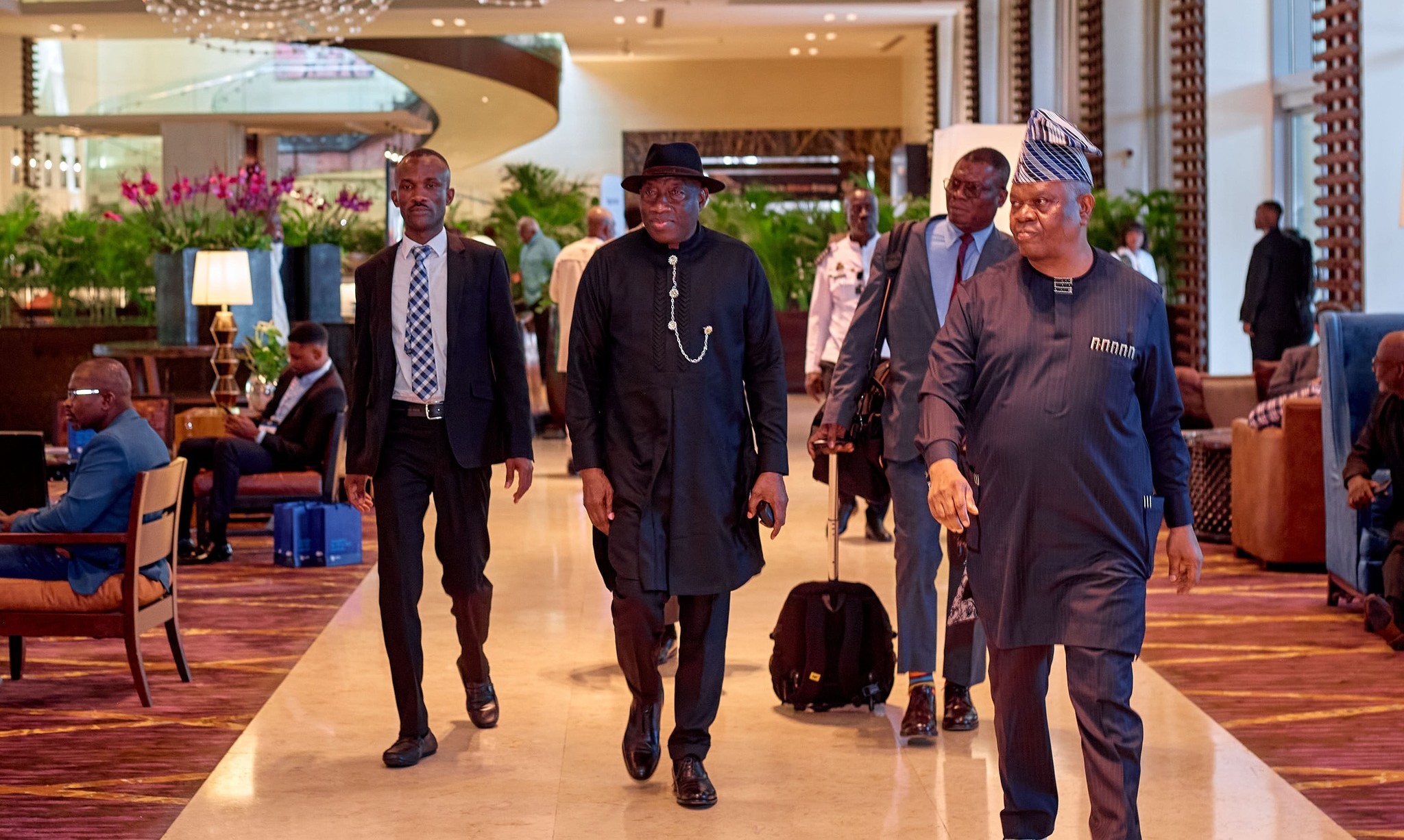 Former President Goodluck Jonathan
The seagulls have once again taken over our skies in their hunting sprees. They glide and preen in the air with a blend of pageantry and sorcery; their swift wings attempt mastery over the whistling winds through diverse and practiced flight antics. The destination looms on the hazy horizon; and as they hover above the swirling currents, their sights remain laser-focused on the coveted prize. Every flap of wings, every theatrical cawing in flight, is done with intent: to scare, to browbeat, or to hunt down other birds of prey - not in the spirit of healthy sportsmanship, but as a response to perceived adversaries.
2027 is the destination. The cherished sky with hues that beguile is the splendored Aso Rock Villa.
The Aso Rock Villa - the place where only a few mortals tread; the realm where dreams are made manifest; the sphere of power and great influence; the seat of the de jure leader within the ambit of the Nigerian polity, is every politician’s fevered dream. Mere mortals have risen within its corridors as awed gods, and their words have thundered time and again through the land as inviolate. In their firm grip lies the rein of life and death, which they dispense at will.
That is the aura of the power politicians seek. To perch at such hallowed heights, anything and everything becomes permissible - even outright blackmail or the silencing of the opposition by any means possible.
The central idea that buffers such a kerfuffle is greed for power. In the semblance of the hawkish Berlin Conference of 1884, the scramble for the soul of Nigeria in 2027 is in top gear. Who gets what depends on the political frame of interest and the players etched within it. To be a top player in the league of influencers shaping the trend of things implies a larger slice of the national pie. Little wonder the frenzy over 2027 is already heightened, even when the destination remains offshore--two years yet.
The spin masters won’t rest until the deed is done. They are primed to regale us with tales of every shade. We are told in unequivocal terms that all is well in the land. The cries of the masses don’t matter. The economic indices, from their lenses, gleam as bright as the midday sun. They even weave yarns to discredit any viable opposition. The opposition, too, is complicit in the frenzy to unseat the incumbent leader through its own concerted alliances.
But in all this, governance suffers. The government of the day is more invested in political engineering towards a desired end than in upholding public trust and delivering the dividends of our democratic milieu. The opposition also adds its fillip to this quagmire through its distractive overtures - birds of the same feathers, though dyed in different tinctures.
No proactive government or visionary leader anywhere in the world needs to embark on veiled campaign sprees years ahead of the statutory provisions for such matters if the right steps and actions are being taken to ameliorate the sufferings of the people. The people, as a matter of natural consequence, will reward genuine performance with their votes in any election cycle. The panicky body language of the ruling party, amid the reality of alliances or the emergence of the ADC and others as viable alternatives to the APC, therefore, hints at the grave underperformance matrix of the ruling party.
As for the opposition, they too appear bereft of any populist agenda beyond a desperate quest for power. Some of these frontline agitators for a change of government through democratic means are the very elites who not long ago bled this country dry. They now hanker for power, ostensibly as a means of burnishing their estates with more lucre and privileges that only political authority can bestow. Beyond this, they have little or nothing to offer going by their antecedents.
Now, the alleged intention of former President Goodluck Jonathan to join the presidential contest has stirred the hornet’s nest, with discomfiture palpable within the ruling All Progressives Congress (APC). The fear of GEJ, it seems, is now the beginning of wisdom. Here is where the seagulls adopt more hunting strategies, whether in collective or solo flight. Already, a legal action has been instituted at the Federal High Court in Abuja to stop GEJ from contesting any election under any political platform.
This kamikaze narrative, or legal stance, reeks of desperate measures from a desperate clan. Else, why the preemptive justice when GEJ has yet to openly declare his intentions? And why are the lackeys of the APC so desperate to stop a man more concerned about global peace than the politics of his homeland?
In my considered opinion, the president would do well to devote greater energy to the demands of governance rather than be swayed by the mirage of 2027. The surest campaign strategy lies not in frantic political manoeuvres but in the quiet, consistent delivery of public good. Let his governance footprints speak louder than the propaganda of his courtiers; let the weight of his performance, not the noise of his handlers, be his true selling point when the next election cycle dawns.
For every hour spent fretting over shifting alliances or speculating about emergent contenders, a minute of credibility is lost in the eyes of a weary citizenry. Panic over imaginary foes only lends credence to the growing suspicion that this administration has not fared well in preserving public trust. Leadership is not sustained by paranoia or political arithmetic but by the moral authority that flows from results. If the president must look to 2027 at all, let it be through the lens of legacy, not insecurity.
As for Goodluck Jonathan, pundits are wont to ask: what exactly did he leave behind in Aso Rock that he now wishes to reclaim, even at the peril of smudging his hard-earned image as a man of peace and an esteemed international statesman? His global engagements have cast him in the dignified light of an elder reconciler - one who, having tasted the intoxicant of power, found wisdom in restraint. To return now to the arena of domestic politics, with all its bile and backstabbing, is to risk trading the moral halo of statesmanship for the muddy garb of partisan contest.
Those nudging and propping him up for the 2027 race may be driven by motives that are anything but noble. Some may genuinely believe his return would steady the ship of state; others, more likely, see in him a familiar vessel through which to reclaim lost privileges and patronage. But were these not the same political choristers who once mocked him as weak, indecisive, and unfit for the rigours of power? Were they not the very coalition that conspired to unseat him, singing hymns of change while dismantling the foundations of continuity?
Have they now seen the light and repented of their political sins, or is this sudden chorus of nostalgia merely another stratagem in the endless theatre of Nigerian politics, where yesterday’s villain is recast as today’s redeemer, and principles are traded for convenience? If indeed they now hail him as the long-awaited messiah destined to salvage the ruins of this country, then one must ask: what manner of salvation springs from the same well that once poisoned the nation’s hopes?
Until Jonathan himself speaks with the clarity of conviction, not the ventriloquism of political opportunists, his silence will remain an enigma, his intentions a subject of conjecture, and his legacy balanced precariously between the honour of statesmanship and the lure of a second chance.
What underlines these tepid scenarios of our nationhood is the unnerving silence of those who once vilified the Goodluck Jonathan presidency with prophetic fervour. Where are the traducers of yesteryears: the vociferous naysayers and self-anointed patriots, the men of God who thundered from pulpits, the social activists who camped on television panels, the literary icons who draped their dissent in moral robes, the political elites and fair-weather allies who chorused “change” until it became an anthem of betrayal? These were the very architects of his fall, the coalition of the sanctimonious who ensured he was hounded out of office even as the incumbent.
Now that their fellow tribesman occupies the saddle and the nation totters under the weight of unfulfilled promises, their voices have suddenly gone hoarse. The pulpits are silent, the placards retired, the pens withdrawn into convenient neutrality. The same actors who once mistook noise for patriotism have discovered the comforts of selective amnesia. It is as though moral outrage in Nigeria is a seasonal crop, planted when the “other” holds power and harvested in silence when one of their own reigns.
To me, that is the climax of absurdity; the full bloom of hypocrisy that has become our national creed. How do we justify a conscience that blares sirens at perceived injustice but slumbers when the familiar commits the same offence? If integrity is subject to geography or faith, then we have reduced morality to a tribal franchise. And that, more than bad governance or economic decline, is the true tragedy of our republic: a people who have lost the courage to speak truth to power unless the power speaks their language.


Comments
Be the first to comment on this post
Leave a Reply