



Local Policing: If it could work in U.S, Canada, why not Nigeria?
By Abidemi Adebamiwa
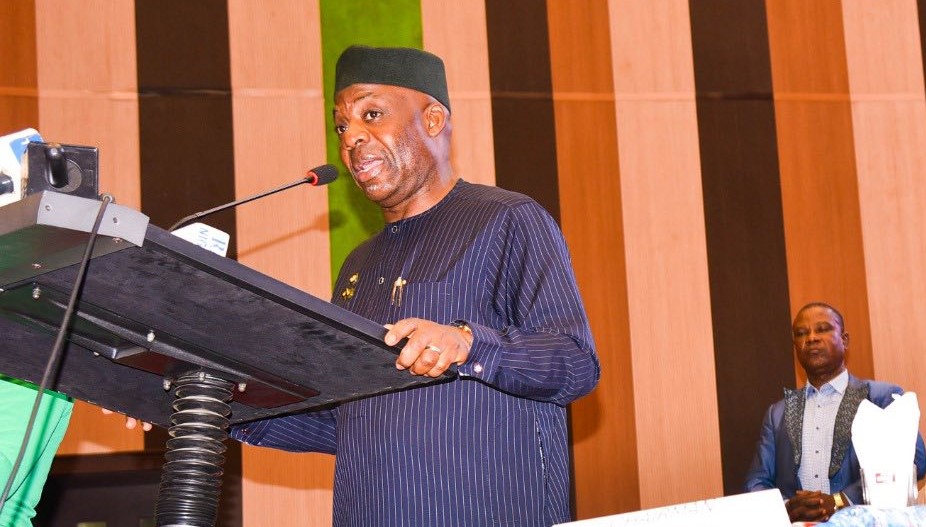
 Nigeria Police Chief, Kayode Egbetokun
In recent years, the need for a new approach to Policing in Nigeria has become impossible to ignore. Many Communities feel disconnected from the Centralised Police Force, and this lack of connection leads to delays in responding to Local Crime, ineffective Law Enforcement, and, ultimately, a deepening gap in trust between the Police and the Public.
The good news? There’s a promising solution: creating a more Localised Police Force. In fact, we’re already seeing positive results from similar Models in Nigeria and around the World.
One of the most striking examples comes from the United States. Like Nigeria, the U.S. operates as a Federal Republic, where power is shared between a Central Government and Individual States. In the U.S., Police operate at different levels—Federal, State, and Local—so Local Police Departments in Cities and Towns can adapt their Approach to the specific needs of their Communities.
Officers who live and work within their Communities understand the unique challenges and are better equipped to handle them. This close connection often results in faster response times and more effective Crime prevention. So, if a large Country like the U.S. can make this work, could Nigeria benefit from a similar approach?
Canada, too, shows us the power of combining Centralised and Localised Policing. The Royal Canadian Mounted Police handle issues on a national scale, while local police focus on community-specific needs. This combination provides both broad oversight and flexibility, allowing Local Officers to address issues that matter most to their Communities. Canada’s success in managing a Federal Structure with both National and Local Police Forces suggests that Countries like Nigeria, which also have diverse Populations and Needs, could gain from adopting a similar Model. And while it’s useful to look Abroad, we don’t even have to go that far to see a successful example of Localised Policing.
Right here in Nigeria, we have Amotekun, the Western Nigeria Security Network. Amotekun was launched by South-Western States to handle Security Issues that the National Police had struggled with. Since its creation, Amotekun has helped reduce Crime in the Region, from responding to Kidnappings to tackling Armed Robbery. This shows that when Officers are closer to the Communities they serve, they can respond more quickly and work more efficiently because they know the Local Terrain, Culture, and People. So, if Amotekun is already showing success, what if we expanded this Idea Nationwide?
One of Nigeria’s biggest challenges is its diversity. With over 250 Ethnic Groups, many Languages, and varied Cultural Norms, a single, Centralised Police Force cannot possibly understand or address the unique needs of every Community. Localised Forces would bridge this gap by recruiting Officers from within each Community—People who know the Language, understand the Culture, and can relate to the People. This would build trust, making it easier for Communities to work with Law Enforcement to solve Crimes and keep Neighborhoods safe. But this isn’t just about better Policing; it’s about fairness and accountability, too.
Imagine this: a Loved One is kidnapped, and you rush to the Police for help. Instead of immediate action, you’re told that you’ll need to pay extra for them to trace the Kidnapper’s Phone. In Nigeria, Families in emergencies often face this heartbreaking situation. Localising Police Services could address this Issue. A more Community-Focused Approach could ensure that Resources are available when needed, without additional charges, because Officers would be more connected and accountable to the People they serve. So, wouldn’t a Localised Police Force be a step toward a more just and reliable System?
A Localised Police Force would also make Officers more accountable. When Police Officers are from the Area they serve, they’re likely to be held responsible by their Neighbors. This kind of connection can make Officers feel more interested in the Community’s well-being and can help reduce Cases of Police Misconduct. When Officers know the People and the everyday struggles of their Community, they’re more likely to act with integrity. Doesn’t that sound like a Model we’d want for Nigeria?
Some might argue that having one unified Police Force is what the Nigerian Constitution requires. But there’s room for interpretation here. The Constitution emphasises protecting the Security and Welfare of all Nigerians, which means finding the best ways to do that. In practice, States already employ Vigilante Groups and Community Security Outfits for Local Issues. Amotekun’s success is proof that State-led Security can work. So, if we’re already seeing positive results, why not formalise and expand this Idea for an even greater impact?
Localised Policing could also shift the focus from reacting to Crime to preventing it. When Officers work closely with their Communities, they can develop Programmes to address the root causes of Crime. This means not just solving existing problems, but stopping new ones from starting. Isn’t that the kind of proactive, preventive Policing Nigeria deserves?
Ultimately, creating a Localised Police Force in Nigeria could strengthen Public Safety, build Community Trust, and make People feel more secure in their Homes. My experience at the Citizen’s Academy, hosted by a Police Department in the East Bay Area, truly highlighted the importance and impact of a Community-Focused Approach to Policing. And with successful examples from Countries like the U.S., Canada, and our very own Amotekun, it’s clear that Local Policing isn’t just a Theory—it’s a proven solution.
Given Nigeria’s Federal Structure, much like that of the U.S., adopting a Localised Policing Model is not only feasible but may be key to fostering a safer, more connected Nation. Isn’t it time we bring safety closer home?







Comments
Be the first to comment on this post
Leave a Reply