




UNGA and the Perennial Jamboree of Speeches
By edentu OROSO
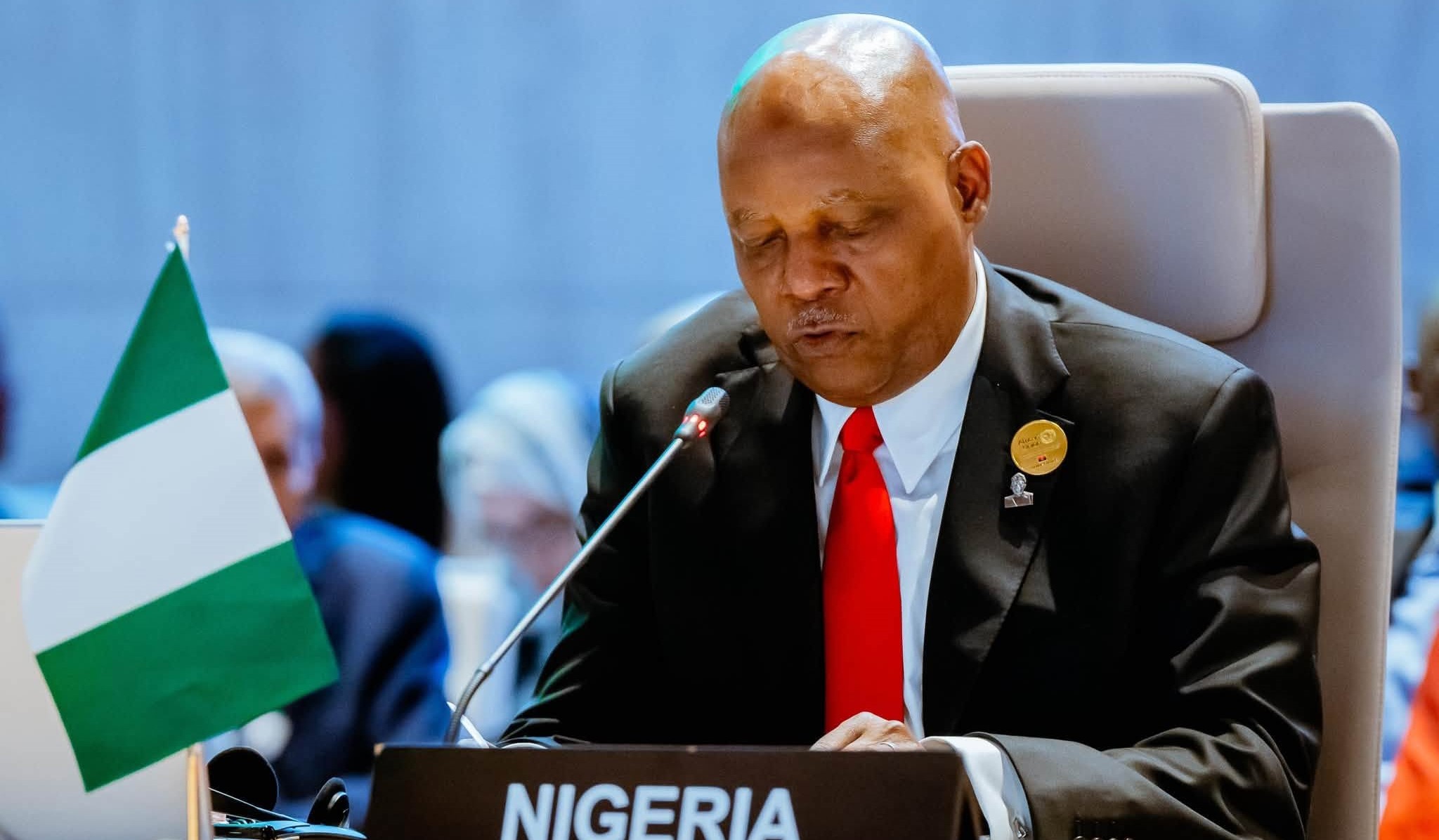
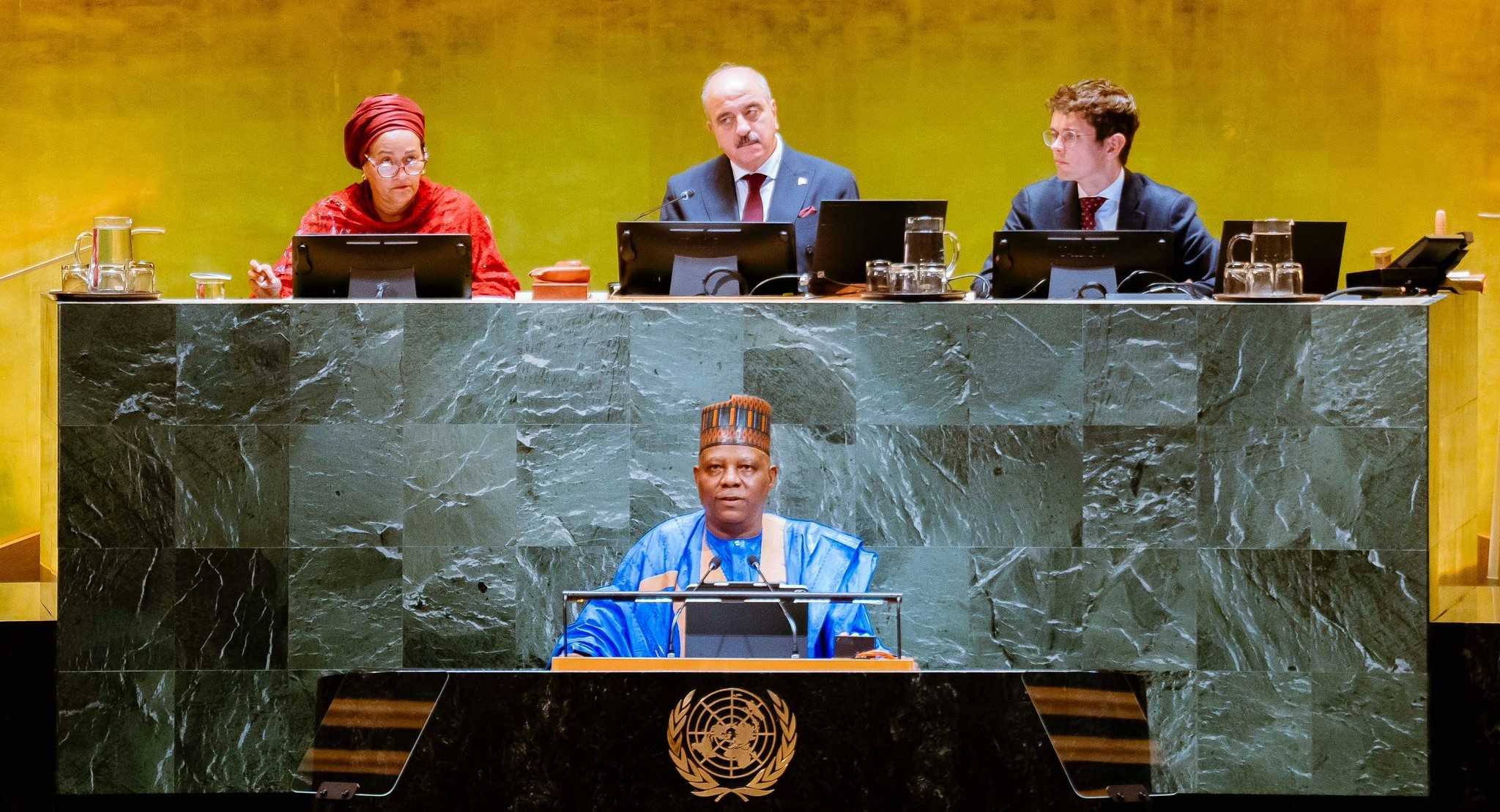 Vice President Kashim Shettima represented President Bola Tinubu at the 80th Session of UNGA
There is a sense in which the perennial jamboree of speeches at the United Nations General Assembly (UNGA) can be placed within the morass of hackneyed oratory. Year after year, it unfolds as a grande theatre where world leaders, cloaked in pomp, jostle for the klieg lights with fevered energy, desperate for a flicker of relevance; whatever that may mean. Shielded from the raw urgencies of their homelands and insulated from the tremors of the global order, they step onto the world’s most conspicuous podium as self-anointed captains of the “free world,” or champions of equity, justice, and fairness.
Their scripts unravel with a sameness that borders on the theatrical: lofty declarations about dealing the right cards and calling the right shots in the affairs of humankind. In truth, however, these orations serve little more than to flatter over-stretched egos and to rehearse tired illusions, betraying a convenient amnesia of the realities that glare just beyond the burnished chamber.
There is, too, a sense in which one cannot help but sneer at the selective amnesia and outright folly of certain declarations, especially when set against the hollow intent and brazen gaslighting so emblematic of failed governments clawing desperately to stay afloat in the swirling currents of their own decay.
UNGA, for all its gravitas, often dissolves into theatrics, a toothless bulldog prowling the global stage, quick to indulge the whims of its chief financiers while clipping the wings of less-privileged states through endless sanctions and hollow policies.
Amid urgent national and global crises, such choreographed escapism cannot escape the gaze of critical minds. That some leaders, whose own houses smoulder in neglect, still preen before the klieg lights and play to the gallery, remains one of history’s most brazen ironies. The spectacle of rulers eager to pluck the mote from another’s eye while blind to the beams in their own is less statesmanship than diversion; often an illusory breath of fresh air for leaders suffocating under the weight of troubles at home.
Nigeria’s appearance at UNGA80, framed against the searing backdrop of the Palestinian question in Gaza, sought to highlight the urgency of proactive discourse. Vice President Kashim Shettima’s speech, anchored on the familiar two-state solution, carried the weight of diplomatic intent. Yet, in the midst of the relentless Palestine–Israel conflagration, with its harrowing toll on lives and property, the address seemed to dissolve into the vast echo chamber of well-worn rhetoric.
Hear Vice President Kashim Shettima at UNGA80:
“We do not believe that the security of human life should be trapped in the corridor of endless debate. That is why we say, without stuttering and without doubt, that a two-state solution remains the most dignified path to lasting peace for the people of Palestine. For too long, this community has borne the weight of moral conflict. For too long, we have been caught in the crossfire of violence that offends the conscience of humanity. We come not as partisans, but as peacemakers. We come as brothers and sisters of a shared world, a world that must never reduce the right to live into the currency of devious politics. The people of Palestine are not collateral damage in a civilisation searching for order. They are human beings, equal in worth, entitled to the same freedoms and dignities that the rest of us take for granted.”
This is a layered statement from the mind of a good speechwriter, but its weight becomes clearer and scathing when read against Nigeria’s own lived experience with Boko Haram in the northeast, as well as against the backdrop of U.S. support for Israel in the Gaza war. Let’s try and unpack Shettima’s diatribe in both contexts:
In the light of Boko Haram insurgency in Nigeria, a moral consistency and hypocrisy glared in Shettima’s speech. Nigeria has been a victim of terrorism for over a decade, with Boko Haram devastating Borno (Shettima’s home state), Yobe, and Adamawa. His words, “the security of human life should not be trapped in the corridor of endless debate,” echo the frustrations many Nigerians feel about the slow and politicised responses of the international community to their plight. Just as Palestinians have been caught in a cycle of violence, so too have Nigerian citizens in the northeast. The VP is indirectly aligning Nigeria’s domestic scars with Palestine’s suffering, elevating Nigeria’s moral claim as a nation that understands what it means to be trapped in unending conflict.
Nigeria’s Peacemaking posturing came under the lenses too. Shettima’s assertion, “we come not as partisans, but as peacemakers,” is reminiscent of Nigeria’s long tradition of peace diplomacy, from Liberia and Sierra Leone to Darfur. But it also reveals a subtle self-critique: Nigeria has struggled to decisively “make peace” at home in the northeast, where Boko Haram’s ideology thrives on the same distortions of faith and dignity that fuel wider conflicts. The words therefore ring aspirational, if not slightly ironic, in the shadow of Chibok, Dapchi, and countless displaced communities.
In the light of U.S. backing of Israel in Gaza, there’s an obvious challenge to power politics: Shettima’s framing, “human life must never be reduced into the currency of devious politics,” is a veiled rebuke of the selective morality often displayed by powerful states. The U.S., in particular, has been accused of shielding Israel from accountability while the civilian toll in Gaza mounts. His emphasis on Palestinians not being “collateral damage” is a deliberate challenge to the language of military justifications that reduce human suffering to unfortunate by-products.
The two-state solution template Shettima offers is apt, if not a permanent solution to the debacle. By reasserting this position, Nigeria aligns itself with the majority of the Global South, which continues to see partition and mutual recognition as the only dignified way forward. However, when juxtaposed with U.S. vetoes at the UN and Washington’s unwavering material support for Israel, Shettima’s words highlight the asymmetry between the rhetoric of peace and the realpolitik of global hegemony.
Shettima’s speech at UNGA80 was indeed a moral positioning for Nigeria by all yardsticks, whether truly deserved or not. Nigeria, facing its own legitimacy crisis domestically under the President Bola Ahmed Tinubu government, uses the Palestinian cause to re-anchor itself in the moral high ground of international diplomacy. It is a subtle way of saying: “We, who have bled under terrorism, cannot be silent when another people are bled dry under occupation and war.”
And then the underlying paradox glared even more with harsh domestic realities. At home, Nigeria still struggles to guarantee dignity and safety to citizens under Boko Haram, banditry, and communal violence. Abroad, it speaks eloquently about the sanctity of life in Gaza. This dissonance does not invalidate his words; rather, it exposes the complex space African leaders often occupy: simultaneously victims of neglect and participants in the theatre of global diplomacy.
While VP Shettima’s statement is considered both a projection of Nigeria’s moral memory of Boko Haram and a diplomatic rebuke of U.S.-Israeli excesses in Gaza, and appeals to conscience over politics, it is ironically shadowed by Nigeria’s own unfinished battles with insurgency and human security. It is aspirational, morally forceful, but also paradoxical, an echo chamber of global justice that Nigeria itself still struggles to fully embody.

Comments
Be the first to comment on this post
Leave a Reply