The International Monetary Fund (IMF) has endorsed Nigeria’s
ongoing bank recapitalisation drive.
It said that stronger capital buffers are cushioning the
financial system against external shocks and strengthening resilience amid
intensifying global uncertainties.
Tobias Adrian, Financial Counsellor and Director of the Monetary
and Capital Markets Department of the IMF, said this during the Global Financial
Stability Report presentation.
He stated this during the IMF/World Bank Spring Meetings in
Washington DC on Tuesday.
Adrian said that robust fiscal positions remained critical for
emerging markets to withstand volatile global capital flows.
He said this would reduce exposure to sudden market reversals,
and maintain macroeconomic stability under uncertain financial conditions.
He stressed the growing importance of bank recapitalisation
during the periods of heightened financial stress globally.
Adrian said that building a well-capitalised banking sector
remained essential to sustaining global financial stability, particularly as
economies confront persistent uncertainty.
He also said that tightening financial conditions, and evolving
risks across international capital markets was crucial for economic sustenance.
According to him, the benefits of bank recapitalisation become
most evident during stress periods, as stronger capital positions enable
financial institutions absorb shocks, sustain lending activities, and support
broader economic stability across markets.
Adrian said that ensuring debt sustainability and maintaining
stronger fiscal positions are foundational to IMF engagement with countries,
particularly across Sub-Saharan Africa, where tailored programmes address
diverse economic challenges and vulnerabilities.
On capital flows to Sub-Saharan Africa, he said: “I have
observed the ongoing Middle East conflict have triggered an outsized reaction,
with movements roughly twice as large as those recorded during early stages of
Ukraine crisis.”
Adrian said that in spite of the significant shifts in capital
flow volumes, price reactions have remained relatively contained, reflecting
broadly healthy global risk appetite.
He also called for continued investor confidence across
financial markets in spite of prevailing geopolitical tensions worldwide.
Jason Wu, Assistant Director in the Monetary and Capital Markets
Department at the IMF, said that the capital flows to emerging markets are
increasingly driven by debt rather than foreign direct investment and equity.
He said that the raising concern was about long-term financial
stability outlook globally.
Wu said that countries with stronger fiscal positions generally
enjoy improved access to international markets and lower borrowing costs.
He also underscored the need for sustained fiscal reforms to
guard against sudden capital outflows.
Credit NAN: Texts excluding Headline





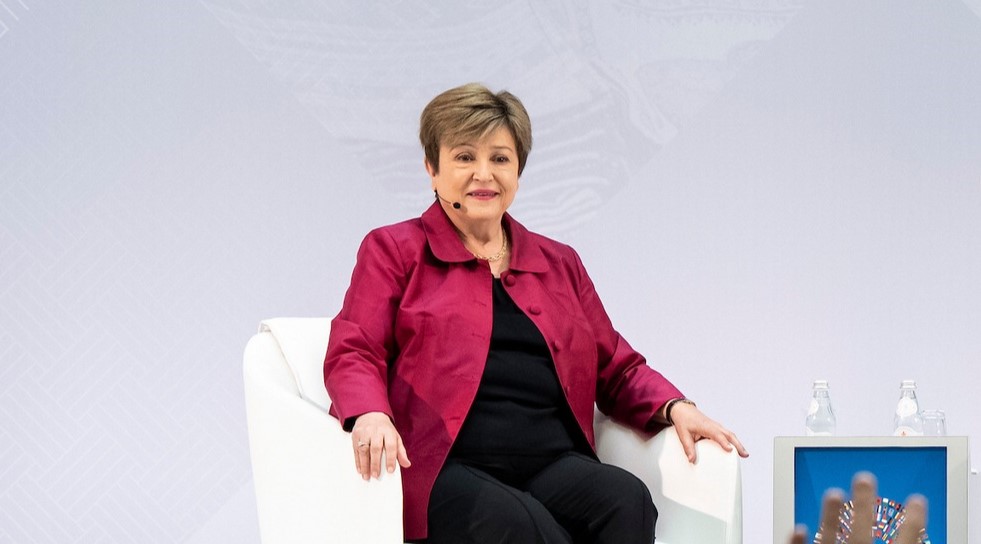 IMF Managing Director, Kristalina Georgieva







Comments
Be the first to comment on this post
Leave a Reply