NSX
Forex
01-Nov-2025 The VeryDarkMan Phenom

The VeryDarkMan Phenom

Every generation comes laced with its heroes and villains. They emerge in the nation’s epochs, clad in different garbs, each embodying distinct temperaments and motives, playing roles as diverse and innumerable as the stars scattered across the galaxy. The villains, in their craft and cunning, often spin the wheels of their societies in reverse, driving chaos, corruption, or decay. And, by a strange irony, they serve as worthy adversaries to the heroes and heroines, sharpening their resolve and tempering their purpose. engrave

In their cinematic stead, the heroes and heroines engrave their names upon the sands of time with rare mastery of the roles destiny assigns them. This they do in the run of things, sometimes through sacrifice, sometimes through defiance, but always through the courage to stand for what transcends self-interest.

There is, therefore, no dawn entirely bereft of leading lights in any society. These may not be utter saints in their posturing; neither are they always the brightest of the bunch. Yet, they inspire genuine interest by their gaiety of spirit, passion, and unrelenting pursuit of values loftier than the ordinary. They come across as steady flames that illumine their times, imperfect, yet indispensable. There is also no dawn that does not embrace the machinations of awed villains and the stuff of their strut; these add pep to the mixed rhythms of life as necessary props.

Heroes are human and have their warts and all. Villains are no different. What distinguishes heroes from villains, however, are the values they embody in the collective character of society. Both are nurtured in the same humus, the same crucible of social experience, but with distinct outcomes in the national conscience.

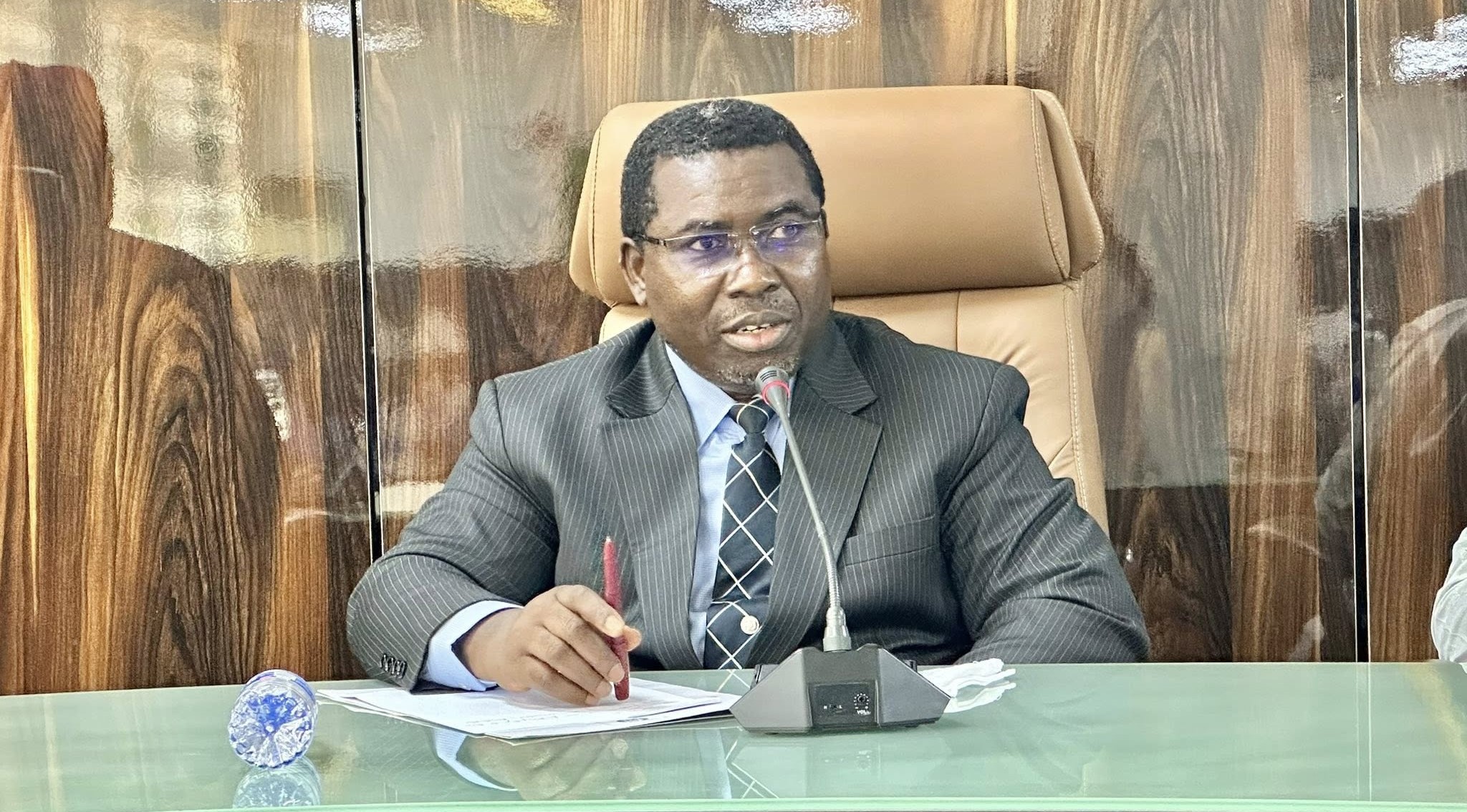
The stead of Vincent Otse, a native of Edo State who goes by the moniker VeryDarkMan or VDM, is emblematic of a hero in our nation’s socio-political ethos. His ways may not be as refined as one might expect of a person with urbane breeding or the intellectual airs of a firebrand activist, yet he exerts a force field of influence so potent it shakes the very fabric of our collectivism and conscience.

Many now consider him a “fourth estate of the realm” in himself, a kind of ombudsman, steeped in patriotic fervour, who steps stoically into realms of activism that most mortals dare not tread. Through this rare sense of selfless sacrifice for the good of others, an incandescent flame flickering to light the path for many, he assumes the vaulted role of a hero where even the government of the day falters in many ways.

Yes, Verydarkman, warts and all, walks tall among us today as the hero of the masses, embodying the conscience of our collective character.

He risks it all to confront the odds. He dares to speak truth to power, minding not whose ox is gored. Where angels fear to tread, VDM soars with ease and with resultant force. He stands a lone ranger in the war against vice and corruption, holding a mirror to our flawed realities and perceptions. Wherever his voice echoes, the realms respond with the cadence of justice. Those in the corridors of power dissemble at the resonance of his sonorous voice of conscience.

VeryDarkMan has been trending on social media for so many reasons. His recent exploits in Nigeria have cemented his reputation as a man of action and conviction, a voice of the voiceless and, to many, a God-sent reformer. His non-governmental initiative for education and community development stunned the nation when it raised over ₦33 million within twenty-four hours of its launch, drawing support from everyday Nigerians who saw in him a symbol of hope. Within just five days, that figure soared to nearly ₦200 million, a feat that highlights his rare ability to mobilise trust and resources across social classes.

Beyond fundraising, VDM has shown consistency in transforming goodwill into impact. Early in 2025, he introduced a vocational empowerment programme through which he disburses ₦1 million monthly to help young Nigerians acquire practical skills, reaffirming his commitment to economic self-reliance and community uplift. His philanthropy has also extended to human-rights causes. In April 2025, he donated ₦20 million to the National Agency for the Prohibition of Trafficking in Persons (NAPTIP) to aid the rescue and rehabilitation of under-age girls trafficked abroad, a bold move that aligned his activism with direct humanitarian intervention.

Perhaps one of his most talked-about moments came during his recent explosive confrontation with businessman and influencer Blord over the controversial sale of the so-called iPhone 17 Pro/Max. VDM’s exposé revealed that many of the devices marketed at ₦400,000 to ₦450,000 were in fact refurbished iPhone XR models worth far less. His sustained outcry sparked nationwide debate, forcing traders to clarify their sources and adjust prices, effectively helping to crash the inflated market for the “iPhone 17 SR.” What began as a personal crusade against deception quickly evolved into a broader campaign for consumer protection and pricing transparency in Nigeria’s tech market.

Through these actions, raising millions for social good, empowering youths, championing justice, and confronting exploitation,  VeryDarkMan has etched his name not merely as a social critic but as a moral force. His blend of audacity and compassion continues to inspire many who see in him the living conscience of a nation long yearning for accountability and change.

Sadly, men like VeryDarkMan are few and far between - - flames flickering against the long night of civic apathy. He belongs to that endangered breed of citizens who dare to speak when silence has become the convenient refuge of many. His style may offend the polished sensibilities of the so-called civilised order, yet beneath the rawness of his approach lies an unflinching commitment to truth. His voice, at once unsettling and necessary, calls society to account in ways that formal institutions have long abandoned.

Where government ought to serve as the custodian of justice, fairness, and accountability, he stands in the gap, audaciously performing the duties of a state grown weary of its own moral obligations. In the face of negligence, he becomes the unlikely sentinel of the people’s hope; in the decay of governance, he becomes the conscience that refuses to die.

But such courage does not come without peril. Every truth he speaks chisels at the foundations of privilege and deceit, earning him a legion of unseen adversaries. He walks daily through the crossfire of admiration and hostility, a man both celebrated and condemned for daring to care. In this, he is an endangered species, not because he lacks support, but because society too often watches its champions fall without lifting a hand.

It is time, therefore, that the powers that be recognise the rare virtue of his mission. He deserves more than perfunctory praise; he deserves protection, moral endorsement, and purposeful engagement. For in men like him lies the possibility of awakening a generation - - youth stirred not by vanity or greed, but by conviction, courage, and moral clarity. And if given the right platform, he might yet transform his solitary crusade into a national rebirth of conscience.

His impassioned strides have already rewritten the story of hope for many Nigerians struggling against the odds. It is, therefore, about time the nation gave him his due flowers. A national honour would not be misplaced; better still, an appointment to a strategic position where his passion and candour can help drive the change our polity so desperately needs. Vincent Otse, the VeryDarkMan, stands today as an unvarnished force for positive transformation, imperfect, yes, but indispensable all the same.

14-Oct-2025 Frenzy over 2027 and the Push for Jonathan

Frenzy over 2027 and the Push for Jonathan

The seagulls have once again taken over our skies in their hunting sprees. They glide and preen in the air with a blend of pageantry and sorcery; their swift wings attempt mastery over the whistling winds through diverse and practiced flight antics. The destination looms on the hazy horizon; and as they hover above the swirling currents, their sights remain laser-focused on the coveted prize. Every flap of wings, every theatrical cawing in flight, is done with intent: to scare, to browbeat, or to hunt down other birds of prey - not in the spirit of healthy sportsmanship, but as a response to perceived adversaries.

2027 is the destination. The cherished sky with hues that beguile is the splendored Aso Rock Villa.

The Aso Rock Villa - the place where only a few mortals tread; the realm where dreams are made manifest; the sphere of power and great influence; the seat of the de jure leader within the ambit of the Nigerian polity, is every politician’s fevered dream. Mere mortals have risen within its corridors as awed gods, and their words have thundered time and again through the land as inviolate. In their firm grip lies the rein of life and death, which they dispense at will.

That is the aura of the power politicians seek. To perch at such hallowed heights, anything and everything becomes permissible - even outright blackmail or the silencing of the opposition by any means possible.

The central idea that buffers such a kerfuffle is greed for power. In the semblance of the hawkish Berlin Conference of 1884, the scramble for the soul of Nigeria in 2027 is in top gear. Who gets what depends on the political frame of interest and the players etched within it. To be a top player in the league of influencers shaping the trend of things implies a larger slice of the national pie. Little wonder the frenzy over 2027 is already heightened, even when the destination remains offshore--two years yet.

The spin masters won’t rest until the deed is done. They are primed to regale us with tales of every shade. We are told in unequivocal terms that all is well in the land. The cries of the masses don’t matter. The economic indices, from their lenses, gleam as bright as the midday sun. They even weave yarns to discredit any viable opposition. The opposition, too, is complicit in the frenzy to unseat the incumbent leader through its own concerted alliances.

But in all this, governance suffers. The government of the day is more invested in political engineering towards a desired end than in upholding public trust and delivering the dividends of our democratic milieu. The opposition also adds its fillip to this quagmire through its distractive overtures - birds of the same feathers, though dyed in different tinctures.

No proactive government or visionary leader anywhere in the world needs to embark on veiled campaign sprees years ahead of the statutory provisions for such matters if the right steps and actions are being taken to ameliorate the sufferings of the people. The people, as a matter of natural consequence, will reward genuine performance with their votes in any election cycle. The panicky body language of the ruling party, amid the reality of alliances or the emergence of the ADC and others as viable alternatives to the APC, therefore, hints at the grave underperformance matrix of the ruling party.

As for the opposition, they too appear bereft of any populist agenda beyond a desperate quest for power. Some of these frontline agitators for a change of government through democratic means are the very elites who not long ago bled this country dry. They now hanker for power, ostensibly as a means of burnishing their estates with more lucre and privileges that only political authority can bestow. Beyond this, they have little or nothing to offer going by their antecedents. 

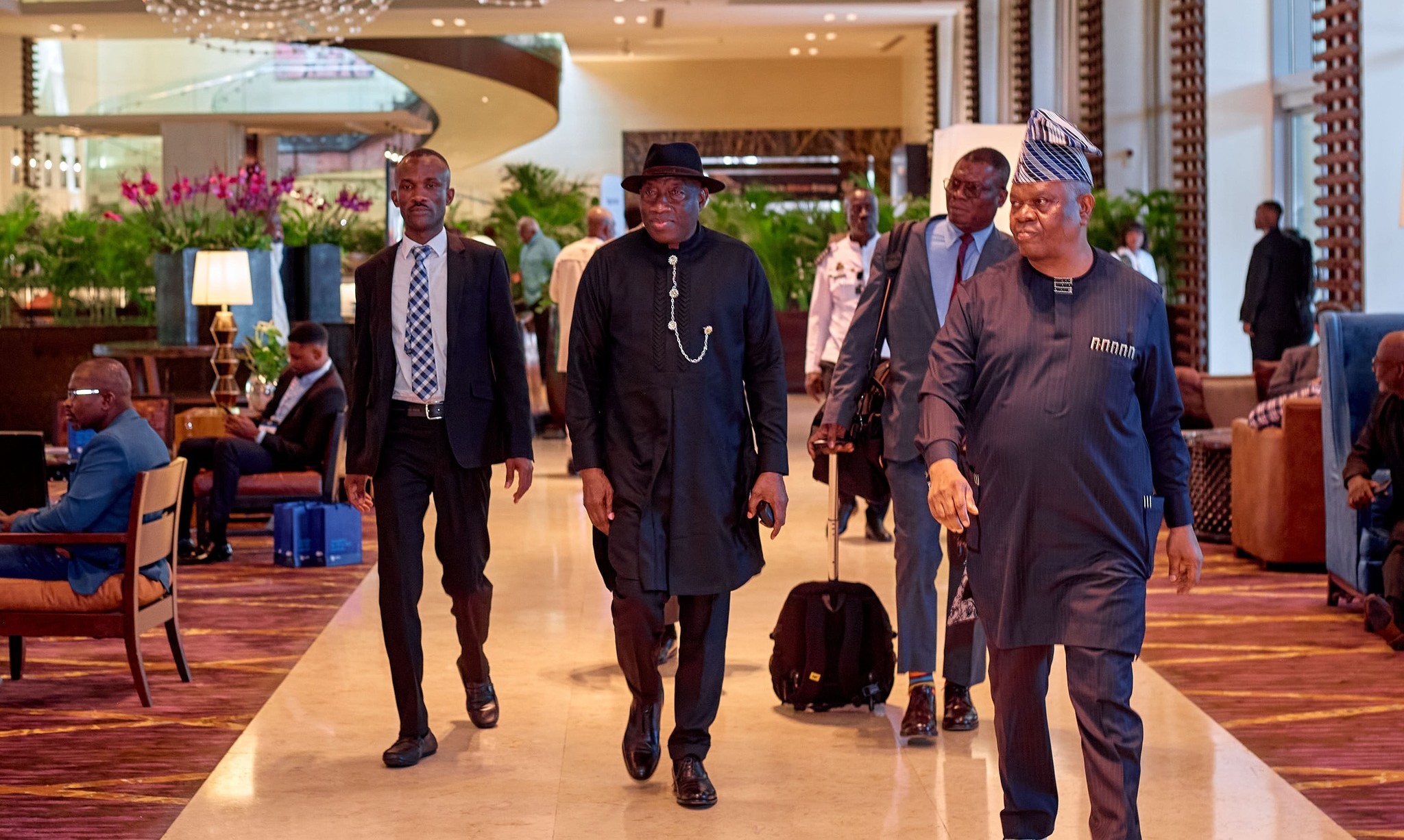
Now, the alleged intention of former President Goodluck Jonathan to join the presidential contest has stirred the hornet’s nest, with discomfiture palpable within the ruling All Progressives Congress (APC). The fear of GEJ, it seems, is now the beginning of wisdom. Here is where the seagulls adopt more hunting strategies, whether in collective or solo flight. Already, a legal action has been instituted at the Federal High Court in Abuja to stop GEJ from contesting any election under any political platform.

This kamikaze narrative, or legal stance, reeks of desperate measures from a desperate clan. Else, why the preemptive justice when GEJ has yet to openly declare his intentions? And why are the lackeys of the APC so desperate to stop a man more concerned about global peace than the politics of his homeland? 

In my considered opinion, the president would do well to devote greater energy to the demands of governance rather than be swayed by the mirage of 2027. The surest campaign strategy lies not in frantic political manoeuvres but in the quiet, consistent delivery of public good. Let his governance footprints speak louder than the propaganda of his courtiers; let the weight of his performance, not the noise of his handlers, be his true selling point when the next election cycle dawns.

For every hour spent fretting over shifting alliances or speculating about emergent contenders, a minute of credibility is lost in the eyes of a weary citizenry. Panic over imaginary foes only lends credence to the growing suspicion that this administration has not fared well in preserving public trust. Leadership is not sustained by paranoia or political arithmetic but by the moral authority that flows from results. If the president must look to 2027 at all, let it be through the lens of legacy, not insecurity.

As for Goodluck Jonathan, pundits are wont to ask: what exactly did he leave behind in Aso Rock that he now wishes to reclaim, even at the peril of smudging his hard-earned image as a man of peace and an esteemed international statesman? His global engagements have cast him in the dignified light of an elder reconciler - one who, having tasted the intoxicant of power, found wisdom in restraint. To return now to the arena of domestic politics, with all its bile and backstabbing, is to risk trading the moral halo of statesmanship for the muddy garb of partisan contest.

Those nudging and propping him up for the 2027 race may be driven by motives that are anything but noble. Some may genuinely believe his return would steady the ship of state; others, more likely, see in him a familiar vessel through which to reclaim lost privileges and patronage. But were these not the same political choristers who once mocked him as weak, indecisive, and unfit for the rigours of power? Were they not the very coalition that conspired to unseat him, singing hymns of change while dismantling the foundations of continuity?

Have they now seen the light and repented of their political sins, or is this sudden chorus of nostalgia merely another stratagem in the endless theatre of Nigerian politics, where yesterday’s villain is recast as today’s redeemer, and principles are traded for convenience? If indeed they now hail him as the long-awaited messiah destined to salvage the ruins of this country, then one must ask: what manner of salvation springs from the same well that once poisoned the nation’s hopes?

Until Jonathan himself speaks with the clarity of conviction, not the ventriloquism of political opportunists, his silence will remain an enigma, his intentions a subject of conjecture, and his legacy balanced precariously between the honour of statesmanship and the lure of a second chance.

What underlines these tepid scenarios of our nationhood is the unnerving silence of those who once vilified the Goodluck Jonathan presidency with prophetic fervour. Where are the traducers of yesteryears: the vociferous naysayers and self-anointed patriots, the men of God who thundered from pulpits, the social activists who camped on television panels, the literary icons who draped their dissent in moral robes, the political elites and fair-weather allies who chorused “change” until it became an anthem of betrayal? These were the very architects of his fall, the coalition of the sanctimonious who ensured he was hounded out of office even as the incumbent.

Now that their fellow tribesman occupies the saddle and the nation totters under the weight of unfulfilled promises, their voices have suddenly gone hoarse. The pulpits are silent, the placards retired, the pens withdrawn into convenient neutrality. The same actors who once mistook noise for patriotism have discovered the comforts of selective amnesia. It is as though moral outrage in Nigeria is a seasonal crop, planted when the “other” holds power and harvested in silence when one of their own reigns.

To me, that is the climax of absurdity; the full bloom of hypocrisy that has become our national creed. How do we justify a conscience that blares sirens at perceived injustice but slumbers when the familiar commits the same offence? If integrity is subject to geography or faith, then we have reduced morality to a tribal franchise. And that, more than bad governance or economic decline, is the true tragedy of our republic: a people who have lost the courage to speak truth to power unless the power speaks their language.

27-Sep-2025 UNGA and the Perennial Jamboree of Speeches

UNGA and the Perennial Jamboree of Speeches

There is a sense in which the perennial jamboree of speeches at the United Nations General Assembly (UNGA) can be placed within the morass  of hackneyed oratory. Year after year, it unfolds as a grande theatre where world leaders, cloaked in pomp, jostle for the klieg lights with fevered energy, desperate for a flicker of relevance; whatever that may mean. Shielded from the raw urgencies of their homelands and insulated from the tremors of the global order, they step onto the world’s most conspicuous podium as self-anointed captains of the “free world,” or champions of equity, justice, and fairness. 

Their scripts unravel with a sameness that borders on the theatrical: lofty declarations about dealing the right cards and calling the right shots in the affairs of humankind. In truth, however, these orations serve little more than to flatter over-stretched egos and to rehearse tired illusions, betraying a convenient amnesia of the realities that glare just beyond the burnished chamber.

 There is, too, a sense in which one cannot help but sneer at the selective amnesia and outright folly of certain declarations, especially when set against the hollow intent and brazen gaslighting so emblematic of failed governments clawing desperately to stay afloat in the swirling currents of their own decay.

UNGA, for all its gravitas, often dissolves into theatrics, a toothless bulldog prowling the global stage, quick to indulge the whims of its chief financiers while clipping the wings of less-privileged states through endless sanctions and hollow policies.

Amid urgent national and global crises, such choreographed escapism cannot escape the gaze of critical minds. That some leaders, whose own houses smoulder in neglect, still preen before the klieg lights and play to the gallery, remains one of history’s most brazen ironies. The spectacle of rulers eager to pluck the mote from another’s eye while blind to the beams in their own is less statesmanship than diversion; often an illusory breath of fresh air for leaders suffocating under the weight of troubles at home.

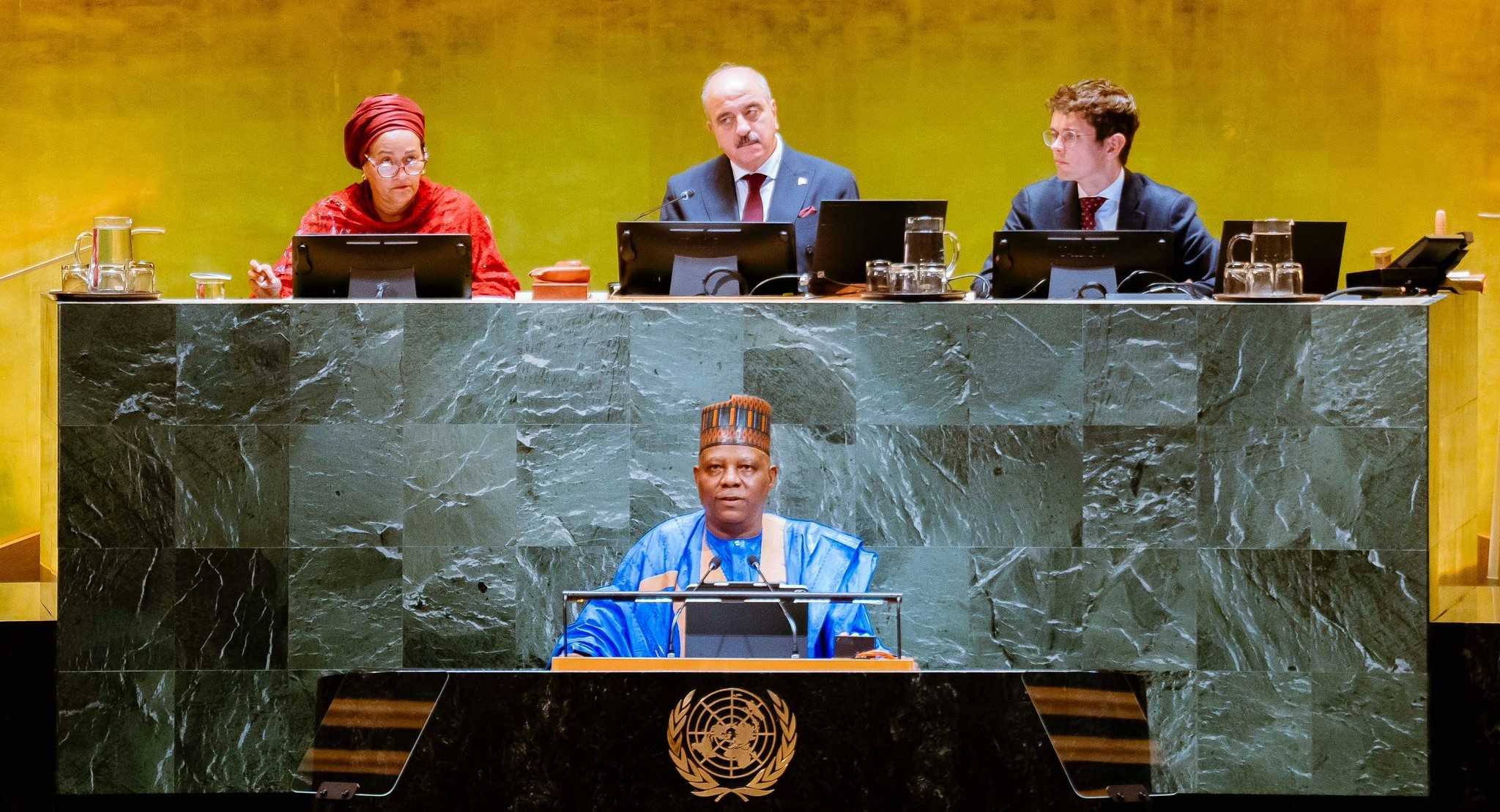
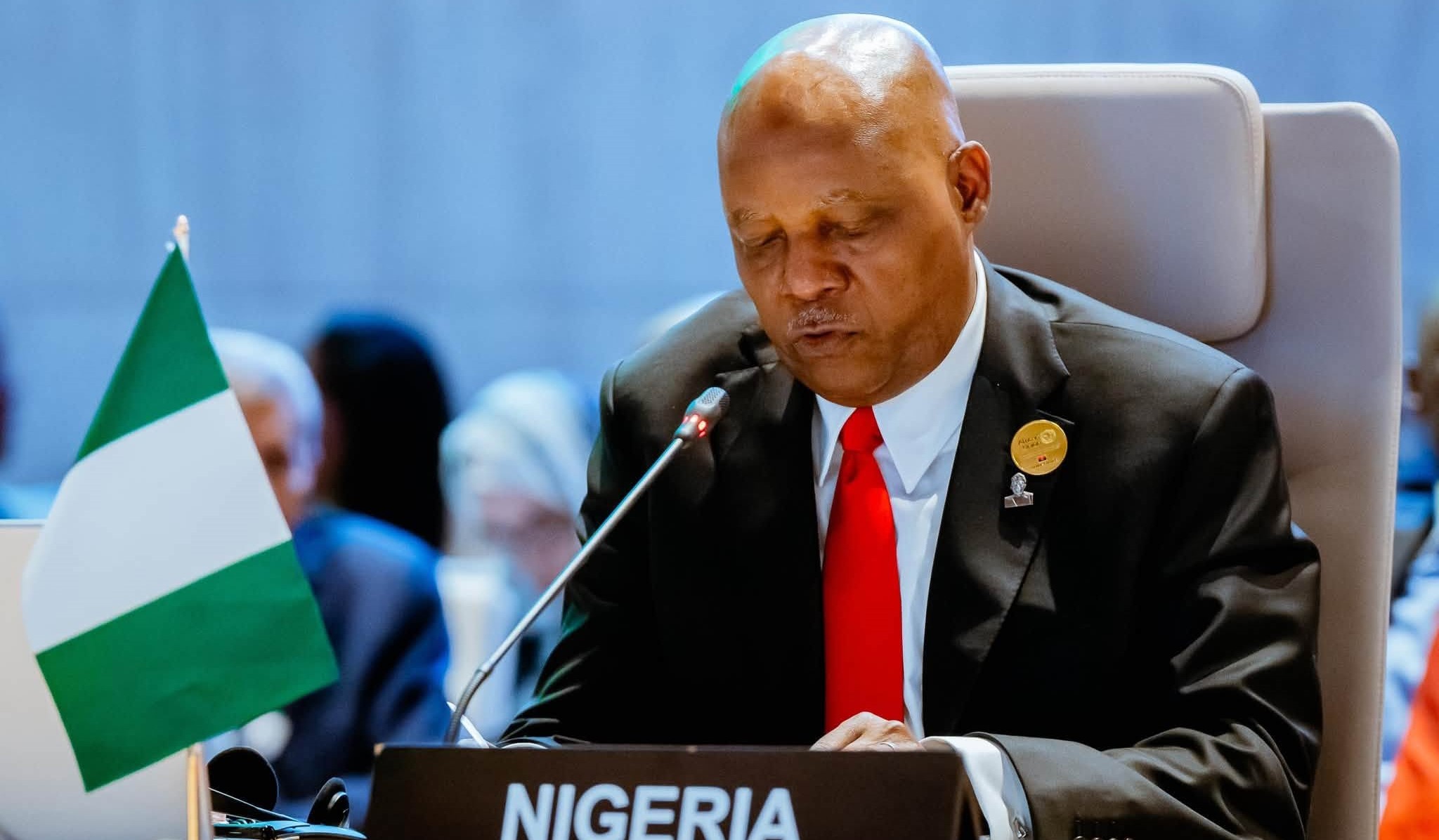
Nigeria’s appearance at UNGA80, framed against the searing backdrop of the Palestinian question in Gaza, sought to highlight the urgency of proactive discourse. Vice President Kashim Shettima’s speech, anchored on the familiar two-state solution, carried the weight of diplomatic intent. Yet, in the midst of the relentless Palestine–Israel conflagration, with its harrowing toll on lives and property, the address seemed to dissolve into the vast echo chamber of well-worn rhetoric.

Hear Vice President Kashim Shettima at UNGA80:

“We do not believe that the security of human life should be trapped in the corridor of endless debate. That is why we say, without stuttering and without doubt, that a two-state solution remains the most dignified path to lasting peace for the people of Palestine. For too long, this community has borne the weight of moral conflict. For too long, we have been caught in the crossfire of violence that offends the conscience of humanity. We come not as partisans, but as peacemakers. We come as brothers and sisters of a shared world, a world that must never reduce the right to live into the currency of devious politics. The people of Palestine are not collateral damage in a civilisation searching for order. They are human beings, equal in worth, entitled to the same freedoms and dignities that the rest of us take for granted.” 

This is a layered statement from the mind of a good speechwriter, but its weight becomes clearer and scathing when read against Nigeria’s own lived experience with Boko Haram in the northeast, as well as against the backdrop of U.S. support for Israel in the Gaza war. Let’s try and unpack Shettima’s diatribe in both contexts:

In the light of Boko Haram insurgency in Nigeria, a moral consistency and hypocrisy glared in Shettima’s speech. Nigeria has been a victim of terrorism for over a decade, with Boko Haram devastating Borno (Shettima’s home state), Yobe, and Adamawa. His words, “the security of human life should not be trapped in the corridor of endless debate,” echo the frustrations many Nigerians feel about the slow and politicised responses of the international community to their plight. Just as Palestinians have been caught in a cycle of violence, so too have Nigerian citizens in the northeast. The VP is indirectly aligning Nigeria’s domestic scars with Palestine’s suffering, elevating Nigeria’s moral claim as a nation that understands what it means to be trapped in unending conflict.

Nigeria’s Peacemaking posturing came under the lenses too. Shettima’s assertion, “we come not as partisans, but as peacemakers,” is reminiscent of Nigeria’s long tradition of peace diplomacy, from Liberia and Sierra Leone to Darfur. But it also reveals a subtle self-critique: Nigeria has struggled to decisively “make peace” at home in the northeast, where Boko Haram’s ideology thrives on the same distortions of faith and dignity that fuel wider conflicts. The words therefore ring aspirational, if not slightly ironic, in the shadow of Chibok, Dapchi, and countless displaced communities.

In the light of U.S. backing of Israel in Gaza, there’s an obvious challenge to power politics: Shettima’s framing, “human life must never be reduced into the currency of devious politics,” is a veiled rebuke of the selective morality often displayed by powerful states. The U.S., in particular, has been accused of shielding Israel from accountability while the civilian toll in Gaza mounts. His emphasis on Palestinians not being “collateral damage” is a deliberate challenge to the language of military justifications that reduce human suffering to unfortunate by-products.

The two-state solution template Shettima offers is apt, if not a permanent solution to the debacle. By reasserting this position, Nigeria aligns itself with the majority of the Global South, which continues to see partition and mutual recognition as the only dignified way forward. However, when juxtaposed with U.S. vetoes at the UN and Washington’s unwavering material support for Israel, Shettima’s words highlight the asymmetry between the rhetoric of peace and the realpolitik of global hegemony.

Shettima’s speech at UNGA80 was indeed a moral positioning for Nigeria by all yardsticks, whether truly deserved or not. Nigeria, facing its own legitimacy crisis domestically under the President Bola Ahmed Tinubu government, uses the Palestinian cause to re-anchor itself in the moral high ground of international diplomacy. It is a subtle way of saying: “We, who have bled under terrorism, cannot be silent when another people are bled dry under occupation and war.”

And then the underlying paradox glared even more with harsh domestic realities. At home, Nigeria still struggles to guarantee dignity and safety to citizens under Boko Haram, banditry, and communal violence. Abroad, it speaks eloquently about the sanctity of life in Gaza. This dissonance does not invalidate his words; rather, it exposes the complex space African leaders often occupy: simultaneously victims of neglect and participants in the theatre of global diplomacy.

While VP Shettima’s statement is considered both a projection of Nigeria’s moral memory of Boko Haram and a diplomatic rebuke of U.S.-Israeli excesses in Gaza, and appeals to conscience over politics, it is ironically shadowed by Nigeria’s own unfinished battles with insurgency and human security. It is aspirational, morally forceful, but also paradoxical, an echo chamber of global justice that Nigeria itself still struggles to fully embody.

29-Aug-2025 Reflections on Human Kindness: A Lesson from an Ordinary Day

Reflections on Human Kindness: A Lesson from an Ordinary Day

The world we inhabit may seem driven by primal instincts in their starkest forms, yet there remain a few good souls amid the evil throng, whose values are anchored in empathy and shared humanity. These are rare breeds, seldom seen, seldom felt, always willing to etch distinct historie in the affairs of men through their actions. The impressions they leave behind are often indelible.

These individuals may not occupy lofty positions or wield influence on a grand scale, yet their actions, small, sincere, and deeply human, ripple outward like drops of water feeding the ocean of compassion that binds us all.

On August 28, 2025, two encounters reminded me that goodness still walks quietly among us. That Thursday, I visited the Imgbi Road branch of First Bank, Yenagoa, seeking to withdraw dollars from my domiciliary account. The day before, the Branch Business Manager had promised its reactivation within 24 hours, following a form I had submitted the previous week after the account was flagged over a foreign inflow.

The delay, he admitted, stemmed from his oversight, an unsigned section of the form. On the phone earlier, I had voiced my frustration at the needless hold-up. He apologised and assured me of swift resolution.

At the branch, looking unsettled by my complaint of unanswered calls, he scrolled through missed calls and a lone neglected message before offering a rueful smile and an apology. Then, without hesitation, he turned to the matter. As we waited, we spoke of corporate ethics, the state of the nation, and the uneasy balance between principle and survival. Soon, he rose and beckoned me to follow him down the stairwell to the section where dormant accounts were revived.

At the desk, he pressed for clarifications. The female officer, brisk and professional, informed him the account had not yet been unlocked. For a moment, silence lingered. Then he turned to me, eyes softened with an almost pleading resolve, and in a voice carefully measured said, Why dont you return by four? Itll be ready by then.

I looked from him to the beautiful lady beside him, her composure wrapped in quiet elegance. A sly grin crept across my face as I leaned in, my voice low yet charged with mischief:

First Bank is looking for my trouble hmm, First Bank is really looking for my trouble. If I write about this matter in my column in a national daily, it is you who will come begging me dont tempt me to write

The words struck the Branch Business Manager like a thunderclap. His eyes widened.
Ah! If you write about this, it is me youve written about o! he blurted, half-stunned. Then, catching himself, he tried to divert the blow. Okay write about HRM, not me. He laughed uneasily, pulled me close in a side hug, and jested with a sudden lightness: See! You and her look alikesame fair complexion!

I caught the ladys fleeting discomfort at my remark and let a knowing smile play on my lips. Then, with deliberate weight, I spoke: If I take this to my back-page column in the Nigerian Pilot and thenewsroom,ngboth national platforms, it will go viraland you people wont like what follows.

The Business Managers mask of bravado slipped. His plea was simple: Please dont.

I wont, I assured, sincerity breaking through my mischief. Because you are a good man. A good man indeed. But listenIll be back by 3 p.m., if this issue is not resolved I left the sentence dangling in the air like a threat carried on the wind.

And with that, I turned and walked out of the bank.

It was a little after noon. Three long hours stretched before me. I had no wish to return home, so I wandered across the road to Kilimanjaro, the bustling eatery opposite Ekeki Motor Park, to idle away the time.

I had no appetite for food. All I wanted was a seat, a screen, and enough distraction until the clock crept towards three. I found a place directly facing a large LED screen flashing a foreign football match I cared nothing about. The crowds cheers rose and fell around me, but my thoughts wandered elsewhere.

Then came the interruption.

A tall man, broad-shouldered and commanding in presence, strode toward me with a tray laden with food. His eyes fixed on me as though I had stolen his rightful place. I could almost hear the unspoken words: Thats my seat. Yet he swallowed them, shifted, and took the table beside mine.

Do you want to sit here? I asked, half-curious, half-courteous. If you want this seat, you can have it.

Before he could reply, I rose and yielded it, though by every right it was mine. I slipped to the table just behind, pretending to busy myself with my phone.

He glanced at me sideways, shook his head faintly, and settled into his meal. Silence stretched between us until, finished, he turned and asked, Do you want to eat something?

I faltered, unsure of his intent. Then he rose, beckoned with quiet authority, and said,
Come with me.

We walked together to the counter, where trays of steaming dishes waited. His voice was firm, almost insistent, Pick anything you want. Ill pay.

I was stunned. The earlier tension had not prepared me for such generosity from a stranger. I tried to decline, but he pressed, almost pleading: Please. Have something to eat.

So I relented, choosing only a light snack. He told the chef to add a bottle of Coke.

As we waited for the chef to serve the snacks, my voice trembled with a mix of gratitude and awe.
Sir I dont know who you are, but I want to reciprocate this kindness. Id like to write about you in my column. Im a writer a publisher.

He looked at me steadily, his face grave. No need for that. You stood up humbly and gave me your seat without complaintthats why Im doing this. Im a pastor.

It doesnt matter, I replied earnestly. Allow me to tell your story. Let me give your church a voice to a global audience. It would be my honour.

This time, he smiled. Okay.

He paid for my food and drink, then we walked back to my seat together, strangers no longer. We exchanged phone numbers. Before parting, he said warmly: Is this your name, Mindfield Publishing?

Thats the name of my publishing company. Im Edentu Oroso.

Im Pastor Emeka.
My church is behind GTB BankAbundant Life Church. Come worship with us one of these days.

I nodded, feeling the weight of providence in the moment. I will, I promised.

I sat back, munching my snacks and sipping Coca-Cola, my mind replaying the encounter at the bank. I had barely settled into my thoughts when my phone buzzed. An SMS lit up the screen:

Sir, your account is okay now. Thanks! signed by the Branch Business Manager.

I almost leapt from my seat in sheer relief. A glance at my watch read 1:34 p.m., scarcely an hour and a half since I had walked out of the bank with a faint but deliberate threat: if the issue wasnt resolved before 3 p.m., I would return to raise Hell.

I kept my word. Back at First Bank, the withdrawal was seamless. Smooth, professional, without a hint of the earlier hitches.

That moment lingered with me, not just for the resolution, but for what it revealed about human kindness and professionalism in service. The man behind the gesture was Mr. Ikechukwu A. Ochuba, the Branch Business Manager. Always polite, always courteous, always willing to step in when customers are at their wits end.

It wasnt my first encounter with him. Over a year ago, I had another brush with frustrationthis time while trying to open a domiciliary account. After weeks of back-and-forth, filling endless compliance forms, the account number was still nowhere in sight, though I urgently needed it.

One morning, exasperated beyond measure, I stormed into the branch determined to shake tables. My voice carried across the banking hall:

Who is the Bank Manager here? I want to see the Bank Manager! How can the simple opening of a domiciliary account take a whole month in First Bank when elsewhere it is done in a flash?

A lady officer, unfazed by my agitation, calmly directed me to an office nearby. I knocked, barged in, and asked almost in the same breath: Are you the Bank Manager?

He looked up, taking in the veins straining across my forehead. He could see I was furious. Yet his response was calm, steady, even disarming:

Come in and sit down, Sir. Whats the issue? Can I be of help?

I laid out my ordeal. Without hesitation, he apologised and took immediate action. Within minutes, he summoned the account officer, resolved the delay, and handed me the account number himself, apologising profusely for the lapses. It was not the apology alone that struck meit was the firmness with which he addressed the matter, the decisiveness that left no room for excuses, and the sense of responsibility that radiated from him.

I walked out that day impressednot just because the problem was solved, but because of how it was solved. His courtesy did not come at the expense of firmness; his professionalism was not hollow but rooted in integrity; and his willingness to take ownership was not selective but absolute. He stood, in that moment, as a model of what service should beswift, humane, and accountable.

And again, on Thursday, he proved it wasnt a fluke. Consistency, after all, is the true measure of character. Where many might act once out of chance or convenience, he showed that integrity is a habit, not an event. There are still men and women in service who treat customers like kings, not inconveniencesand Mr. Ikechukwu Ochugo stands firmly among them, a reminder that leadership is not in title but in action.

As for Pastor Emeka, I must confess that my first impression of him may have been clouded by misjudgment. I had thought him aloof, perhaps even indifferent, as so many men of the cloth in our time appear to be. Yet, in the quiet unfolding of events, he revealed himself to be quite the oppositea man with bowels of compassion, one who does not merely preach kindness from the pulpit but embodies it in his dealings with others. His willingness to reciprocate a simple act of courtesy, unprompted and without fanfare, struck me deeply. In todays Nigeria, where many General Overseers are often cloaked in distance, authority, and inaccessibility, such a gesture is nothing short of remarkable. That single act, small in appearance but weighty in meaning, casts him in a rare light: a shepherd humane enough to walk among his flock, not above them, and to lead with the strength of empathy as much as with the authority of his office.

06-Aug-2025 Nigeria: The Many 'Incurable Diseases'

Nigeria: The Many 'Incurable Diseases'

We see a blur of things. We hear the deafening noise. We feel the pulse too. And we can't help but smell the tang of all thats gone sour. So we wail for our dear country.

The things our eyes behold are the kind that make our hearts throb with ache. The sounds our ears absorb daily drone through the realm with pitched beats that numb the senses.
The rhythms in our skies echo dreary tales. And the confetti on the canvases of our time carry the aftertaste  of unpalatable offerings.

Stale airs impel the colours of our breaths. In the bursts of reprobate winds, we anchor our comfort. Were fast embracing the colours of fangled dreams. And everything that could have been a hint at progress in our notion of nationhood seems stalled by the nature of our inherent docility and large scale unproductivity.

The rarest of gifts is a questioning spirit--the capacity to examine the wavelengths of thought, to act with intention in every circumstance, and to wield the rational power needed to create conditions ideal for life and living. This, indeed, remains the most exalted of values.

Yet this vital quotient seems sorely lacking in our collective pursuit of a better society. By all indices, there are concerted efforts to press forward despite the shenanigans at play, but our notions of progress often resemble motion in reverse. We take two steps forward, only to retreat three steps backward, endlessly.

We swim with vigour almost on a daily basis, hoping to arrive at gilded shores, yet those dawns have remained mirages in our horizon, an inertia induced by our inability to think critically and creatively as a people.

History is strewn with stories of men and women who changed the trajectories of their societies through moments of inspired insight driven by creative and critical thinking.

A nation that fails to interrogate its existence and systems of governance is a nation in grave decline. 

A people content to thrive in abject squalor without so much as asking fundamental questions, about the state of their environment, the dysfunction of their educational systems, the prevailing economic malaise, their chronic lack of productivity, their inventiveness or lack thereof despite a richly talented populace, why their political elite continue to perpetuate poverty rather than pursue sustainable development, and why they persistently lag behind in the comity of nations, are those on the brink of extinction.

True progress is measured by the quality of questions we ask about where we are, where weve come from, and where we are going.

Why are we content with not interrogating the debt burden arising from the fiscal impropriety of the governing class?

Why is the President Bola Tinubu-led administration consistently borrowing from the IMF, World Bank, and Paris Club when it argued at inception that the removal of the petroleum subsidy regime was meant to shore up our foreign reserves and float the national economy? Where are the monies from the subsidy removal being ploughed into?

Why are we still a monoeconomy despite a plethora of viable alternatives capable of reliably buoying the financial burdens of our superstructure?

Why are our political elites devoid of principles and the ideological bent that define other democratic ethos?

Why cant our country have world-class hospitals and clinics where both the privileged and the less privileged can access modern medical treatment?

Why do our leaders delight in bastardising our health system, yet run to foreign hospitals when the chips are down?

Why cant we, as a country, generate and distribute uninterrupted electric power like other nations do routinely, despite the humongous amounts spent on revamping the power sector?

Why have our roads become death traps--graveyards of wanton carnage--despite the billions budgeted annually to fix them?

Why is it too difficult for our governors and presidents (past and present) to provide potable drinking water and functional public schools for the citizens of this country, when many of them are products of free education?

Why is it that a country of over 200 million people, rich in intellect and talent, struggles to produce a single product of global relevance, instead operating merely a service-based economy? Even the petroleum Nigeria boasts of, along with its associated revenue streams, is scarcely refined locally. It is a paradox that Nigeria, one of the worlds largest oil producers, still imports fuel for domestic consumption. Agree most countries follow this path, but not with the alarming degree of Nigerias oil-sector inefficiency.

Why are the youths content being cannon fodder in the arsenals of the political elites or being thugs during electioneering campaigns? 

And why is their sole interests only in the YahooYahoo or Internet scam fast lane lifestyle, cultism and social vices?

The questions are endless, and they gnaw at our collective conscience. We must begin to cultivate the habit of asking critical questions, both at the individual and national levels. Without the courage to interrogate our realities and demand accountability, progress will remain elusive, no matter how many policies are introduced or how frequently governments change. 

True development begins when we dare to ask the right questions--questions that challenge the status quo, disrupt complacency, and compel us to think beyond the narrow confines of tradition or convenience. Asking the right questions is not just about curiosity; it is about awakening the intellect and igniting purposeful change.

Socrates once said, The unexamined life is not worth living. Few words ring truer. The youth have a pivotal role to play, not only in reappraising our distorted national narratives but also in reframing them for a more glorious future. 

As the successor generation, they hold all the aces, if they come to the realisation that asking the right questions is essential. It is through this culture of enquiry that we all can identify what is not working in the country and cultivate values and systems that promote genuine progress.

Therefore, the onus is on all of us, but most especially young people to reject bad governance by holding the political class accountable. They must eschew violence, corruption, social vices, and every conceivable evil that has held our nation hostage for decades.

If the older generation has failed in its duty to provide direction, then the youth must pick up the gauntlet, peacefully, resolutely, and shape the nations collective destiny by embracing the power of questions.

We cannot inherit a future we do not help to build. We cannot sit idle and watch our nation drift into oblivion without asking pertinent questions.
The imperative is not to carry physical arms, but to arm ourselves with the mind and the will for positive change. That is where the strength lies--in the mental resolve of progressive nations and people determined to make a difference.

29-Jul-2025 Kissing Poverty Goodbye: A Vow I Must Keep...

Kissing Poverty Goodbye: A Vow I Must Keep...

I made a solemn vow this morning, one I must keep, no matter the odds. To hell with poverty. Its a jinx I must break in my lineage. A heritage of wretchedness is not something I can tolerate any longer. Not at all.

Poverty is a curse, deadlier than the greatest scourge. It kills subtly. It wastes its victims quietly, yet thoroughly. At times, it strikes like a shrill drum in a crowded market square, deafening all ears with its ominous rhythms.

No wonder I made that vow today, to confront this soul reaper head-on. Poverty has had a firm grip on my lineage for far too long. It has stolen the breath of too many great souls for lack of the means for proper medical care. Someone must stand up, must dare this ever-reaping monster. Someone must brace up, take the gauntlet with resolve, and go the route of inspired risks to call povertys bluff.

No, we all cant remain pawns in povertys cruel game. We cant keep dying untimely deaths just because our forebears couldnt break the jinx, or because we ourselves have failed to pull off the hood of affliction from our heads.

Ive lost countless kith and kin to povertys scythe. And today, it struck again. A nephew, in his 40s, gone. And the most painful part? He could have survived. He had every chance. A mere ?80,000 could have made the difference. But no, it was out of reach, or so it seemed, in a lineage full of vibrant, capable souls.

Is there a greater tragedy than this?

Im still trying to grasp the full weight of this disease. But Ive resolved, I wont be a hostage to this suffocating heritage. I refuse to be silenced or intimidated by the brutal grip of poverty. I accept this challenge with gusto. I wont be your victim, poverty. You wont reap my soul in any guise.

I refuse to follow the same sad path as my forebears, siblings, and step-siblings. If Ive been asleep all this while, lulled by povertys whirlwinds, then now Im awake. Ill turn its swift sails in my favour. I wont leave this stage unsung. My cenotaph will not be inscribed with the ink of wretchedness. No. Never.

Last year, I lost my elder step-sibling, the second eldest in our family. His battle? Diabetes. The killer? Lack of proper medical care. The culprit? Money.

Two years ago, we lost the eldest of my fathers children. Prostate cancer took him. A death sentence? Not by modern medical standards. He too could have been saved, if only the means had been there. But they werent. His children and the extended family simply couldnt foot the bills.

His beloved wife followed a year later. The reason? Unpaid medical bills and improper treatment.

Should this be the norm in a robust lineage? Never.

Thats why I refuse to accept it any longer. With every ounce of energy in me, Ill rise above this gnawing challenge. I will not be a victim. Thats a forgone conclusion.

Poverty, you may have defeated my ancestors in inexplicable ways, but Im a freight train on a mission. You cant stop my glide. You cant halt my ride. With the right mindset and the tools of our time, Ill arrive at my financial destiny.

My nephews passing yesterday, and the earlier losses of my elder step-siblings, gave me deep cause for reflection.

While my elder step-siblings lived morally sound and responsible lives, I cannot say the same for my nephew. His illness, in all honesty, was self-induceda fatal cocktail of marijuana and crystal meth (ice). Ice is even more lethal than marijuana. We cannot be reckless with life and expect its blessings. No; two things cannot occupy the same space.

There are undeniable lessons here for us who still live. Life is not a game of checkers. We get only one shot at it. Live it to the fullest, or lose it through reckless abandon.

We cannot continue with spendthrift lifestyles either. What we dont save today wont be there for tomorrows emergencies. That fact hit me hard yesterday. It all comes down to planning ones lifemeticulously. Financial intelligence and deliberate planning are among the keys to fulfilling destiny.
You might ask, where is God in all of this? The truth is, God wont do for you what you must do for yourself. Hes already given you everything, in heaven and on earth. How you use them is entirely up to you.

Equally important is our commitment to avoiding unhealthy eating, drinking, and smoking habits. These are silent killers, more lethal than any bullet.

Death comes in many shades. Its timing? Unpredictable. Thats true. And yes, we will all depart this world at some pointno one escapes that reality. But while we still draw breath, we must ensure we dont become liabilities to ourselves or society.

We must fine-tune the machinery of our lives with utmost care and financial prudence. I say this first to myself. Because when the chips are down, its every man to himself.

This is not a call for radical individualism in a communal culture. I know, in the African cosmology, life is communal. But this is the reality of the world we now live in. Nobody owes you anything.

You owe it to yourself to be better than your forebears. Better than your parents. Better than your siblings. You owe it to yourself to be financially free, legitimately, so that you can be a blessing to others in their time of need.

Poverty is a curse. Resist it with everything youve got.

As for me, Ive made my vow: I will never die poor, in mind or in means. And if I must seek wealth, it must be through honest means. There are countless paths to legitimate riches, just as there are to stolen ones. But let me be clear: the former brings peace and fulfillment; the latter destroys in the end.

Embrace life. Be prosperous. And dont get caught in its many warps.

23-Jul-2025 The Streets and Our Future

The Streets and Our Future

The streets are no longer quiet. They wail. Not just with the wind, but with sirens and shrieks, with the silence of mothers who have run out of tears. In Yenagoa, Bayelsas once breezy capital of mangroves and saltwater dreams, the streets now howl like haunted corridors, echoing the fury of unburied boys. There is a summoning in the air, a call from the deep, not to mariners, but to young bloodlust.

These streets inspire dread, not the mystical dread of deep waters, but the terror of a midday gunshot, the foreboding of walking home in broad daylight and not arriving. Their ways are murky, shapeless, unpredictable. A young man leaves his house for bread and vanishes into the dark breath of the city. He is found three days later behind on a street corner butchered like an erring dog, his throat cut, his body marked with the crude insignia of initiation.

Yenagoas streets, like so many across Nigeria, are now theatres of a slow, daily war.  Blood splashes stains the pavements of Swali, Biogbolo, Kpansia, and Amarata every now and then. Teenagers heavy on colos or drugs wield machetes and guns like relics of revenge. The city is gradually slipping into the firm grip of a cultic haze. The Greenlanders. The Vikings. The Bobos, etc. It changes names, but not intent. The game is power. The drug is fear. The trigger is the new sacrament.

But amid this inferno, where are the police? When cultists strike in Yenagoa, they do not sneak in, they descend like a tempest, in droves. Guns slung like handbags. Faces bare, fearless. They shoot into the air with a confidence that mocks the very idea of law and order. And the police? Often outgunned, poorly renumerated, and ill-equipped, they retreat. In many instances, they become victims, ambushed on the streets, caught in crossfire, slain at checkpoints that stand no chance. You hear of police patrols retreating in shame as boys barely out of their teens unleash hell in broad daylight.

There are times, yes, when the police respond with matching fire, when bullets kiss bullets in bitter exchange. But even then, it is a battle of attrition. The cultists move like shadows, fed by inside intel, emboldened by political immunity. Their weapons are newer. Their intel is sharper. Their audacity is unholy. For every ten they kill, two are caught, paraded before cameras, then quietly returned to the streets after a call from above. And so the streets burn again. 

The hood is no longer just a geographical space, it is a state of being, a dangerous fraternity of loss and illusion. It cradles many sons: the boy with nothing to lose, who sees in a gun the only form of inheritance; the politicians son, too rich to be tamed, too hollow to be full; the dropout, the smart one, the abused, the angry, all drawn into a common fire. They seek validation, dominance, visibility. In a country where silence follows dreams, the scream of a bullet often feels like the only thing that echoes.

Those who cheer them on, the ones who drop brown envelopes behind tinted windows, who use these boys to rig votes, snatch power, silence rivals, they remain untouched. They sit in offices with ACs while boys spill blood for respect and crumbs. Cultism is no longer subculture, it is an intrinsic strategy. It is how poor boys mimic the ruthlessness of their masters.

A troubling alchemy has taken root. The boy who sees his House of Assembly representative drive past with a convoy of Hilux trucks knows exactly how he got there: through the streets. Not by reading, not by service, but by forging loyalty in fire. So what other path remains but that of the blade, the bullet, and the vow of blood?

Yenagoa bleeds, but it does not bleed alone. Every street in Nigeria, Makurdi, Owerri, Akure, Warri, has become a metaphor for broken promises. The roots of cultism are not just in cult shrines. They lie in our crowded classrooms, in homes without fathers, in governments that remember the youth only during campaigns. The streets mirror the collapse of the Nigerian soul. In every gunshot, one hears the echo of a failed school, a gutted hospital, a disillusioned prayer, governance gone awry.

I remember the haunting images from the streets too, Sai Street, North-Bank, Makurdi specifically. July 27, 2020. I watched a young boy convulse in his own blood. I heard a mother scream a name that would never answer again. I saw policemen arrive like men searching for ghosts they dared not confront. That evening, I knew: the streets had won again. 

And now, Yenagoa walks that same road. If we keep ignoring the screams, one day well call them songs. If we keep justifying bloodshed, well forget the taste of peace. The streets are not calling anymore, they are condemning. And their sentence is always death.

The most dangerous men in this war are not on the streets. They wear white kaftans and thousand-watt smiles. They sit in high places. They wine and dine under chandeliers, away from the streets they have defiled. They are the real godfathers of this chaos. These are the ones who fund cultists during elections, who whisper instructions through intermediaries, who hand boys cash to burn ballot boxes or silence a rival. When the deed is done, they recline into their mansions, untouched, unbothered. Their children school abroad. Their wives post filtered selfies from Dubai and London. They are the ones who create monsters, then act surprised when the monsters tear down the town.

It is an anomaly. A profound madness. A country where those who keep the law are hunted, and those who break it are protected. Where the poor bury their sons, and the rich deliver campaign speeches. Where a policemans life is worth less than the bullet in his rifle. Where entire communities cower while teenage cultists declare curfews, exact vengeance, and settle scores without consequence.

And beneath it all, what fuels this fire? Poverty. Hopelessness. Betrayal. The absence of justice. The death of truth. When a society offers nothing to its young but hunger and humiliation, it should not act surprised when they return with rage. The cultists are not just criminals, they are symptoms. Of broken schools. Of stolen budgets. Of leaders who look away until the fire reaches their gates.

The bloodbathseon our streets does not hold true only on Yenagoa, but a general cankerworm in most towns and cities across the country. Every street in Nigeria, Makurdi, Owerri, Akure, Warri, bears this insignia of national failure. The raging cult war is not peculiar to Bayelsa, it is a mirror held up to a decaying nation. A nation that teaches its youth that survival is everything, and virtue is weakness.

The future our nation is the future of our streets, now a theatre of the macabre. Grieving parents have seen law enforcement become spectators. Parents have watched  their children die for nothing. Until Nigeria stops treating its youth like cannon fodder, the streets will keep calling. Until we dismantle the unholy alliance between politics and violence, we will keep digging graves.

The streets are not just calling anymore. They are judging. They are asking: how long shall the innocent die while the guilty dine?

Until we answer that question with truth, not slogans, there will be no peace. Only more blood. And more silence.

16-Jul-2025 Buhari's Exit and The Rest of US...

Buhari's Exit and The Rest of US...

Since the death of former President Muhammadu Buhari, social media has been agog with praise songs, curses, and critical reviews of the stead of a man who rode onto national consciousness on the fiat of a disciplined, almost invincible and no nonsense persona, and who left the stage of human actions with diverse impressions as legacies in the memories of the living.

In lifes short shrift journey, only a few individuals would rival Buharis silver streak of opportunities in national ethos. Starting as a young military officer to the pinnacle of his career as the Head of State of a military junta in 1983, to becoming a democratically elected President of Nigeria, the most populous Black nation, in 2015, after a serial presidential bid, he had never ceased to elicit a cult following with a swathe of northern elites and youths with a near mythical aura. Perhaps, only former President Olusegun Obasanjo who had been a military Head of State and two term President as Buhari himself equals that stellar record of strategic leadership of this blessed country twice.  

Many whose paths crossed with Buharis would readily attest of his infectious magnetism. Like the radiant sun, his incandescence touched not only the precincts of family but those outside military and political circles. His trademark gapped-tooth smile often buoyed the spirits of those who found themselves breathing within the ambit of the atmosphere in which he thrived. 

We still have fond memories of his enlivened promises over the years to rejig our fortunes for the common good whenever he had the chance to solicit for our votes during those marathon campaign sessions around the country. We can still hear his warm laughter echo through our national psychethe zest with which he took his strides on earth, the embers of the splendid clannish and national hopes he fanned in the light of his visions for a pluralistic Nigeria, and the faint glimpses of the fears that lurked in the bowels of our hearts about broken promises and the place of his strides in posterity.

We can still perceive the aroma of all those sumptuous meals of vaulted ethnicity you prepared even at the twilight of your life - the alleged railway lines to your ancetral home in Mahradi, (or is it a petroleum refinery in Chad when those you presided over were moribund?), so you dont feel a sense of being a bad kith and kin to the Fulani stock when presiding over a rich and benevolent country such as Nigeria. And we recall you ever teasing the youths to stop being pepertually lazy with your knack for invective humour on our collective aspirations, as you often grinned and laughed at our follies as the good President you were.

One of the hardest truths about your death was your conviction, I belong to nobody. which meant that you were no mans puppet on strings, that you possessed a certain magic wand with which you could steer the rein of Nigeria in the direction of our concerted prayers for better dawns, especially when the doubts crept in about the glaring religious fault-lines that your cleavages so wittingly created and your inability to say no to religious extremism in form of Boko Haram or banditry in the northeast. And your trust in our bond as an indivisible entity was such that you'd not question our diversity and needs. But that intrinsic aspect of your conviction, really never came to the fore in your tangential actions. 

Though wed always treasured those moments you played the pragmatic and astute President, especially when we talked about the level of hardship the masses had to endure in the midst of great wealth, about the prevalent economic and security malaise, and about the unpredictable future. One thing glared in all this: your sterling strength of character, your unblemished record as an incorruptible, and your unwavering faith in turning things around.  A hero of unity, a tireless advocate for fiscal responsibility who held the forte for Nigeria when it mattered, you never for once abandoned the ship of state you were destined to steer.As a matter of fact, Nigeria came across as the religion you propitiated with zeal and wanton sacrifices.

We were stunned when the Federal Government spilled the sad news of your passage and some northern youths whom you protected with your last breath during your tenure poured out in droves chanting in glee Buhari ya mutu - Buhari is dead! Oh my God, such a cruel-hearted breed, ingrates that do not reckon with your dogged fight to upscale the North in all you did for eight years as President. 

These scathing words negate all he stood for in his lifetime as a leader who was keen on turning new leaves in the lives of kindred souls. In this vein, he gave more than he got in return from his kiths and kins. But we are certain, wherever he is at the moment, hell take life's blows with a pleasantness of heart. And he would smile knowing he came, saw and conquered. Even his detractors or staunch critics owe him the reckoning that he was as one of a kind. 

We could go on and on writing about our impressions of your persona and strides on this patch of the earth. We could easily write about the times you made it very clear that nepotism was a national hallmark after all. That it was fair to embrace the nepotistic impulse in national appointments and privileges. This maybe a by-product of systemic failures or political pressures and not necessarily a warp in individual principles. 

We could paint endless portraits of your incurable optimism about a prosperous and progressive Nigeria and how you often inspired our collective drive to always look at the brighter side of things than the grim realities of our experience. It'll be hard not to remember the beautiful mind behind an equally beautiful and multi-faceted persona that you are! We refer to you still in the present tense because your impressions are indelible in our hearts.

As he bades this stage farewell and takes his deserved seat next to Allah in the afterlife, it is our fervent prayer that the legacies he left behind will speak volumes of the good life he lived and that he'd smile down from Aljanah at his footprints on the sands of time and what Nigerians are able to accomplish in his absence. And we are certain that hed be proud of the legacies his predecessor President Bola Ahmed Tinubu is leaving behind. 

Of course, the world will remember him as a man who came, saw and conquered in every sense of the word. Many envy who he was or who he became in the rituals of life. 

 Buhari was human, so had flaws and good traits just as everyone else. We do not mock him in death, but let his strides remind us of the transience of life and why we must be the best versions of ourselves while we live. Because people will always remember both our good and bad deeds when were gone. 

Adieu, the star from Daura that shone like a diamond in our skies and dimmed at noonday!

04-Jul-2025 2027: Time to play the Game!

2027: Time to play the Game!

The entrance anthem of WWE icon and Chief Operations Officer, Triple H (Hunter Hemsley), is a thrilling score that echoes far beyond the roaring arenas of entertainment wrestling. Time to Play the Game, performed with electrifying menace by the band Motorhead, captures the ruthless energy of a peak performer poised for combat. But its resonance now pulses through a very different kind of ring: Nigerias volatile political theatre, where coalitions are forming, old alliances are fracturing, and ambitions are sharpening like blades.

The songs lyrics strike a raw nerve:
Its time to play the game

Time to play the game

Ha ha ha ha

Ha ha ha

Its all about the game, and how you play it

All about control, and if you can make it

All about your debt, and if you can pay it

Its all about pain and whos gonna make it

Im the game, you dont wanna play me

Im control, no way you can change me

Im heavy debts, no way you can pay me

Im the pain, no way you can take me

Im the pain, and I know you cant take me

Look over your shoulder, ready to run

Like a Cleveland thief from a smoking gun

Im the game, and I make all the rules

Though the fight for power to Aso Rock is still some distance off, set for 2027 actually, the gloves are already off. Political gladiators are deftly circling the arena with daggers drawn, eyeing the throne and the levers of influence. For them, it is indeed time to play the game, of wits, of cunning, of calibrated deceit and masterful doublespeak. It is the season of sophisticated political sorcery, with Nigerias soul as the coveted prize, and the machinations of control-freaks on full display.
In this unfolding spectacle, coalitions are no longer mere political conveniences, they are survival tools. Patchwork alliances are stitched together by those who claim to champion change, or who are simply willing to chant whatever mantra gets them through the gates of relevance. 

Its all about the game, and how you play it. All about control, and if you can make it, the lyrics could well be the unofficial soundtrack of Nigerias 2027 pre-election chessboard.

Politics here has never been a noble sport. The terrain is greasy, treacherous, where loyalty is as fickle as the next deal, and personal ambition is the lodestar. Whatever shape the struggle takes, whether cloaked in reformist rhetoric or disguised as populist zeal, the one unyielding constant is self-interest. The masses remain, as always, spectators in a game rigged against them.

Beneath the blinding spotlight of public discourse, real power often lies with the shadow players, the kingmakers, string-pullers, and quiet tacticians. Surrounding them are the ever-noisy rabble-rousers and political mascots, shouting slogans and staging theatrics. But when the shadow players feel slighted or outmanoeuvred, they converge like vultures around a carcass, forming formidable blocs designed to recalibrate their fortunes, not the nation's. Their motivations are rarely patriotic. This is not about Nigeria. It is about staying relevant in a game where the unscrupulous flourish.

For the sake of this discourse, lets return to Triple Hs iconic entrance theme: The Game. If its all about control, and who has the grit to seize it, then the question looms large: among the emerging coalitions of unlikely political bedfellows, who possesses the reach, tact, and ruthless edge to unseat President Bola Tinubu and stride into Aso Rock as Nigerias next numero uno? 

Here is a tactically shrewd, street-hardened politician with his eyes firmly fixed on a second term, no less predatory than the hawks circling above, poised for the kill. Here is a man who will spare no effort in hounding dissent into silence, as evidenced by the long queue of governors defecting from rival parties into the warm, consolidating embrace of the ruling All Progressives Congress (APC).

When we speak of control, lets not be nave. Nigerian presidential elections have long been less about the will of the people and more about the whims of the Independent National Electoral Commission (INEC), a body whose "independence" is more fiction than fact, and a small cadre of political kingmakers. Within that matrix, Tinubu still holds the reins with steely command and will almost certainly script the final act of this unfolding drama. Its a foregone conclusion, unless, of course, the masses strike up a new anthem, or a coherent, credible opposition finds its voice and rhythm.

But those cobbling themselves into alliances to dethrone the president come burdened with their own baggage of failed stewardship. They owe Nigerians the unpaid debt of responsible governance, carried over from their stints as governors, senators, federal lawmakers, ministers, ambassadors, and military brass.

Tinubu, too, must settle his own ledger with the people, one measured in good governance, not just political conquest. Should the opposition coalitions find harmony and purpose, should they rise above their mutual distrust and petty grievances, they may well emerge as a formidable threat to the presidents second-term ambition.

This is the point it all gets so interesting:

Its all about pain and whos gonna make it

Im the game, you dont wanna play me

Im control, no way you can change me

Im heavy debts, no way you can pay me

Im the pain, no way you can take me

Im the pain, and I know you cant take me

Politics bears its own peculiar shades of pain when the right choices arent made or the right alliances fail to crystallise. If Tinubu is indeed the game, the real deal, then how do the coalitions plan to outmanoeuver him, to rewrite the script he so masterfully directs? Should he decide to get his hands dirty in a bid to retain power, the pain may well be visited upon the many.
With INEC and a host of key institutions effectively under his grip, and given that a lion does not suddenly shed its instincts to become a leopard, what hope do his challengers have of restraining him when the stakes are highest? When push comes to shove, will they be able to blunt the claws he has spent a lifetime honing?

Make no mistake: he will become a thorn in the flesh, no, a searing pain in the butt, of the leaders of the emergent coalitions, particularly the ADC, that fledgling sanctuary for battered politicians coalescing under the banner of vengeance, all eager to seize the levers of state power. But when Tinubu begins to peel back his layers of tactical ruthlessness, will they have the spine to endure the pain hes primed to unleash?
Two strategic moves could swing fortune in favour of the African Democratic Congress (ADC) or any emerging coalition: first, persuade Peter Obi, the Labour Partys presidential candidate in the last election and the face of the vibrant Obedient Movement, to hoist the ADCs presidential flag in 2027. 

Second, rally behind former President Goodluck Jonathan, widely hailed both at home and abroad as a man of peace, who sacrificed more for the North than he did for his native South-South. Presenting him as a consensus candidate for the ADC or any coalition could very well turn the wheels of fortune. 

These two men alone seem to embody the hopes and collective yearnings of Nigerians today, even though Jonathan is often criticised for lacking the bite to combat the corruption hydra. Im sure hes learned a great deal since his presidency.

Peter Obis appeal lies in his prudent management of resources and his unyielding vision of what ought to be. Goodluck Jonathans strength rests in his commitment to peaceful coexistence, his knack for assembling firebrand technocrats, and his steady repositioning of the country through stellar policiessuch as local content development, federal character compliance in appointments, and bold infrastructural strides.

Of course, former Vice President Atiku Abubakars ambition to become president is his constitutional right. However, at this juncture, the spirit of the unwritten gentlemans agreement on power rotation still favours the South for another term. Should the coalition resolve to field Atiku Abubakar as their flag bearer, regardless of the platform, they must be prepared to secure every single vote come 2027. The rest, as they say, would be history. And itll be a game well-played. 

So, its time to play the game!

21-Jun-2025 Lessons from the Yelwata Massacre...

Lessons from the Yelwata Massacre...

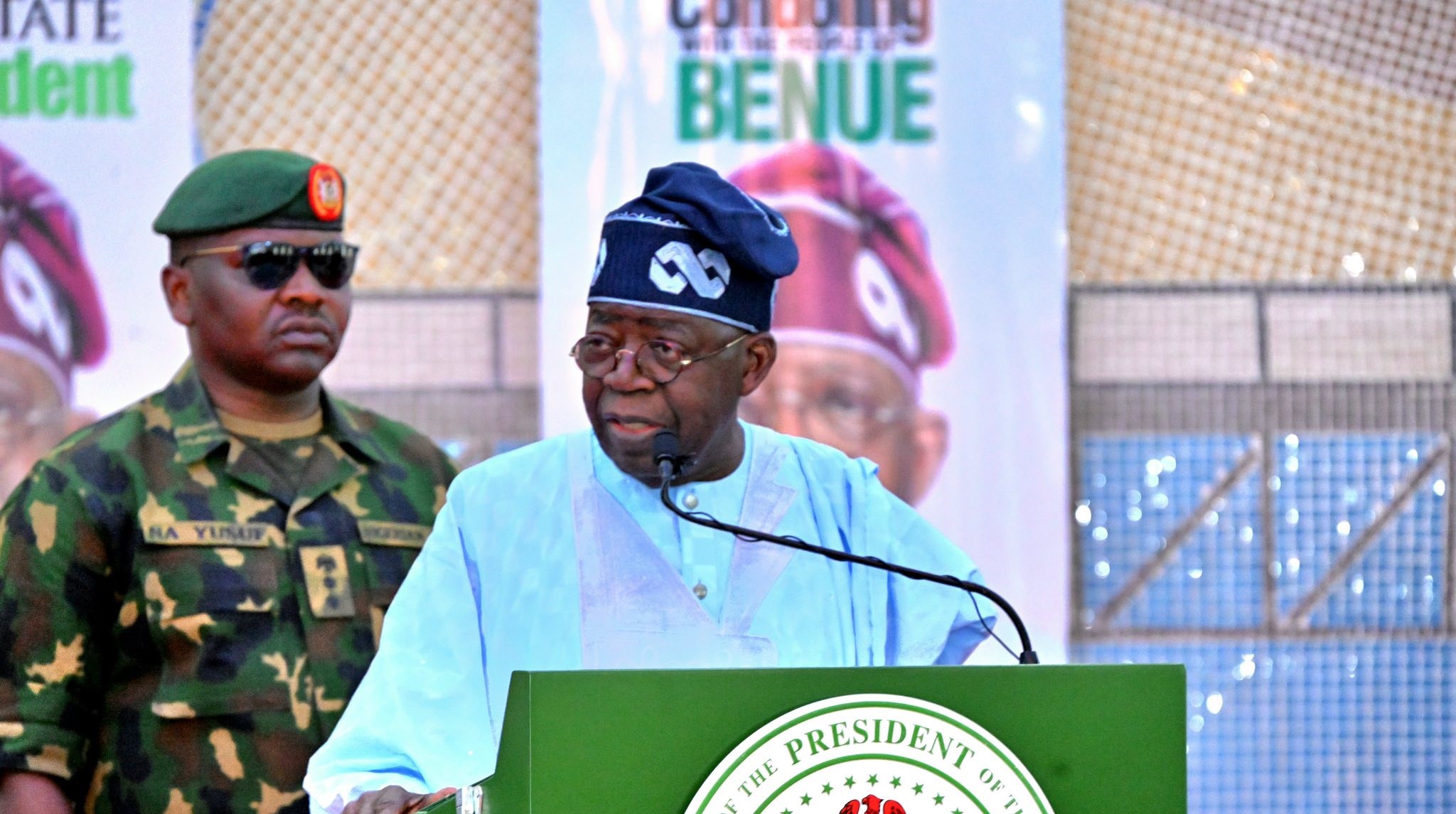
There are myriad lessons to be drawn from President Bola Tinubus visit to Benue State in the aftermath of the Yelwata killings. First, it provided the political class ample runway to soar unchallenged on the emotional tides of the tragedy, pushing thinly veiled agendas beneath the guise of national concern. Second, the very citizens who bear the heaviest burden of Nigerias national security failures, the ordinary people, unwittingly compounded the charade by failing to read the national mood at such a dire moment of cold-blooded slaughter.

In sum, the convergence in Makurdi of the political elite and swathes of grief-stricken Benue indigenes, who hoped for genuine solace from the President, devolved into a carnival of hollow rhetoric, tone-deaf speeches, and a carefully orchestrated rebuke of the governors political innocence in Nigerias treacherous arena of power play. It is hardly surprising that it took President Tinubu five days to decide on the visit, something that, in saner societies, would have occurred almost instinctively. That delay alone underscores the lack of urgency.

The visit reeked of afterthought, more a product of political recalibration than a heartfelt response to a state in trauma. Layered beneath the public optics were subtle barbs, veiled warnings, and a strategic attempt to mold the governor into a more compliant figure in the unfolding political script aimed at 2027, one riddled with roadblocks, shifting loyalties, and Benues pivotal role.

The Presidents body language spoke volumes, betraying a sense of urgency laced with political calculation. His public scolding, or, if one prefers, the tutelage of the Reverend governor, still green in the dark arts of power, came wrapped in a passive-aggressive narrative. Blame was subtly redirected under the guise of reprisal attacks and neighbourly disharmony, euphemisms that mask the long-standing reality of herders aggressive land incursions against peasant farmers in the Benue Valley.

Third, and perhaps most damning, was the Presidents failure to visit Yelwata itself, the actual site of the massacre. That omission alone, in a region desperate for healing, stripped the visit of whatever symbolic balm it might have offered to a wounded people. In any truly civilised society, no leader visits the scene of mayhem, be it natural or man-made, based solely on distant impressions or filtered reports. Such pilgrimages are anchored in
empathy, meant to reassure a grieving people that they are seen, heard, and not abandoned.

But this was not the spirit that underpinned President Bola Ahmed Tinubus visit. In choosing to avert his gaze from the gruesome aftermath of the mass slaughter, where over 200 souls in Yelwata perished, he squandered a profound, perhaps historic, opportunity to inscribe his name not just in the heart of that tormented community, but in the soul of the Tiv nation.

Security briefings, no matter how sanitised, should never eclipse the raw truth on the ground, nor
should they dampen the urgency of human compassion. What added insult to injury was the theatrical absurdity that accompanied the visit: schoolchildren lined along the roads, singing orchestrated praise songs; a carnival of banners and placards; the shrill parade of loyalists choreographed more for the optics of 2027 politicking than
the solemnity of mourning. From the Makurdi airport tarmac to the venue of empty rhetoric, it was a spectacle that reeked of misplaced priorities.

By every conceivable metric, the undisputed star of the moment was none other than His Royal Majesty, Begha U Tiv, Orchivirigh, Professor James Ortese Iorzua Ayatse, Chairman Benue State Traditional Rulers Council. His bold, clear-eyed appraisal of the enduring plight of a people edging dangerously close to extinction was nothing short of statesmanlike. In a time of national crisis, true leadership demands the courage to name things for what they areand the Tor Tiv did just that. He left no room for ambiguity, declaring in unmistakable terms that what confronts the Benue people is not a reprisal of any kind, but a deliberate, coordinated campaign, a marshal
plan, for land seizure and displacement.

This tragedy, sadly, is no longer Benues burden alone. It is metastasising into a national affliction, playing out in various forms across the country: in the unending clashes between herders and farmers, and in the simmering settler-indigene conflicts that have become an all-too- familiar refrain. During the visit, President Bola Tinubu made a number of significant remarks. Chief among them was his call on Governor Hyacinth Iormem Alia to convene a think tank, one inclusive of traditional leaders, past governors, and critical stakeholders such as the Secretary to the Government of the Federation.

This proposed parley in Abuja, ostensibly aimed at crafting a path forward, is welcome in principle. Yet it bears the markings of a well-worn ritual, an echo of the bureaucratic merry-go-round that often substitutes motion for meaning in the Nigerian polity. What the Yelwata massacre and other tragedies across Nigeria demand is not another round of ponderous consultations. They demand swift, decisive, and protective action, interventions that
save lives and secure communities. We have danced this dance before. The time for endless dialogue is past. What is needed now is resolve.

The Presidents suggestion that Governor Alia should take a cue from his peers, those who, through strategic alliances and shared intelligence, have managed inherited crises with relative success, may, on the surface, seem like sage counsel. His reference to his own tenure as governor of Lagos State, and the deftness with which he navigated periods of unrest, lends weight to the advice. Yet, such comparisons falter in the face of the grim reality confronting Benue. This is not a crisis of misgovernance or administrative inertia, it is the slow burn of a war declared on an entire people.

The Presidents proposal for the establishment of ranches in Benue may, on the surface, offer a compelling solution, if implemented to the letter. Yet, one must ask: do the Fulani herders, whose traditions are steeped in nomadism, truly subscribe to the sedentary discipline of ranching? When the pulse of their identity beats with the rhythm of open skies and untamed paths, from the savannahs of the north to the forests of the south, is it realistic to expect them to abandon the liberty of movement for fenced pastures? Their age-old impulse is not to settle, but to roam, to conquer where the terrain allows, and to assert presence wherever pasture beckons.

Benue State must draw inspiration from regional security outfits such as Amotekun in the Southwest and the Eastern Security Network (ESN) in the Southeast, as a necessary complement to whatever protection the federal government can offer her people and land. The state can harness President Bola Tinubus Forest Guards initiative or activate state-recognised vigilante groups to safeguard its expanse from the mounting carnage spreading across its vast terrain.

Sole reliance on the armed forces and the police may no longer be viable, given the dire straits in which the nation currently finds itself. As General Theophilus Danjuma recently warned, self-help may well be the only recourse in the face of the barbaric massacres witnessed in Yelwata and other parts of Benueand beyond.

30-May-2025 The AI Revolution and Future of Education

The AI Revolution and Future of Education

The Fourth Industrial Revolution is in full motion, powered by technologies that are redefining how we work, communicate, and learn. At the forefront of this revolution is Artificial Intelligence (AI)no longer a futuristic concept relegated to science fiction but a transformative force reshaping everyday life. Education, perhaps more than any other sector, stands at a critical crossroads: adapt or become obsolete.

AI is already demonstrating its disruptive power in the education sector. From intelligent tutoring systems to AI-driven grading software, voice assistants, plagiarism detectors, and learning analytics dashboards, institutions are leveraging intelligent systems to enhance efficiency, deepen engagement, and personalise learning. These tools promise a democratisation of knowledge, enabling learners to access tailored content regardless of geography or background.

Yet, as the tide of AI rises, it brings not only potential but peril.

But isnt personalised learning a double-edged sword?

One of AI's most celebrated contributions to education is its ability to personalise the learning experience. Intelligent algorithms can monitor a student's performance in real time, adapting lessons to their strengths and weaknesses. Platforms like Carnegie Learning and Squirrel AI in China use data-driven diagnostics to tailor instruction, allowing struggling students to revisit concepts while fast learners move ahead.

This individualisation is especially valuable in large classrooms where one teacher may struggle to meet diverse learning needs. With AI, students no longer have to conform to the pace of the curriculum; the curriculum adapts to them.

However, theres a caveat. Hyper-personalisation risks creating intellectual echo chambers. If AI systems continuously feed learners content based solely on their past behaviour, it may limit their exposure to new ideas and diverse perspectives. Education must not become an algorithmic bubble. Curiosity thrives on unpredictabilityand while AI is excellent at optimising efficiency, it must not come at the expense of intellectual exploration.

Despite the optimism, AIs promise remains out of reach for millions of learners, particularly in low-income and remote regions. While elite schools experiment with AI-powered labs and classrooms, many rural and underserved schools struggle with electricity, internet access, and even basic teaching materials.

In sub-Saharan Africa, where teacher-student ratios can exceed 1:100, AI could be revolutionarybut only if the infrastructure exists. Without conscious policy interventions, the AI revolution may reinforce existing inequalities rather than resolve them. Ensuring equitable access requires not only connectivity but also affordability. Open-source AI platforms and low-bandwidth applications will be crucial to bringing smart learning to the global South.

AI will not replace teachers, but it will redefine their role. Rather than being the sole source of information, teachers must evolve into facilitators, mentors, and designers of learning experiences. AI can handle administrative drudgerygrading assignments, monitoring attendance, or providing instant feedbackfreeing up educators to focus on emotional intelligence, moral development, and critical thinking.

But are teachers ready? In many countries, teacher training curricula do not include modules on digital literacy, let alone AI. Many educators still view AI with suspicion, as a threat to job security rather than a collaborative tool. Bridging this gap requires a nationwide retooling of the teaching workforceongoing professional development, hands-on exposure to AI tools, and support systems to help educators integrate technology meaningfully into pedagogy.

AI systems in education gather vast amounts of dataacademic performance, behavioural patterns, even keystroke dynamics. This data is valuable for optimising learning but also raises significant privacy concerns. Who owns this data? How is it stored, and who has access?

There have already been instances of algorithmic bias in predictive analytics used for university admissions or scholarship allocation. If left unchecked, these biases can reinforce systemic inequalities under the guise of data-driven objectivity. Ethics must become a cornerstone of AI deployment in education, with clear regulations on transparency, consent, accountability, and redress.

Few discussions on AI in education mention its environmental cost. Large-scale AI systems require enormous computational power, translating into substantial energy consumption. For instance, training a single large language model can emit as much carbon dioxide as five cars in their lifetime.

As educational institutions increasingly rely on cloud-based AI services, they must also invest in green computing practicesenergy-efficient data centers, renewable energy integration, and environmentally conscious coding.

AI is not just a tool for educationit is also a subject that must be taught. Future learners must not only know how to use AI, but how it works, what its limitations are, and how to engage with it ethically. AI literacy should be woven into school curricula from an early age, just as reading, writing, and numeracy once were.

This means teaching students about algorithms, data interpretation, automation, and critical thinking. It also means fostering creativity, empathy, and collaborative skillstraits that no machine can replicate.

Some countries are already leading the way. Singapore has introduced AI ethics and literacy into its national curriculum. Finland has rolled out a nationwide AI education program that offers citizens free online courses to understand AIs implications. These are models worth studying and adapting.

Ultimately, education is not just about content delivery. It is about growth, connection, and transformation. The best teachers do more than teachthey inspire. They notice a struggling student before an algorithm does. They nurture potential that no dataset can predict.

AI can support this human connection, but it cannot replace it. As education becomes more data-driven, we must not lose sight of its soul.

The path forward is neither about resisting change nor blindly embracing technology. It is about intentional innovation. Governments, institutions, and educators must come together to:

  • Develop inclusive policies that bridge the digital divide
  • Invest in teacher training and AI literacy programs
  • Establish ethical frameworks and data protection laws
  • Support sustainable technology use
  • Rethink curricula for a world shaped by automation and augmentation

AI has the potential to make education more inclusive, efficient, and effectivebut only if wielded with care, conscience, and clarity of vision.

The future of education lies not in choosing between human or machinebut in building a system where both work in harmony, each amplifying the strengths of the other. In this partnership, learners are not passive recipients but active participantsequipped to thrive in a world where learning is no longer a phase of life, but a lifelong pursuit.

19-May-2025 Sex, Food and Divinity...

Sex, Food and Divinity...

Sex, food, and divinity are three fundamental tripods upon which the human experience revolves. Each leg of this tripod bears its own inflection in the grand narrative of existence. Each impels a force of its own, yet all converge in a communion that defines our being. They are interwoven, interdependent, and inescapable bridges. No mortal has eluded the entire gamut of the webs these elements spin across the reel of life.

Sex, to the best of human imaginationthats ever wandering, ever probingholds multiple meanings. The first and most primal reality: sex is the instinct for procreation. It is the biological mechanism through which human form takes shape and finds manifestation on Earth. Whether steeped in romantic overture or arising from the basest of circumstances, the union of male and female produces the miracle of creation. This, undeniably, is the fulcrum of human continuity.

The second reality of sex is its role in hedonistic expression. It becomes a consensual exchange of pleasure, a carnal indulgence experienced by male and female alike in the natural order of things. In recent decades, its expressions have broadened within LGBTQ spheresan evolution, albeit considered by some as a deviation from traditional norms. Regardless of perspective, this dimension of sex dominates contemporary life for many.

The third and perhaps most esoteric reality: sex, when consciously harnessed, becomes a vortex of transcendence for the spiritual initiate. Properly channelled, sexual energy aids the ascent of the being along the spirals of consciousness. This is the realm of Kundalini awakeningwhere the life force at the base of the spine rises to the pineal glands at the base of the brain, igniting higher awareness and a holistic consciousness of body, mind, and soul.

Thus, sex serves as a vehicle for procreation, pleasure, and spiritual ascent. The manner of its expression determines whether one ascends to the pinnacle of consciousness or descends to its nadir.

Schools of Tantric Yoga emphasise conserving this spiritual energy through abstinence or moderation for the sake of inner growth. To them, sex is sacrednever to be trifled with. 

I recall reading a book a few decades ago  titled The Tao of Love and Sex by Jolan Chang, which focuses on the ancient Chinese way to ecstasy.  Born in Hangzhou, China, in 1917, Chang was a Chinese-Canadian sexologist and Taoist philosopher. He is renowned for interpreting ancient Taoist sexual teachings into a modern context.  His work emphasizes the importance of sexual health, male restraint, female pleasure, and the integration of sensuality with spiritual well-being.  Chang passed away in Stockholm in 2002.

 In the Tao of Love and Sex, Chang  advocated a specific number of sexual engagements per year, adjusted according to age, for those who wished to live long. The argument was straightforward: the more indulgent one becomes in sexual activity, the more likely one is to die young.

The rationale behind this claim is that the energy released during sex is the vital life force. Excessive loss of it diminishes vitality. Conserving this energy through moderation or abstinence, on the other hand, increases longevity by redirecting the life force toward creativity, awareness, and inner vitality.

Contemporary discourse, often fuelled by a flood of contradictory studies online, frequently posits that inadequate sexual activity is a contributing factor to prostate enlargement or cancer in middle-aged men. While such assertions may contain a sliver of biomedical insight, they risk reducing sex to mere mechanics. In the realm of esoteric wisdom, sexuality transcends the physicalit is regarded as a sacred current of life force, a potent energy not to be squandered. Here, sex is not a remedy to be prescribed, but a ritual to be reveredengaged with intention, restraint, and spiritual awareness.

Food, on the other hand, is an irreplaceable component of our existence. While one may live fully without sex, survival without food is impossible. Yet food, too, carries a paradox. Overindulgence becomes a hindrance to spiritual growth and a threat to physical health. The bodys cells and tissues rely on food for rejuvenation and optimal function. Our entire biological system hinges on food intake, metabolic processing, and the subsequent release of nutrientsproteins, carbohydrates, vitaminsessential for life.

But for the seeker of truth, excessive food consumption is more a curse than a blessing. It weighs down the spirit with coarse material energy, making transcendence more difficult. In contrast, the food of the spirit is ether or prana, as described in esoteric textsspiritual energy that sustains and uplifts. This energy builds and is maintained only through right eating habits and meditation.

Meditation, in this sense, is not mere chanting or repetitive prayer. It is a deeper communion with the Source, enabling one to tap directly into the energy that atomises the universethe ether, the prana, the photons of divine light.

Picture the spirit as a balloon lifted by a current of hot air. When that air ceases to rise from beneath, the balloon deflates and falls. So too the human body: the moment the life force ceases to flow, death ensues.

Divinity, at its core, is mans return to Source. It is the awareness of origin, the harmony of self with the ocean of universal consciousness. Divinity transcends religion; it is not bound by dogma. Rather, it is the experience of self-realisationman recognising the infinite within himself. It is the cosmic dance of knowing that while man is but a speck of the universe, the universe itself is contained within that speck. He is, in essence, the universe made flesh.

The nexus between sex, food, and divinity emerges not merely as evident, but as profound. These are not just biological urges or survival ritualsthey are portals into the sacred, thresholds where flesh and spirit converge. In the mystery traditions of East and West alike, this triaderos, nourishment, and the divineserves as a cipher for decoding existence.

In the Kabbalistic Tree of Life, Yesodthe foundation governing sexual energyacts as a bridge between instinct and higher consciousness, ascending toward Keter, the crown of divinity. Sex, then, is not a shameful necessity, but the pulsating engine of lifea divine echo of Ein Sof, the infinite.

Food, too, carries sacred weight. In The Gospel of Thomas, Jesus declares, If you fast not from the world, you will not find the kingdom. Yet, he also breaks breadsuggesting that conscious eating becomes sacrament. Like the Eucharist, the act of nourishment is not merely digestion, but communion: grain into body, grape into blood, matter into spirit.

Ancient Hindu texts, such as the Taittiriya Upanishad, speak of the annamaya kosha, the "sheath of food," as the body's outermost layer. Beyond it lies the anandamaya kosha, the sheath of blissaffirming that the path from sustenance leads to divine joy, ?nanda.

Sex and food, far from distractions, are vehicles of the sacred. The Song of Songs, that lyrical biblical ode, praises the lovers body with the reverence of temple artifacts: Your navel is a rounded goblet that never lacks blended wine. Your waist is a mound of wheat encircled by lilies (7:2). Erotic intimacy and agricultural abundanceflesh and fieldare sanctified in unison.

The early Church Fathers, particularly within the desert mystical tradition, recognised this interweaving. Saint Augustine, in Confessions, reflects on how bodily hunger and sexual desire mirror the souls deeper yearning: You have made us for yourself, O Lord, and our hearts are restless until they rest in you. That restlessness marks the human conditionnot just for touch and taste, but for the Source behind all longing.

These elements are not discrete compartments of life, but interwoven currents flowing into the ocean of being. To eat is to remember creation, to reconcile with mortality. To make love is to echo genesis. To worship is to reach beyond the fleshthrough it. They are not contradictions, but concentric circles of the same sacred fire.

To understand one deeply is to sense the resonance of the others. The Tantric Yogi tasting sacred food, the mystic in silent prayer, the lovers in their unionall ascend the same ladder, each rung purified of ego, each act a step toward the Divine.

Together, they embody the totality of our condition: our biology, our longing, our transcendence. We eat, we love, we worship. And in each act, when imbued with presence and reverence, we do not descend into fleshwe rise into light.

13-May-2025 The Scathing Sword of Public Trust

The Scathing Sword of Public Trust

The social contract is a fragile architecturea high wire suspended over the abyss of public conscience. To walk it is to perform a delicate balancing act, one that tests the moral fibre of those entrusted with power. It is no mere metaphor to call it a double-edged sword. On one edge lies the lure of authority, prestige, and influence; on the other, the ruthless consequences of betrayal. Flip the coin of public trust, and the outcome can either elevate or annihilate. Woe betide the one caught on the jagged edge of its wrath.

Trust is sacred. Public trust, doubly so. To safeguard it is to inscribe ones name into the annals of history with the ink of honour. To violate it, however, is to tumble like Humpty Dumptyirreparably shattered in the chronicles of public life. Sadly, in our nations unfolding tragedy, far too many have plunged their hands deep into the public till, greased not by duty but by insatiable greed. They do not merely abandon the reins of consciencethey burn the bridles altogether, galloping into infamy on steeds of avarice.

What drives this moral decay? The lust for unbridled power and inordinate wealth. A dangerous amnesia has taken root among many public officials: they forgetor choose to ignorethe fleeting nature of power. They overreach, weaponise influence, and normalise the plunder of public coffers. Theft has become routine, and routine has become numbness. The nation watches, aghast but weary, as theft parades itself as success.

In functioning societieswhere accountability thrives and institutions stand uprightpublic trust is sacred and inviolable. Abuse it, and you face swift retribution. The reverse, alas, is Nigerias predicament. Here, corruption not only festers but flourishes. Those entrusted with safeguarding the nations wealth flaunt stolen riches like badges of honour, while enforcement agencies look on, hamstrung or complicit. The Economic and Financial Crimes Commission (EFCC), the Independent Corrupt Practices Commission (ICPC), the Code of Conduct Bureau (CCB), and even the police have all faced serious allegations of corruption and collusion. When the watchdogs dine with the wolves, the flock is doomed.

Yet, amid this darkness, glimmers of hope flicker.

The recent protests in the United Kingdom, demanding the extradition of Mele Kyarithe immediate past Group Managing Director of the Nigerian National Petroleum Company Limited (NNPCL)are a refreshing breeze of civic conscience. As reported by The Sun News on May 12, 2025, concerned Nigerians rallied outside the Nigerian High Commission and the UK Home Office under the banner Rescue Nigeria Now. Their demand? That Kyari be returned to Nigeria to face the music of damning corruption allegations linked to his tenure from 2019 to 2025.

The details are damning. Billions allocated for the rehabilitation of the Warri, Kaduna, and Port Harcourt refineries have vanished into bureaucratic smoke, with no functional output to show. The opaque subsidy regime under Kyaris watch allegedly teemed with inflated claims, offshore shell games, and untraceable transactions. Protesters carried placards with messages like London is not for public officials who abused public trust, echoing the frustration of millions at home and abroad.

The petitioners arguerightlythat allowing Kyari to remain in the UK undermines not just Nigerias anti-corruption war but also violates Britains own anti-money laundering laws. If illicit funds truly flowed through British financial channels, then silence is complicity. Their appeal is not only for repatriation but for justice, restitution, and moral reckoning.

Kyari has dismissed the allegations as mischievous, claiming to be on a well-deserved rest abroad. But the optics are damning, and the timing suspicious. Whether or not he cooperates with Nigerian authorities, the clamour for justice will not be silenced.

Ultimately, the recovery of stolen wealth is not just an economic imperativeit is a moral one. For every naira looted, a child is denied education, a hospital lacks medicine, a road remains a death trap. To steal from the public purse is to steal futures, dreams, and dignity.

Nigeria stands at a crossroads. It can either continue down the well-trodden path of impunity or summon the courage to confront corruptionno matter how high the collar or sacred the cow. The Mele Kyari saga is not just about one man; it is a litmus test for our national soul.

Will we fail again? Perhaps, as in all things Nigerian. Perhaps, a new dawn of fiscal accountability is feasible.

The likes of Mele Kyari are not isolated cases; Nigeria is replete with individuals who have exploited their positions of power to plunder our commonwealth and stash the proceeds in foreign vaults. This systemic looting continues to undermine our national development, depriving citizens of basic infrastructure, quality healthcare, education, and economic opportunities. If we are serious about building a prosperous and equitable nation, the government must not only speak against corruption but be seen to act decisively. It must pursue and prosecute offendersno matter how highly placedand implement robust reforms to seal the loopholes that enable such theft. Only then can we begin to reverse the damage and secure a better future for all Nigerians.

The primitive accumulation of wealth remains one of the most morally bankrupt instincts of humanityan impulse driven not by necessity, but by an insatiable appetite for dominance and self-aggrandizement. In contrast, enlightened mindsthose rare souls attuned to the rhythms of compassion and social justiceoften endeavour to redirect the course of human affairs towards nobler ends. Such individuals, guided by a deep-seated empathy for the marginalised and the impoverished, are inclined to relinquish their earthly riches as a testament to their values before embracing the final rite of passage.

A sterling example of this higher moral calling is Bill Gates, who has pledged to donate over 200 billion USD of his wealth within his lifetime. This is not merely a philanthropic gesture, but a profound expression of ethical convictiona willingness to uplift others and invest in the shared future of humanity. His actions stand in stark contrast to the prevailing ethos among many of the wealthy elite in Nigeria and, more broadly, across Africa, where the plundering of public wealth continues with impunity and is too often celebrated as cleverness rather than condemned as corruption.

The difference is telling. It lies in the architecture of conscience, the moral fibre that anchors ones sense of duty to humanity. While some hoard wealth to fortify their legacies of greed, others disperse it to kindle hope in lives they may never meet. It is in these choices that the true measure of greatness is foundnot in the size of a bank account, but in the depth of one's humanity.

06-May-2025 Harnessing 'The Power of Free'

Harnessing 'The Power of Free'

The Power of Free is not a phrase of my own invention. I first encountered it during an illuminating conversation with my friend, Akinloye Tofowomowidely known as Akiin Shuga of the iconic Shuga Bandwhile we explored the contours of a potential book project in his Lagos home three years ago. Since then, the phrase has echoed through the chambers of my thoughts, shaping my professional journey as a ghostwriter and resonating even in the quiet corners of my personal life before that fateful meeting.

In the relentless pursuit of our aspirations, values, and higher callings, we often overlook the invisible engine that quietly fuels much of our progress: the principle of free. Like a river flowing unimpeded toward the sea, propelled by unseen forces, the power of free charts its course with a grace that belies its strength. It is the gentle current beneath our ambitions, the unseen hand behind serendipitous connections, and the silent whisper that coaxes dormant talents into bloom. 

Nature is the grand testament to this truth. Airfree to inhale, free to exhale. Watergranted in its raw abundance, refined only by our hands. The lush fields, the towering trees, the stone-laden mountains concealing treasures in their depthsall of them manifestations of natures benevolence, freely given, awaiting only our recognition.

To harness the power of free is to understand that growth does not always come with a price tag. It is a seed, potent and self-willed, that flourishes in openness and generosity. It is a honeycomb hanging on the branches of human interaction, needing only a curious touch before the swarm comes to pollinate, distill, and sweeten the world with purpose and possibility.

In clearer terms, the power of free is the launchpad from which potentialraw or refinedtakes flight. It is the fertile ground where talent is first nurtured before it is applauded. You may carry within you a gift, a spark, a vision, waiting not for perfection, but simply for recognition and release.

When next you consider your next move, your next act, or your next collaborationpause, and remember: The Power of Free might just be the most powerful force in your arsenal. What does The Power of Free truly mean? At first glance, it may seem like a contradiction in a world where value is often measured in currency, and time is exchanged for profit.

Yet beneath its modest name lies a principle that has built empires, forged networks, and transformed obscurity into influence. The Power of Free is the conscious decision to giveyour time, your talent, your expertisewithout demanding immediate compensation. It is the unglamorous art of service born not of naivety, but of a profound understanding of how value circulates in unseen ways. In a world obsessed with instant gratification and monetised validation, this can feel almost heretical.

Why give something for nothing? Why pour energy into a task that doesnt pay the bills? But heres the truth: if your first instinct is to equate talent with income, then you may have misunderstood the essence of creative labour. Passion births talent. But passion alone is not currency. Recognition is the bridge between your ability and its reward. And recognition often begins with generosity.

You see, talent is not a finished product. It is a seedalive with potential but dormant until planted in the fertile ground of opportunity. And where is that ground found? In the minds and hearts of others. By offering your work freelystrategically, not endlesslyyou give that seed a place to sprout. You allow people to experience your gift without the filter of a price tag, without suspicion, without hesitation. And that is often the beginning of everything.

Let me draw from my own story. As a ghostwriter, editor, and publisher, I have written, revised, polished, and nurtured countless projects for othersoften for free. There were days when it felt foolish, even wasteful. The world whispered, Youre being used. And yet, I knew better. Every unpaid article, every quietly edited manuscript, every uncelebrated consultation was a brick in a structure much larger than I could see.

Those late nights of labour, those weekends sacrificed on the altar of service, became my quiet offerings to a future I dared to believe in. Some of those I helped never looked back, never even said thank you. But someone always noticed. And when they did, they came not just with compliments, but with keyskeys to doors I never knew existed.

Today, my most treasured professional relationships, the networks that sustain my career, the referrals that flood my inboxthey all trace their roots to moments when I said: Let me help you, without a fee. That is the Power of Free. Not free as in worthless, but free as in fearless. Free as in planting a forest without needing to own every tree.

So, if you are at the start of your journeyor even midway through itand you are wondering whether its worth offering your skills for nothing, ask yourself this: What if free is the most powerful currency in your arsenal? What if generosity, offered wisely, is the very thing that will make you unforgettable?

Remember, the world may not always pay in cash. But it always pays in kind. And sometimes, the kindest reward is a door you never thought would open. Ive forged friendships I never could have imaginedkindred spirits from corners of the globe I may never physically treadall because of one simple, radical idea: the power of free.

Free has opened doors I didnt even know existed. It has ushered me into rarefied rooms, into conversations and communities typically reserved for societys highest achievers. And who knows what tomorrow holds? Perhaps the winds of opportunity yet to blow will still be stirred by that same powerful current: the power of free.

Heres the truthany talent, when nurtured and exposed, can evolve into a thriving, income-generating engine. But first, dare to give it away. Offer your skills without price tags. Approach decision-makers, tastemakers, and those calling the shotsnot with a pitch, but with value. Share your voice, your vision, your craft. Not for the payout, but for the platform.

Because when youre generous with your gift, people take notice. And when they do, momentum builds. Recognition follows. Eventually, even those who once received your services for free will returnthis time, ready to pay. Thats the magic. Thats the full-circle reward.

Thats the power of free!

Never be discouraged when youre grinding through the humbling journey of offering your talent for nothing. It bruises the egoespecially when the pantry is bare and youre out there, pitching your gift for free while others charge for less. Its not just the hunger that bites, but the sting of doubt from those you love. They whisper that youve lost it, or worse, that youve thrown away your sense. But deep down, you know this: what you carry is pricelessit only needs to be seen.

Its not madness to give your best without a price tag. Its strategy. Its sacrifice. Its the hard, often invisible work of letting the world catch up to your worth. Keep going. Stay true to what you do best. The universe has a long memory and an even longer arm. It rewards those who plant value without demand. As certain as breath and breeze, your harvest is near.

The Power of Free Is no weaknessit is a waiting crown. Wear it boldly.

28-Apr-2025 Why Africa must queue behind Burkina Fasos Ibrahim Traor

Why Africa must queue behind Burkina Fasos Ibrahim Traor

Africa is in dire need of self-cleansing or rebirth. This urgency is never more pressing. The continent, whose wealth has long been overshadowed by the invasive forces vying for dominion over its soul, must respond promptly to the challenge of rising together to confront the hawkish West that hovers like vultures in the sky. The unity of Africa is sacrosanct. Its not just an aspiration but a vital necessity for the survival of a continent that continues to bleed under the weight of mental servitude and an insidious culture of economic subjugation. 

As long as Africa refuses to elevate its collective psyche in alignment with the imperatives of the changing world, harnessing its boundless potential as the economic powerhouse it could be, it will remain trapped in a cycle of divisionperpetuated by external forcesthat cripples its progress. In the face of such internal disarray, the continent will forever struggle against its most formidable adversary: itself.

Africans remain the staunchest enemies of their own robust and resource-rich continent. The absence of internal cohesion mechanisms, a unified vision supported by a common currency, and the persistence of self-imposed trade barriers between states and regions highlight Africas ongoing fragmentation. Add to this the unresolved language question, and it becomes clear why the continent struggles to forge a formidable economic and political front capable of resisting Western dominance. The former Organisation of African Unity (OAU), now rebranded as the African Union (AU), stands today as little more than a symbolic appendage to a continent in perpetual crisis.

The AU and several sub-regional bodies such as ECOWAS and ECOMOG have played significant roles in fostering regional cooperation and integration. However, a holistic unity capable of redefining Africas relationship with the rest of the world remains largely aspirational. Numerous challenges plague the continent: discordant voices, competing interests, and ideological divisions that leave its frameworks vulnerable to external infiltration and exploitation.

The West, ever vigilant, hovers like a predator, poised for the moment to strike. With carefully placed dominion over key global economic and political platforms, the West's hawks sharpen their talons, ready to stifle or devour any semblance of progress. Their eyes are ever watchful, their beaks well-honed to seize control of Africas precious resources, a pursuit that sparked the historic scramble and partition of the continent. The veneer of independence for African states was, in truth, a farce. The exploitative schemes of the West continue unabated, their grip firm on every conceivable lever of power, shaping Africa's fate according to their agendas. The exploitation of Africas wealth is as relentless as it is discreet, and it can only be undone through a unity of thought, strategic action, and resolute engagement. The time for complacency has passed. The moment to act is nowor never.

A few visionaries have attempted to tilt the scales, striving for a more self-reliant and cohesive African future. The late Libyan leader, Muammar Gaddafi, once championed the bold idea of a United States of Africa, an ambitious vision where self-sufficiency, progress, and homegrown solutions took centre stage in Africas governance. His dream of an indivisible Africaone not bound by foreign interests but driven by its own destinywas tragically cut short by the sharp arrows of the West. They painted him as a tyrant drunk on power, his leadership style condemned as a threat to Libya's prosperity. They sold the world the lie that Gaddafi was corrupt, transforming Libya into his personal fiefdom. The Wests media machine, ever the accomplice, fashioned him as a villain, obscuring his genuine efforts to foster stability and development in the country. In their eyes, Gaddafis vision of a stronger, independent Africa posed a dangerous challenge. Thus, they orchestrated his demise, aided by the USA, to prevent the rise of another regional superpower.

General Sani Abacha, of controversial memory, was a thorn in the side of the West. Unlike many of his contemporaries, he saw no need to court Western approval. He refused to borrow from the Bretton Woods institutions, the Paris Club, the IMF, or the World Bankbodies widely viewed as tools of neocolonialismyet managed to stabilise Nigerias economy when crude oil prices hovered below $17 per barrel. Through the Petroleum Trust Fund (PTF), he launched an ambitious programme of infrastructural development, building roads, hospitals, and schools nationwide, despite his reputation as a repressive military ruler. Many believe that his economic independence and defiance of Western influence ultimately led to his death, allegedly with the complicity of local collaborators.

Captain Thomas Sankara of Burkina Faso met a similar fate. His "crime" was not failure, but rather his genuine commitment to his peoples well-being. Sankara, much like Gaddafi, sought to liberate his nation from the choking grip of former colonial powers. He envisioned a Burkina Faso where the dreams of its people could take flight, unencumbered by foreign influence. But his closest ally, Captain Blaise Compaor, would betray him in a bloody coup, orchestrated in part by the interests of France, who could not tolerate Sankaras independent vision. Sankaras only sin? Challenging the imperial grasp of his former colonial masters. His death was not just a political tragedyit was a message to any leader who dared to envision an Africa free from foreign control.

The truth remains that both Anglophone and Francophone African nations are still, in many ways, subservient to their former colonial masters. Independence, as symbolised by national flags and constitutions, remains largely a faade. Behind the curtain, the policies of these nations are still subtly steered by London, Paris, and Washington. Any African leader who dares to defy this system is swiftly labelled an enemy of the West. The relationship between France and its former colonies exemplifies this imbalance. France continues to siphon immense wealth from its former colonies, with recent revelations indicating that it generates over $500 billion annually from its African holdings. Not a single African country colonised by France controls its own currency or foreign reservesthese are managed in Paris. Their military personnel are trained in France, and their arsenals of war are supplied by the same power that once oppressed them. In countries like Senegal, Mali, Burkina Faso, and Cte d'Ivoire, the influence of France is so deep that the line between French and African identity is often indistinguishable.

It is no surprise, then, that when any African nation dares to break free from this imperial hold, it faces vehement resistance, threats, and, at times, violent retribution. The imperial hawks will stop at nothing to ensure that their stranglehold on the continent remains unchallenged. The message is clear: for Africa to truly rise, it must first uniteresisting the internal divisions that have long been exploited by external forces. Only then can it reclaim its rightful place on the global stage, not as a passive resource, but as a dynamic and sovereign force, capable of shaping its own destiny.

Keeping Africa in a state of perpetual dependency is a recurring feature of Western foreign policies and financial aid. This is what Burkina Fasos current leader, Captain Ibrahim Traor, is confronting. 

Captain Ibrahim Traor has carved his place in history as the second-youngest head of state globally at 37 years old,  rising to power in Burkina Faso after toppling interim president Paul-Henri Sandaogo Damiba in a swift coup in September 2022. From the outset, Traor committed himself to steering his nation on a sovereign path, breaking away from the heavy influence of former colonial master France. Despite facing waves of smear campaigns, foreign-backed protests, and even assassination attempts, he has stood resolute, defending the dignity of his people. Where others have falteredsuccumbing to corruption, suppressing dissent, and breeding decay, much like the painful decline seen in parts of Nigerias central regionTraor has remained steadfast in his commitment to the trust placed in him.

Against this backdrop, it becomes evident that Africa can no longer afford to stand divided. The fate of Captain Ibrahim Traor in Burkina Faso is no longer the concern of one nation alone; it is a clarion call for the entire continent. His sterling steadhis audacity to carve a path unshackled from colonial chainshas made him both a symbol of hope and a target for imperialist hawks circling overhead.

History warns us: whenever a son of Africa dares to rise, the old empires marshal their forces, cloaking exploitation in the garb of diplomacy, sanctions, and sponsored unrest. Traors resistance to subjugation is not merely for Burkina Faso; it is for Lagos and Dakar, for Kinshasa and Kigali, for all the ancient rivers and sunlit plains where our ancestors once walked free.

If Africa fails to rally around him now, if we allow him to be isolated and overwhelmed, we betray not only Traor but the dream of a sovereign continent. His struggle must become our struggle. His stand must awaken a continental consciousness that transcends borders drawn by foreign hands. In defending him, Africa defends the principle that her destiny is hers alone to shape.

Traors courage must inspire a pan-African resurgencenot a unity of words, but a unity of will. A unity forged not merely by history's shared wounds, but by the burning resolve to safeguard the few brave enough to challenge the old order. Africa must gather, not as disparate nations jostling for favour, but as one people rising to protect the future Traor represents: a future where no African leader bows before imperialist interests, and where no African child grows up a stranger to freedom.

In Captain Ibrahim Traor, Africa has been given a rallying point. In standing with him, Africa stands with herself.

24-Apr-2025 Nigeria and the Politics of Numbers...

Nigeria and the Politics of Numbers...

Politics is, and has always been, a game of numbers. It evolves, devolves, and revolves around numerical strength. No political calculus can be considered complete without the indispensable variables of numbers. Twist the equation in myriad ways, shade it with ideology or strategythe outcome is still a final tally. The greater the number of constituents a politician can rally, the higher the chances of acceptability and, ultimately, electoral triumph. Power dynamics are drawn and defined by numerical dominance and the zones of influence wielded by political actors. Strip numbers from the daring and often witty theatre of politics, and what remains is a sterile canvasa chaotic interplay of guesswork and futile ambition.

The quest for influence, often reaching beyond traditional power or political frameworks, defines much of human ambition. From coercing adversaries into submission to outright purchasing of loyalty through fair or foul means, the totems of political engagement remain evident. In this arena, power without influence is feeble; influence without power, even feebler. Politics, therefore, morphs into a dual-purpose mechanisma veritable fiatfor acquiring both. Ironically, for the political class, it is not so much the application of these tools in fulfilling the social contract that matters, but the means by which they are obtained. In this peculiar ecosystem, the end invariably justifies the gamenot the other way around.

Nigerias democratic experience continues to be viewed through the prism of numbers. Even when the integrity of these numbersor the components that constitute thembarely registers in final outcomes as benchmarks, the political discourse remains firmly rooted in numerical mystique. Take Northern Nigeria, for example: it consistently parades its numerical clout as the game-changer in any presidential equation, citing its high number of registered voters. Northern elites have elevated this rhetoric to a symbol of political dominance, proclaiming that no Nigerian can clinch the presidency without northern endorsement. Whether that holds water or not, the South vocally counters with its own weight, asserting that no president can emerge without its decisive backing. This claim, though bold, is not without meritit represents a verifiable check in the larger democratic ledger.

Within this grand chessboard of numbers, a recent revelation by iconic comedian Ali Babagleaned from an unlikely mentorship with former President Olusegun Obasanjooffers a masterclass in political maneuvering. Ali Baba, in a widely circulated video, recounted a lesson he received from Baba OBJ via WhatsApp when it seemed he had wandered into the murky waters of politics. Central to OBJs tutelage? Numbers.

According to Ali Baba, Obasanjo told him plainly: To become the president of Nigeria, you need the governors of seven statesLagos, Rivers, Delta, Bayelsa, Kaduna, Kanoand the Central Bank of Nigeria. While the CBN Governor isnt technically a state governor, these seven loci represent the deepest political war chests in the federation. These are the bastions with the highest monthly federal allocations and internally generated revenues. Secure them, and the political equation bends favourably toward your ambition.

In addition, OBJ, according to Ali Baba, advised him to gain control over 44 of the most influential and strategic local governments out of Nigerias 774. These LGAs, too, are key tactical assets in the political power gameveritable launch pads for consolidating influence across the federation.

While Ali Baba hinted at more lessons from the elder statesman, it is prudent to focus on these foundational strategies. They represent the essence of the matter. Given OBJs storied political careerboth as a former military Head of State and a two-term democratic presidenthis permutations offer a telling glimpse into the machinery behind the Aso Rock gates. With 2027 on the horizon, the implications of his insight are as clear as day.

Indeed, the signs are unmistakable. One doesnt require a crystal ball to perceive the shape of things to come. The tug-of-war for the soul of Rivers State is already underway. Governor Siminalayi Fubara, according to whispers from the grapevine, may be coerced into defecting to the ruling All Progressives Congress (APC) as a precondition for reinstatement after a potential declaration of emergency rule by President Bola Ahmed Tinubu.

Just recently, the Governor of Delta State, Sheriff Oborevwori, and his predecessor, Ifeanyi Okowa, defected from the Peoples Democratic Party (PDP) to the APC. This political migration lends credence to OBJs power play blueprint and its far-reaching resonance in contemporary power negotiations.

Lagos State, of course, remains a defined entity, solidly tethered to the presidency. The stateand indeed the entire Southwesthas long been the bastion of Bola Tinubus political machinery. Since the passing of Obafemi Awolowo, Tinubu has assumed the role of de facto leader of the Yoruba political spectrum. Meanwhile, his son, Seyi Tinubu, has been making visible inroads into the North, particularly Kano and surrounding states. Whether this gambit will fracture the Norths political unity remains uncertain. Yet, the cracks in the monolithic northern bloc are beginning to show, signaling that the so-called political certainty of the North may be nothing more than bravado in a rapidly shifting landscape.

The prospect of Nigeria becoming a de facto one-party state looms ever larger, as a flood of defections from opposition parties into the APC continues apace. It smacks of a carefully orchestrated consolidationone executed with precision by a seasoned political tactician operating at peak form.

In the face of a potentially coordinated opposition push to dislodge the incumbent in 2027especially one anchored by Northern political heavyweightsOBJs roadmap could prove decisive. If his recipe holds true, the path to political relevance for challengers becomes daunting, if not near impossible.

Granted, President Tinubus two-year track record has left much to be desired. Rising poverty, runaway inflation, growing insecurity, unchecked killings in Benue and Plateau States, rampant kidnappings, and the ripple effects of the abrupt fuel subsidy removal all weigh heavily on the electorate. Yet, in the grand chess game of Nigerian politics, he holds the acesnot just as president, but as Commander-in-Chief with expansive powers and unmatched strategic nous.

With the Presidents assent to the National Assemblys legislation granting full autonomy to local governments, a seismic shift has occurred in Nigerias political architecture. Monthly subventions from the federation account, as envisioned, will now flow directly into the coffers of the 774 Local Government Areasunfettered by the meddling hands of state governors. In this recalibrated power matrix, the LGAs are, by principle and purse, beholden to the Piper who pays the tune. When the political drums begin to beat and the dust of electioneering rises, these grassroots strongholds will not merely be observersthey will march as foot soldiers, loyal and mobilised, in the high-stakes theatre of electoral warfare.

Moreover, elections in Nigeria have become more imagined than genuinely felt. Our democratic experiencesince independencehas been riddled with fraudulent elections, masked in legitimacy, often crowning mediocrity in place of excellence and vision. 2027 may just be another charade at democracy.

We await, breath held, the next gust in this political tempest. Will a man who could not be stopped when he was outside the seat of powerwho ascended despite resistance from even his own predecessorbe so easily unseated by political journeymen hungry for a new lease of relevance?

We wait to see if the man destiny has seemingly anointedone who transcends ethnic and religious fault lines with a blueprint of inclusive developmentwill emerge. We long for impassioned strides stripped of parochialism, for leadership that gives life to our collective yearnings. And we wait, still, for that long-promised sigh of reliefthat amidst our fumbling in the shadows of misrule, there flickers a light at the tunnels end. That is the promise our chequered history still owes us. And the now, more than ever, demands it.

15-Apr-2025 Bloodbath at Noon...

Bloodbath at Noon...

Theres a dastard movie on the Plateau. Not one for the lily-livered. The spectral splash of innocent blood. Just as troubling as the bloodbaths in the Benue valley.  The gory flicks on the spawn are the kinds that send numbing sensations to the marrow. Ascribe these as the new normal. The free-rein terror of blood thirsty killers. Often the macabre weaving of land usurping herders. Or settlers-indigenes jousting for supremacy. Whole communities have been disemboweled as a result. Hundreds of lives have been sent prematurely to the beyond. 

The tally of the dead on the Plateau just a day ago was 51 as reported in the mainstream media. A few days back, it was also a similar count. Hapless villagers now scamper helter-skelter to wherever safety could be found. Their presumed protector, the government, appears impotent in the face of the marauders invincible heckling of their targets with absolute ease. 

The plateau is on the boil again. The cauldron of death is fast brimming with the blood of the innocent. The Benue valley too has never known sustained peace for decades. Fulani herdsmen have become the awed villains and worst nightmares of peasant farmers. Empty villagers litter everywhere. IDP camps swell with hordes of homeless people.

In both scenarios, pregnant women have been raped and maimed, innocent children killed in droves, men in their ancestral homes slaughtered like herds in an abattoir, many villages burnt, farmlands utterly destroyedand these remain the stuff of the sterner news that buffet our ears and make the headlines. For the umpteenth time.

The endless conflicts between settlers and indigenous peoples can be traced to land grabbing antics. The perennial rhetoric of the political elite and the prevailing government inertia does not help matters eitherit engenders a discourse often steeped in calculated invective and unyielding ambition. The ensuing theatre is that of perpetual strife. Even the media, far from vociferously condemning these relentless, audacious perpetrators and land usurpers, appears to offer only muted criticism. A governmental approach marked more by verbose declarations than by decisive, coherent action, leaving a trail of disillusionment in its wake, unfolds. 

Simultaneously, the North-East has been scarred by the relentless ravages of Boko Haram since the early 2000s. The visceral, blood-soaked realities of this region have only darkened over time. The government still struggles to mount an effective response against an ever-evolving menace. It remains a grim battleground, where each day brings new horrors. The stark contrast between impassioned rhetoric and tangible results becomes all too evident.

A government that came fully hyped to out-perform its forebears cannot afford to play the Ostrich in matters of national exigency. Securing lives and property is the primary responsibility of any government. The people on the Plateau as well as the people in the Benue valley deserve prompt and far-reaching federal governments response. One thats commensurate with the heightened atrocities in those domains. 

If a state of emergency could be mooted in Rivers Stateonce a poster child for peacesimply because of the messy fallout between political heavyweights Minister of the Federal Capital Territory, Nyesom Wike and Governor Siminalayi Fubara, then what excuse remains for the deadly silence in Plateau and Benue, where bloodshed is fast becoming routine? These are not political intrigues; they are battlegrounds. Entire communities are under siege, and lives are being lost with chilling regularity. Leaving the crisis to state governors alone is like tossing a bucket of water at a wildfire. Insecurity anywhere is a threat to security everywhere. Nigeria cannot afford selective urgency. Its time for the federal government to stop watching from the sidelines and take bold, coordinated actionnow.

The early warning signs emanating from Nigerias conflict zones have long offered critical insight into the underlying causes of unrestand the viable paths toward resolution. Yet, time and again, these red flags have been ignored, downplayed, or met with mere lip service. The consequences have been dire. Conflict, regardless of its guise, does not arise in a vacuum. It is often the culmination of unattended grievances, systemic neglect, and avoidable provocations.

The carnage on the Plateau, for instance, is not without a traceable lineage. Its rootsboth immediate and remotecan be identified and addressed. If only the political will matches the urgency of the crisis. A particularly stark example lies in the ongoing clashes between Fulani Herders and Agrarian Communities in Benue State. These confrontations, often fatal, are the direct consequence of an outdated and increasingly untenable practice: open grazing.

Fulani Herders, are emboldened by a perceived constitutional right to graze freely across the federation. They therefore routinely encroach upon farmlands. For farmers, these incursions are more than mere trespassesthey are existential threats. The destruction of crops represents not only the loss of food but the collapse of livelihoods painstakingly nurtured over seasons. The resulting tension has festered into a cycle of violence and reprisal, destabilising entire communities.

The way forward is neither elusive nor novel. In progressive societies, ranching has long supplanted open grazing as a sustainable and secure method of livestock management. Nigeria must urgently embrace this modelnot merely as an agricultural reform, but as a national security imperative. Anything less is a disservice to the countless lives already lost and a perilous gamble with the nations fragile peace.

Beyond the visible destruction of lives and livelihoods on the bloodstained soils of Plateau and Benue lies a more insidious terror that gnaws at our collective psyche. A silent siege wrapped in fear, violence, and lawlessness. Our highways, once symbols of connection and progress, have become corridors of dread. Kidnapping for ransom, armed robbery, and the ever-mutating menace of banditry now reign supreme, leaving citizens at the mercy of predators who have no regard for human dignity or state authority.

The roads themselves are treacherous enoughcrumbling, narrow, pockmarked with neglect. But it is not the potholes that paralyse the heart; it is the ever-present fear of vanishing into the dense bushlands, abducted by faceless marauders who barter lives for cash. Each dawn breaks with yet another grim tale: passengers dragged from vehicles, families hurled into grief, ransoms demanded in chilling tones. Banditry, once a distant threat, has now claimed a permanent place in our national vocabularya fixture in headlines, and an affliction in the minds of all who must travel.

This is not just a breakdown of infrastructure; it is a breakdown of trust. Trust in the states ability to safeguard its people. The time for reactive lamentation must give way to bold, strategic action. The government must risenot with words, but with will. It must protect, preempt, and prevail. Only through decisive, sustained, and people-centered security measures can we reclaim our roadsand our peacefrom the grip of chaos.

The solutions must be multi-pronged and urgent. A robust, mobile, and well-equipped highway security force must be deployed along major routes, especially those notorious for attacks. Patrol frequency must increase, with aerial surveillance using drones and helicopters to monitor hotspots.

The government should invest in smart surveillance systemsCCTV, vehicle tracking, biometric border checks, and facial recognition toolslinked to a centralised national security database to track movement and apprehend criminal networks.

Engage local vigilantes and hunters as part of intelligence networks. Locals know the terrain and the players; their collaboration with formal security agencies can yield actionable insights that preempt attacks.

Roads riddled with potholes and brush-lined highways enable ambushes. Expanding, resurfacing, and lighting these roads, along with clearing the surrounding vegetation, will limit hiding spots for criminals and boost commuter confidence.

Bandits and kidnappers, when arrested, must face swift prosecution. A dedicated judicial track for violent crimes on highways should be instituted to ensure justice is both seen and serveddeterrence is impossible without consequence.

Motor parks and terminals should be regulated, policed, and equipped with digital manifest systems that track passengers and vehicles, discouraging random and unsafe travel arrangements.

At the root of much of this lawlessness is economic despair. Targeted rural development, job creation schemes, vocational training, and social investment in hotspot areas can provide alternatives to crime.

Only through decisive, sustained, and people-centred security reforms can we reclaim our roadsand our peacefrom the grip of chaos. The question is not whether government can rise to the occasion. It must. Our national stability depends on it.

07-Apr-2025 Why Abba Kyari deserves Presidential Pardon...

Why Abba Kyari deserves Presidential Pardon...

At the zenith of his illustrious career as Commander of the Inspector-General of Police Intelligence Response Team (IRT), Deputy Commissioner of Police Abba Kyari towered above his peersan emblem of gallantry in Nigerias fraught security landscape. He was more than a law enforcer; he was a phenomenon. Decorated with the moniker The Super Cop, Kyari carved a niche for himself as the scourge of the underworld, a relentless pursuer of justice whose mere name struck terror into the hearts of hardened criminals.

He didnt just enforce the lawhe embodied it. His battlefield was Nigerias grimy alleys of terror and violence, where he hunted down some of the most ruthless figures to have menaced the countrys peace. From Boko Haram kingpins to deadly kidnap lords and transnational fraud barons, Kyaris dossier reads like the triumph of order over anarchy. To armed robbers and criminal masterminds, he was their Achilles' sword, their Waterloo.

Among his many celebrated conquests was the capture of Chukwudubem Onwuamadike, notoriously known as Evans the Billionaire Kidnapper, whose seven-year reign of terror ended in Kyaris iron grip. He tracked and apprehended Abiodun Egunjobi, alias Godogodo, one of the most dangerous armed robbers in West Africa. And then there was Henry Chibueze, alias Vampire, a ruthless bandit likened to the legendary Lawrence Anini, who met his end under Kyaris watch.

Kyaris brilliance didnt go unnoticed. The National Assembly once applauded his gallantry. The Silverbird Group named him Man of the Year in 2020. He was the gold standard of policing, a rare blend of tactical genius, intuitive precision, and iron resolve.

His fall from grace, marred by controversy and allegations, cannot erase the gleaming legacy of his years of service. While justice must always prevail, a holistic view of his extraordinary contributions invites the nation to consider clemencynot as a dismissal of the law, but as an act of national gratitude.

DCP Abba Kyari deserves a presidential pardonnot as a reward for his errors, but as a recognition of the many lives he saved, the criminals he caged, and the courage he exemplified in the face of national peril.

This appeal for a pardon for Abba Kyari does not hinge on the idea that exceptional service should outweigh scandalous misconduct. Because it sounds rather poetic, really, when seen in the light of the pesky detail that national security collapses when trust in law enforcement is eroded. You cant enforce justice with one hand and flirt with crime with the otherunless youre starring in a Nollywood version of Breaking Bad.

The goal of this piece is not to turn the presidency either into a forgiveness machine for uncommon men who fell. Rather, the goal is to avoid wasting our geniuses when the chips are down. Nigeria is in dire need of crime fighting czars right now. DCP Abba Kyari is the exemplar Super Cop! A state pardon and prompt call to duty would be in order. He would have learned a lesson or two by it.

Indeed, the call for clemency for DCP Abba Kyari is not an invitation to overlook wrongdoing; it is a patriotic plea rooted in reason, balance, and national interest. Throughout history, even in the most advanced democracies, the state has often tempered the hard edges of justice with the soft wisdom of pragmatismespecially where genius, skill, and unmatched service to the nation are involved.

Consider the United States of America, where President Gerald Ford granted a full, unconditional pardon to Richard Nixonnot to excuse Watergate, but to protect the fragile soul of the nation. Or the case of Frank Abagnale Jr., the infamous con artist whose criminal exploits inspired the film Catch Me If You Can. Abagnale, once a fugitive and master forger, was granted a second chance. The FBI recognised his rare gift and turned his cunning into an asset for the nation. He became an indispensable consultant in combating fraud and identity theft, working for decades with the very agency that once pursued him.

Likewise, Marcus Hutchins, the British hacker who saved the world from the WannaCry ransomware attack, was given a suspended sentence in the U.S., and went on to contribute positively to cybersecurity globally. Why? Because nations that are wise understand that a geniushowever flawedis too valuable to waste behind iron bars.

In that same spirit, Nigeria must now rise above the easy path of punitive justice and embrace restorative justice. DCP Abba Kyari is not an appendage in history to be discarded, but a formidable asset to be recalibrated for national good. His rare instincts, tactical intellect, and unrelenting bravery are tools this country desperately needs, especially now that bandits ravage highways, kidnappers terrorise farmlands, and armed robbers plague our cities with impunity.

To ignore such a weapon in our war against crime is to leave our troops disarmed in battle.

Let President Bola Tinubu, in the fullness of his constitutional powers, grant Kyari a Presidential Pardonan act that will signal not weakness, but visionary strength. Let him be reinstated into the Nigeria Police Force, not as a symbol of controversy, but as a champion of redemption and renewal. Place him at the forefront of new national assignments to tackle banditry, terrorism, cybercrime, and the hydra-headed menace of organised crime.

Let his story become a parable of resurrectiona reminder that even broken swords can be forged into instruments of triumph.

The nation owes it to itself. In the age of uncommon threats, we cannot afford to throw away uncommon men.

One might be forgiven for mistaking this for a hagiographya canonisation of sorts. We have now entered the flawed hero deserves a sequel chapter of the DCP Abba Kyari saga. The script feels familiar: the redemption arc is poised, national gratitude simmers, and historical analogies stretch the bounds of reality like a well-worn bungee cord. Check. Check. And check.

True, DCP Abba Kyaris career was once gilded with acclaim. True, he was the golden boy of Nigerian law enforcementmaking front pages for spectacular arrests, paraded as the fearless nemesis of the underworld, practically knighted by the media. It is also true that he hunted down Nigerias most notorious criminals with theatrical precision, earning both accolades and admiration. But the sheen dulled when his name became entangled with Hushpuppi, the infamous cyber fraudster with a request for his extradition by the FBI in the USA, and later with damning accusations from the NDLEAallegedly dipping his fingers into the powdery rot of the cocaine trade.

Not exactly the kind of moonlighting you expect from the laws golden standard. Not the extracurricular activity befitting the poster child of justice. That isif proven guilty in a court of competent jurisdiction.

And yet, in a country where impunity has built mansions on every hilltop, is he the worst offender? Far worse walk freely among us, cloaked in agbadas or babanrigas, desecrating the soul of our nation not with bullets but with ballots and banknotes. They plunder our commonwealth under the guise of representation, pilfering futures with the stroke of a pen. These ones dine in daylight, unashamed, unbothereduntouched by consequence.

Perhaps that is the true tragedy. Not just that our heroes fallbut that our villains never do.

29-Mar-2025 Nations Don't Run on Autopilot

Nations Don't Run on Autopilot

Theres a prevailing notion that every nation gets the kind of leaders it deserves. It is a belief that skirts dangerously close to truth. The birth and evolution of nations are inseparably tied to the consciousness of their founding elites and the succeeding generations that inherit the mantle of leadership. The political and economic pulse of a nation, the pleasant or stale breath it exhales into the world, is the sum of the converging energies of its peoplespecifically, its leaders and the multitudes who follow them.

Nations do not run on autopilot. That in itself would be a dangerous precedent, if it were ever so. There are always hands at the controlspilots in the cockpit, charting the course through clear skies or navigating storm-laden clouds. Some ascend to these exalted positions by flukes of history, while others rise by a mix of predestination and popular will. Yet, in the governance of states, how one arrives at the helm is as significant as what one does upon arrival. Leadership is not a privilege to be luxuriated in; it is a burden of urgent service, a responsibility to steer the fate of millions towards safety and prosperity.

Just as nations can be flown, they can also be harnessedlike carts drawn by a select few for the benefit, or detriment, of the many. The ideological inclinations and worldviews of the ruling class ripple through society with their diverse currents, shaping the destinies of those they govern. In ideal circumstances a rare occurrence in contemporary Africa - the will of the majority enthrones the leadership of the few, an arrangement sanctified in democratic traditions. Here, the aspirations of the people find expression in the policies and pronouncements of those elected to serve them.

But when leadership ascends not on the mandate of the people but through the deft manipulations of power, the distortion is inevitable. When greed eclipses governance, and legitimacy is traded for personal gain, the few at the top steer the machinery of state toward tyranny and totalitarianism. The consequences are stark: a nation meant to soar is instead dragged through the mud, its trajectory dictated by opportunists rather than visionaries.

There is another peril. Perhaps the most steeped, the most scathing. Leaders blinded by what Plato termed the Idols of the Cavetrapped in the shadows of their own illusionsstumble in their interpretation of national needs. Whether through ignorance, self-interest, or sheer incompetence, they misread the imperatives of governance, and the results are catastrophic. The nation, like a rickety cart, lurches towards the abyss, while those on boardordinary citizensbrace for impact when they should be basking in the security of foresighted leadership.

At the core of great leadership lies valuessacred, unshakable principles that shape governance and inspire followership. A leader is only as strong as the values they uphold, just as a nation is an intricate web of its ideals and governing philosophies. But legitimacy, in many societies, is often mistaken for subservience. Over time, the inability of citizens to question authority or hold up a mirror to their leaders has bred a culture of acquiescence. Hero worship in governance begets not just ineptitude but an entrenched culture of political recklessness, where incompetence, excesses, and even outright plunder go unchecked.

Also, nations that are making laudable developmental strides are propelled by vision and values. Their leaders and followers are equally committed to pushing the frontiers of knowledge, industry, and technological advancement. They invest in strong institutions, not just personalities. They cultivate a culture where leaders are held accountable, where no oneno matter how exaltedis above the law. Here, governance is not a game of impunity, and deviations from the norm are not the rule but the rare exception.

But this is not the case everywhere. In our clime, leadership is seldom moored to the raft of values or principles. Here, power is not a sacred trust but a transactional conquest, a prize wrested through brute force, manipulation, and patronage. Our leaders, numb to the nobler virtues of the human experience such as empathy and integrity, possess hides as thick as the crust of the earth. The suffering of the people is but a distant murmur beneath their gilded corridors of excess. Their lifeblood seems to be nourished not by the well-being of their citizens but by the very despair they inflict upon them.

The inescapable reality is that many bulldozed and bribed their way into office, owing allegiance not to the electorate but to the godfathers and power brokers who anointed them. Public service, in theory, is a calling to advance the common good; in practice, it has become a feast for the voracious, where the spoils of governance are devoured in a grotesque carnival of self-interest. The notion of legacy, of leaving an indelible mark of honour and service, is but a fleeting whisper, drowned out by the clinking of ill-gotten wealth. Rather than uplift society, they squander goodwill for fleeting material gain, trampling collective aspirations in their ruthless ascent. They are the new weasels gnawing at the granary of national consciousness, eroding progress with unchecked impunity.

And what of the followers? They are no less complicit in this theatre of dysfunction. Conditioned by decades of subjugation, they have lost the will to demand accountability, choosing instead to genuflect at the altars of their tormentors. Offer them the stale husks of stolen wealth, the dregs of corrupt patronage, and they will trade their voices, their futures, even their very souls. Theirs is the plight of a people ensnared in the iron grip of Stockholm Syndrome, enamoured with their oppressors, bewitched into revering those who milk them dry.

Nowhere is this grotesque spectacle more vividly on display than in the recent implosion between the Minister of the FCT, Nyesom Wike and his erstwhile Political Godson, the suspended Governor of Rivers State, Siminalayi Fubara. Once Allies, bound by the invisible cords of patronage, their unraveling epitomises the grim nature of power in our land. The anointed, once thought to be a puppet, finds himself entangled in the brutal reckoning of his benefactors ambitions. In a land where loyalty is a commodity, where powerbrokers play kingmakers and discard their creations at will, democratic principles are but a faadediscarded when inconvenient, weaponised when expedient.

It is only the wretched of the earth who foolishly court the tiger in its lair, expecting it to be satiated with mere scraps. It is only in this dysfunctional polity that individuals, rather than institutions, wield supreme powerwhere a mans whims can override the dictates of governance, where personal fiefdoms masquerade as Democracies. This is the ugly truth of our national existence: a place where strongmen, rather than strong institutions, dictate the rhythm of our collective dance, a grotesque waltz of power, patronage, and peril.

And so, the cycle continuesDemocracy suspended, not for the good of the people, but for the ambitions of the few. What else should we expect from a system designed to perpetuate dysfunction, where reform is but a whispered promise, perpetually deferred?

Frederick Douglass was undeniably right when he declared, Power concedes nothing without a demand; it never has and never will. History has repeatedly shown that the powerful do not relinquish their grip out of goodwill but only when confronted with unwavering resistance. Until the collective awakens to this fundamental truth, they will remain the toiling hands that cultivate abundance for the privileged fewwho, in turn, will trample over them with impunity, unchallenged and unchecked.

16-Mar-2025 The Izon Nation and Wike's Rant

The Izon Nation and Wike's Rant

Power is a heady wine, dark and beguiling, its bouquet laced with the whispers of dominion. Those who dare to sip soon find themselves ensnared, lulled into a rapturous haze, blind to the creeping tendrils that tighten with each indulgence, until the cup is no longer theirs to set down.

The more the indulgence, the more they begin to assume that they embody the mythical essence of the gods, invincible and infallible. Powers sweet wine courses through their livid veins, granting them the irresistible strengths of the genies of the spheres. Yet, beware, for its honeyed taste can forever trap one in a maelstrom of boastful and arrogant grandeur.

Untamed ambition is a heady brew, the elixir of self-anointed demi-gods who stride across the spheres like towering colossi, bending reality to the force of their whims. Nowhere is this more evident than in the realm of political powera tempest that reshapes the landscape with an unrelenting hand. When the ego runs unbridled and the terrain is both vast and treacherous, power ceases to be a mere instrument; it becomes an insatiable force, a marauding spectre that leaves an indelible mark on history itself.

And power, when plundered from the collective wealth, becomes a double-edged sword a tool of coercion and manipulation wielded by those who have usurped it. Individuals who never envisioned themselves in positions of authority, yet stumbled upon power through cunning and pilfered resources, become consumed by its intoxicating influence.

The unbridled might that power affords, coupled with the allure of dominance, transforms these unlikely rulers into unapologetic autocrats. Reckless abandon becomes their modus operandi, as they disregard the consequences of their actions, leaving a trail of devastation in their wake. The axiom 'might makes right' becomes their guiding principle.

In this distorted sense of the world, money regardless of its origin, legitimate or ill-gotten serves as the catalyst for political power. It becomes the primary currency in the calculus of influence, allowing those who wield it to dictate the terms of the political game. As the old adage goes, 'money talks,' and in this realm, it screams loudly, drowning out the voices of reason and accountability.

The purveyors of power often overlook a fundamental paradox: the currency of power is inextricably linked to its transience. Like sandcastles on the shores of time, power is ephemeral, susceptible to the erosive forces of fate, fortune, and the whims of human nature.

Whether wielded with impulsive fervour or calculated precision, power's intrinsic impermanence remains an immutable constant. Yet, those intoxicated by its allure frequently fail to acknowledge this fundamental truth.

Blinded by the dazzling aura of influence, they become oblivious to the precarious nature of their position. Theirs is a world of hubris and complacency, where the seductive trappings of authority lull them into a false sense of security.

But when the inevitable reckoning arrives, their mighty edifices of power come crashing down, leaving only ruins and regret in their wake. The once-mighty brokers of influence are left to ponder the transience of their ascendancy, their names becoming cautionary tales etched in the annals of history.

Against this backdrop, we turn to the latest outburst and political brinkmanship of the former Governor of Rivers State, Nyesom Wike, now Minister of the Federal Capital Territorya spectacle that lays bare the intoxicating grip of power, wealth, and influence. His tirade against the Ijaw (Izons), the very custodians of Nigerias oil wealth, is more than a reckless verbal assault; it reeks of a calculated bid to assert dominance.

Buoyed, perhaps, by his close alliance with President Bola Tinubu, he appears emboldened to lash out at the Ijaw people with little regard for the fallout. Yet, beneath the surface of this vendetta lies a deeper, more personal waran unresolved rift with his protg-turned-rival, Governor Siminalayi Fubara, now playing out on the grand stage of power and ego.

This petty squabble has exposed the ministers true character, revealing a man consumed by the very trappings of power he once wielded as Governor. His actions are symptomatic of a deeper malaise one that stems from the corrupting influence of ill-gotten power, money, and influence. Chinua Achebe in his timeless creative work, Things Fall Apart, alluded to the fact that those the Gods want to destroy, they first make mad.

As this political spectacle unfolds, one must ask: has the ministers relentless pursuit of power and relevance consumed him to the point of forsaking decorum and responsibility? Time will reveal the answer, but one thing remains indisputablethe people of Rivers State, particularly the Ijaw community, deserve better from their leaders.

The Ijaw people, a formidable force in Nigeria, number approximately 14.39 million, making up 6.1% of the countrys population and standing as its fourth-largest ethnic group. It is both troubling and telling when figures as influential as Minister Wike dismiss their significance with cavalier remarks like Who are the Ijaws?... They're a minority Such rhetoric not only distorts reality but also disregards the undeniable role the Ijaw people play in shaping Nigerias economic destiny.

As custodians of the Niger Deltas vast oil wealth, the Ijaw people provide the very lifeblood of Nigerias economy. Without their resources, the corridors of powerwhere individuals like Wike now revel in luxurywould be far less gilded. Yet, despite their indispensable contributions, they continue to battle the twin burdens of environmental devastation and systemic neglect.

To downplay the Ijaws importance is to ignore the truth: they are not mere footnotes in Nigerias story but central figures in its economic and political landscape. Recognising their struggles and contributions is not just a matter of fairnessit is a necessity for building a nation that values all its people, not just those who momentarily wield power.

Henry Ehlers view of progress is refreshingly unromantic: a linear shift from bad to good is a mirage, for every advance in one sphere of life invariably extracts a toll in another. Nowhere is this paradox more apparent than in the volatile theater of politics, where gains are often shadowed by unseen forfeitures. For Nyesom Wike, the trajectory of progress post-governorship meant ascending to the role of Minister of the Federal Republican elevation that, by necessity, required relinquishing control of Rivers State. That is the natural order. Not a steamrolling of perceived lesser forces simply because he wields Federal influence.

If his legal education and political tutelage were meant to cultivate knowledgedefined as the capacity for clear thinking and professional competence in a chosen vocationit must also embrace a higher purpose: the formation of a truly civilised individual. As John E. Smith posits, such a person possesses self-awareness, self-restraint, a sense of duty, and an unwavering commitment to justice and freedomqualities essential for life in a truly civilised society. Without this moral and intellectual grounding, Smith warns, "all of our knowledge is vain, and our vocations and professions fall to the level of mere competitive struggles for money and power."

Minister Wike must grasp a fundamental lesson in strategic thinking: a man's center of gravity is also his weakest point. At present, Federal Might is Wikes strength, his anchor. But as with all things mortal, power is ephemeral. The Nigerian proverb captures it best: the stick used to whip the first wife still hangs, waiting for the second.

Today, Wike may be the favoured bride of the ruling All Progressives Congress (APC), basking in the Presidents trust. But he would do well to remember that the political whip that lashed the likes of former Kaduna Governor Nasir El-Rufai and his own predecessor in Rivers State, Rotimi Amaechi, hovers perilously close. If he continues to revel in the intoxication of power and speak from the side of his mouth, he may soon find himself on the receiving end.

Lastly, the Izon people remain an unpredictable forcea wild card Wike underestimates at his peril. If he sees them as a people to slight, he courts his own downfall. For, as Chinua Achebe aptly reminds us, those whom the gods wish to destroy, they first make mad.

13-Mar-2025 The Sedate Faith...

The Sedate Faith...

Ive yet to envision, even in my wildest thoughts, a world untouched by the grip of religiona world where faith hasnt burrowed into the deepest recesses of human consciousness. I often wonder what life looked like before religions first incursions into the heart. And sometimes, I ask myself: is religion the most dangerous creation man has ever conceived?

Undeniably, religion is an opiatea drug nations endlessly refine. It numbs, blurs rationality, and holds the mind captive in a blissful delusion. Under its spell, we smile, cling to hope, and endure unimaginable pain, all while praising the very thing that keeps us bound.

Religion, in its most seductive form, can become a potent elixiran intoxicant that dulls the senses and clouds the judgment. For some, it is not just a source of solace, but a drug that induces a dangerous delusion: they are no longer mere mortals, but divine beings worthy of worship. Elevated by the unwavering devotion of their followers, these self-appointed deities perch high above the masses, basking in the glow of adulation. From these dizzying heights, they see themselves as a different breeduntouchable, immune to error, and cloaked in an illusion of invincibility.

Their influence is pervasive, spreading like wildfire through communities, through nations, and their words carry the weight of unquestionable truth. The faithful are enthralled, their souls bound to the edicts of these self-styled gods who wield belief as both a weapon and a shield.

Karl Marx, with surgical precision, captured this manipulation in his timeless phrase: "Religion is the opium of the masses." It pacifies, numbs the pain, and offers escapebut at what cost? Mao Zedong understood the devastating potential of this opiate when he declared, "To kill a people, don't give them guns, give them religion." With faith as their weapon, rulers can conquer without ever drawing a blade, as the minds and hearts of the masses are subdued, not by force, but by fervour.

This is the insidious power of beliefwhen faith becomes a tool of control, and the faithful are lulled into submission, their eyes no longer on the heavens but on the earthly tyrants who wear the mask of divinity.

Countless distorted calibrations of the religious opiate permeate global affairs, each more insidious than the last. Religion pulses through the political veins, its arteries thick with the lifeblood of deception, fuelling systems of control. In our world, it has taken flight as the favoured mantra of the oppressora tool to dominate the impressionable souls of the oppressed.

With every sonorous chant, this mantra reshapes the painted devil of fear and submission. The oppressors wield it to stampede the vulnerable, who, in their confusion, retreat into the shadows of their closets. Faith, once a beacon, now serves as the weapon of their subjugation.

The deadliest weapons in man's arsenal are not the atomic, hydrogen, or helium bombs. Nor do stealth bombers, intercontinental ballistic missiles, armoured tanks, or chemical weapons hold the crown as humanitys most destructive creations. While these have indeed wrought devastation in our time, they pale in comparison to the unchecked carnage unleashed by religious extremism and fanaticism.

As the opiate of the masses, religion serves as a perpetual brew of deception from which mankind drinks. It intoxicates beyond the point of redemption, inflating egos to dangerous extremes and dulling the minds capacity for reason. In this stupor, humanity is shackled by a predictable mass conformitya modern slavery, where blind faith reigns and critical thought perishes.

Slavery is the inability to question the foundations of one's faith or the natural order of things. It is when mere mortals, through persuasive oratory or cunning, elevate themselves to the status of gods and craft the very doctrines that entrench the mental lethargy of the less discerning.

This mental lazinesshostile to the inquisitive spirit that challenges outdated beliefs and embraces deeper, more enlightened truthsbecomes the fuel that sustains the egos of faiths slave masters. It is the energy that keeps the wheels of this oppressive system turning, stifling growth while feeding on the unquestioning submission of its followers.

In a poetry class during my undergraduate days, we studied a satirical poem by one Zimmerman titled The Day I Lost Religion. It was a sharp and witty piece that explored the poet personas growing disillusionment with the manipulative tendencies inherent in religion.

I find myself increasingly disenchanted with the cacophony of voices rising from this religious quagmirevoices that continuously assault the collective consciousness with mercantilist imagery, instead of making genuine efforts to rekindle human spirituality. Whether through the incendiary diatribes pouring from pulpits, the self-serving grandiosity of certain preachers who defend their enlightened self-interests, or their behaviour as self-proclaimed deities immune to critique, the arrogance is unmistakable. The outright disdain they show for their congregants, treating them as mindless, unperceptive beings, reveals the depth of manipulation these followers are subjected to. It's a hackneyed playbook, one that exploits the very faith it pretends to nurture.

The unabashed display of such arrogance is infuriating. In carefully crafted sermons, these preachers manipulate their congregations, sowing fear at the mere thought of questioning their teachingseven when those teachings are flawed. With selective amnesia, they cherry-pick scripture that conveniently aligns with their agenda, silencing any voice of dissent or meaningful enquiry from those who recognise doctrinal errors.

Such are the times we live in. Such is the religious air we breathe in pursuit of spiritual edification. Each denomination offers its own brand of intolerant, subversive doctrines. Each fosters a herd mentality that blinds its followers, preventing them from seeing beyond the narrow, distorted lenses of subservience. Each new day brings more of the samegreed and self-interest masquerading as sermons of salvation, painting over truth with a veneer of sanctity.

No nation can rise above the collective psyche of its people. Similarly, no religion can transcend the unquestioning minds of its adherents. We are the architects of our own religious and cultural reality. Nigeria is a reflection of our collective consciousness, a society shackled by the chains of religion. Weve become by it slavesslaves to our beliefs, our emotions, and our unchallenged convictions. But as Socrates said, The unexamined life is not worth living.

Old mannequins, stubbornly clinging to their outmoded mindsets, are back in the fray, their influence once again permeating the spiritual and political arena. Their egos thrive facilely in the swirling discordant echoes of greed and the opiate of religion. Weve journeyed the full cycle, only to find ourselves back at the starting point of this rollercoaster ride.

If we once again entrust our spiritual and political fortunes to this senile and morally bankrupt breed, we risk allowing the nightmares of the past to seep back into our collective psyche. They disregard the fresh perspectives of the younger generations or the right bearings from revivalist spiritual teachers and the holy books, remaining oblivious to the digital divide and the unbundling realities that defines our era. Instead, they wield the weight of transient power, flaunting their ill-gotten gains in the name of religion and politics.

The masses suffer from these spiritual and political misadventures, reduced to pawns in a game of greed. They are expendable on the political chessboard, sacrificed for the ambitions of their leaders. Without a narrative shift, well soon hear of grand larcenies again, as the predators of corruption sharpen their fangs.

It's tragic how round pegs end up in square holes. This misalignment leads to despair that drowns out cries for change. Religion numbs the masses, blinding them to their plight while those in power pursue their self-interest relentlessly.

01-Mar-2025 Revisiting the North-South Dichotomy

Revisiting the North-South Dichotomy

A cursory examination of Nigerias ethnic configurations and the complex web of relationshipsfraught with suspicion at every turnreveals a stark testament to the nations deep-seated divisions and contradictions. These fractures, etched into the very fabric of the country, raise profound questions about the paradox of a land so richly endowed yet so persistently polarised.

Long before the forced amalgamation of the Northern and Southern Protectorates by Lord Frederick Lugard in 1914, the strains of ethnic and religious discord had begun their insidious infiltration into the political consciousness of both the Muslim North and the Christian South. However, the struggle for ethnic and religious dominance, which simmered beneath the surface for decades, only erupted into its most virulent and grotesque form in the post-independence era.

The Hausa-Fulani North, bound by centuries of trans-border trade, the unifying force of Islam, and the common thread of the Hausa language, had always exhibited a semblance of cohesion. The Christian South, by contrast, was a mosaic of diverse ethnic groups, each with distinct linguistic, cultural, and political identities. The Yoruba, predominantly in the Southwest, maintained a rich tradition of political organisation, commerce, and scholarship, blending indigenous beliefs with Christianity and Islam.

The Igbo of the Southeast, fiercely republican in their socio-political structure, thrived on entrepreneurial ingenuity and a deep-seated belief in meritocracy. The Niger Delta and the South-South Region, home to minority ethnic groups, navigated a different realityone shaped by a long history of resource wealth, environmental exploitation, and struggles for self-determination.

Despite this diversity, colonial rule imposed an artificial unity, stringing together these disparate entities under a single administrative framework. Yet, rather than fostering integration, colonial policies entrenched divisions, fuelling mutual distrust and competition for political and economic power. The post-independence period only exacerbated these fault-lines, as regional interests clashed in a relentless contest for dominance, culminating in political instability, coups, and a brutal civil war.

Today, the echoes of these historical tensions continue to reverberate across Nigerias socio-political landscape, shaping national discourse and governance. The unresolved questions of identity, resource control, and power distribution remain potent triggers of conflict, reinforcing the fragile nature of a nation still grappling with the ghosts of its colonial past.

Since the First Republic, the pendulum of political power in Nigeria has largely swung between the North and the Southparticularly the Yoruba-dominated Southwestleaving minority groups systematically marginalised by the sheer weight of numerical strength. This entrenched power dynamic, shaped by historical precedent and demographic politics, has effectively sidelined other regions from the highest office of the land.

An exception to this pattern came in 2010an anomaly in Nigerias political historywhen the untimely death of President Umaru Musa YarAdua propelled his vice president, Goodluck Ebele Jonathan, from the Niger Delta, to the presidency. His six-year tenure, though significant, was widely regarded as an accident of history rather than a deliberate shift in Nigerias power calculus.

For the Igbo of the South-East, the road to the presidency has remained elusive since the First Republic. Though Nnamdi Azikiwe served as Nigerias first indigenous President at independence in 1960, his role was largely ceremonial under a parliamentary system. The brief leadership of Aguiyi-Ironsi following the 1966 coupmarked by turbulence and swiftly truncated by counter-coupremains the closest the Southeast has come to executive power.

Decades later, despite their formidable contributions to Nigerias political and economic landscape, the Igbos continue to be conspicuously absent from the presidency, reinforcing long- standing grievances over political exclusion and marginalisation. The enduring myth of the North-South dichotomy in Nigerias political landscape is not merely a relic of historical narratives; it persists because of two undeniable realities.

The Yoruba of the South-West, despite internal political disagreements, often present a formidable united front when issues of cultural identity or geopolitical interests arise. This cohesion grants them significant leverage in power negotiations, particularly in their engagements with the Muslim North. While external observers may perceive them as fragmented in state affairs, their unity resembles the symbiotic relationship between the tongue and the teethdespite occasional friction, the tongue never abandons the teeth, and no matter how often the teeth bite the tongue in the act of chewing, the food is never spilled. This intrinsic solidarity, though sometimes
understated, remains a defining factor in their political calculations.

On the other hand, the Muslim Norths strength has always stemmed from two dominant forces: ethnicity and religion. Politically, they move as a monolithic bloc, often speaking with one voice when rallied by their religious and political leadership. Their steadfastness in political allegiance is rarely swayed by external influences, as they consistently align with their regional and religious affiliations. Beyond ideological commitments, they wield a numerical advantage in electoral contests, a factor that has historically bolstered their influence in national politics.

Moreover, their political dynamics are characterised by a deeply ingrained followership
structureleaders command near-unquestioning loyalty, and followers rarely deviate from the
collective stance. This herd mentality, whether perceived as a strength or a weakness, remains a
defining characteristic of their political machinery.

The political landscape of Nigeria is akin to a delicate chessboard where each major ethnic bloc
manoeuvers with calculated precision, striving for dominance while contending with historical
grievances and entrenched suspicions. Yet, a third force existsone that, if properly harnessed,
could either disrupt or completely upend this precarious balance of power: the predominantly
Igbo Southeast. Ironically, despite their immense intellectual and economic capital, the Igbos lack the political
cohesion that has long fortified the Hausa-Fulani hegemony in the Muslim North. Nor do they
exhibit the organic sense of fraternity that underpins the Yoruba Southwests political manoeuverings.

Instead, they remain their own greatest adversaries, ensnared in a web of self- conceit, internal rivalries, and insatiable political ambition. This fragmentationmanifested in a cacophony of conflicting voices and a relentless scramble for individual political patronagehas repeatedly been their Achilles heel, ensuring their prolonged exclusion from the presidency since the Aguiyi-Ironsi debacle.

A historic and mutual distrust between the Yorubas and the Igbos has further exacerbated this predicament. Rather than forging a unified front capable of dismantling the political stronghold of the North, both ethnic groups persist in their ideological dissonance and party fractionalisation. Their insistence on parallel paths has, time and again, played into the hands of the dominant northern oligarchy. Were the Yorubas and Igbos ever to set aside their deep-seated suspicions and coalesce under a singular vision, the Norths grip on power would loosen considerablyperhaps even irreversiblyregardless of its numerical advantage. If the Igbos, rather than prioritising individual gain, embraced collective strategy and aligned with the Yorubas in pursuit of a shared political objective, it would mark a turning point in Nigerias political history.

Yet, this remains a miragean elusive ideal that rarely translates into political reality. The North,
ever cognisant of this fundamental weakness, has mastered the art of divide and rule, ensuring that the Southeast remains in a perpetual state of internal discord. By deepening the fractures within Igbo leadership and exacerbating the mistrust between the Southeast and Southwest, the Northern elite continues to consolidate its hold on the levers of power. Until the day the Igbos recognise the imperative of strategic unity and forge alliances beyond the bounds of ethnic sentiment, the Norths dominance will remain unchallenged, and their political marginalisation will endure.

The Northcentral regionlong regarded as a subservient extension of the Northis beginning to
rouse from its political slumber, recalibrating its allegiances in pursuit of liberty and a new consciousness of its marginalised status. In this awakening, it could serve as the critical buffer that the Yorubas and Igbos need to dismantle the entrenched myth of Northern dominance.

Naturally, the oil-rich Southsouth would find strategic advantage in aligning with such a consensus between the Southwest, Southeast, and Northcentral, leaving the core Muslim North isolated without its historical stronghold.
Yet, this remains an elusive ideal. The real impediment? The deep-seated greed and provincialism of the Igbos and Yorubas, who, despite the strategic necessity, will not permit such an alliance in the ruthless arena of power politics.

Meanwhile, the far-sighted Muslim North, ever adept at political manoeuvering, will continue to stay ahead of the game.

23-Feb-2025 The Edge of Erasure: Africa at a Crossroads

The Edge of Erasure: Africa at a Crossroads

A silent coup is sweeping across Africanot with guns, tanks, or bloodshed, but with screens, signals, and silent algorithms. The Internet and GSM, once hailed as the golden keys to progress, have become the harbingers of cultural extinction. With each passing day, our languages fade into echoes, our traditions buckle under the weight of borrowed realities, and a new breed of African emerges: neither fully Black nor White, but stranded in the void between.

Franz Fanon called them Black Skins, White Masks. Today, they are the casualties of an identity crisis barrelling toward the precipice of no return. We have become the worlds most accomplished imitators, mimicking the West with the zeal of converts, believing that salvation lies in assimilation. We lay blame at the feet of colonialism for
our fractured state while eagerly downplaying our incompetency, corruption and nepotistic tendencies, discarding our mother tongues, our indigenous attire, and our sacred worldviews.

Our aspirations are painted in foreign hues. Our very thoughts are processed through borrowed lenses. And in the digital age, cultural annexation has never been easier. No need for physical conquest when we willingly surrender our essence. We are now the conquered, freed and reconquered species. The real battleground? The mind. It is where empires rise and fall long before a single stone is laid or a sword is drawn. Conquer the mind, and the body follows. Subjugate the spirit, and a people will police their own chains, mistaking servitude for order, oppression for stability.

Nowhere is this truer than in Africa, where centuries of subjugation have not only plundered lands but rewritten identities, conditioning generations to bow before foreign altars while neglecting their own thrones. The defeat of the mind is not a momentary lapse; it is an erosion, a slow, silent unraveling that turns sovereignty into supplication. And the worst part? It is almost irreversiblealmost. Unless the intervention is prompt, strategic, and unyielding. Unless we reclaim our narrative, dismantle the mental fortresses built by colonial ghosts, and re-forge the chains of dependency into weapons of liberation. Because a mind once truly freed is a nation reborn.

Subliminal programming has done what centuries of imperialism struggled to achieve. It lurks in the music videos that glorify excess and decadence. It parades through the Hollywood scripts that reframe our aspirations, casting our histories as footnotes in grander Western narratives. It stares back at us from the glossy pages of magazines that repackage inferiority as sophistication. We are not merely consuming media; we are being reprogrammed by it, transformed into marionettes whose strings are pulled by unseen hands.

Albert Einstein warned us, No problem can be solved with the same consciousness that created it. Yet, Africa continues to seek solutions through the myopic gaze of foreign ideals. Our vision is blurred, our trajectory uncertain. Eleanor Roosevelt once said, The future belongs to those who believe in the beauty of their dreams. But how can a continent dream when its very soul is being rewritten?

Chairman Mao once theorised, To kill a people, dont give them gunstake away their culture and give them religion. Today, Africa finds itself overdosing on the opium of organised faith, peddled by self-styled prophets who exploit fear for personal gain. In packed auditoriums and lavishly adorned megachurches, a gospel of prosperity drowns out the agonised cries of a people hemorrhaging their identity. The real heist is not our wealthit is our collective consciousness.

Consider Project MK-Ultra, the CIAs infamous mind-control experiment. It was a crude attempt at something that is now unfolding on a global scale. Reprogramme the narrative, and you reprogramme the people. Africas story is being rewrittennot by us, but about us. Our melanin- rich skin, once celebrated, is now bleached into pale imitations of perceived perfection. Our indigenous languages are sidelined, spoken only in hushed tones, reserved for the elderly and the uneducated. Our cultural heritage is auctioned off in the name of globalisation, while our sacred artifacts sit in foreign museums, stripped of context and soul.

What is the cost of cultural amnesia? A continent that speaks, dresses, and thinks like the West yet remains at the periphery of global influence. A people who adopt foreign values but still find themselves seeking validation. We parade in borrowed robes and wonder why we are treated as second-class citizens on the world stage. We have traded our authenticity for acceptance, only to discover that assimilation does not equate to elevationit is merely a different form of subjugation.

The path to reclaiming our essence begins with self-examination. Where do we stand? How do we define ourselves beyond borrowed narratives? Does our relentless pursuit of Westernisation truly elevate us, or does it merely chain us in a subtler, more insidious form of bondage? Existence alone is merely survival, a passive state that holds no weight in the grand scheme of human advancement. Respect is not a birthright, nor can it be giftedit must be forged through action, resilience, and undeniable impact. To truly matter in the global equation, we cannot afford to be mere consumers, feeding off the ingenuity of others. We must be architects of progress, creators of change, and custodians of our own destiny.

Innovation is not a luxury; it is the currency of relevance. To redefine our place in history, we must challenge the status quo, push the boundaries of possibility, and carve our names into the pillars of civilisation. As O.E. Kay warns in Generation Whys Perdition, If you dont dominate your environment, the one who does will enslave you. This is not a cautionary exaggerationit is a truth etched into the annals of history. The world does not wait for the passive; it is shaped by those bold enough to claim their space.

Africa has everything it needs to reclaim its destiny, but first, we must break the trance. We must seize control of our socio-political and economic landscapes. We must safeguard our spiritual integrity against the wolves who wear the robes of shepherds. We must cease defining ourselves through foreign reflections and instead craft our own mirrors. A man who abandons his culture becomes a ghost in historyvisible yet unseen, present yet unaccounted for, like a shadow that lingers but leaves no footprint. Culture is more than inheritance; it is the lifeblood of identity, the thread that binds generations, the essence that shapes our voice in the chorus of humanity.

Our language is more than mere wordsit is the souls imprint, the rhythm of our ancestors echoing through time. Our traditions are more than customsthey are the pillars that uphold our dignity, the wisdom of those who came before us, whispering their lessons through ritual and practice. To forsake them is to unravel oneself, to dissolve into the nameless void of history where the forgotten dwell. Own your heritage. Live it with pride. Defend it with conviction. Because to lose it is not just to be erasedit is to never have truly existed at all.

17-Feb-2025 A Society Adrift?

A Society Adrift?

The majestic vessel of society, once launched with noble ideals and far-reaching values, now finds itself adrift, having lost its guiding rudder in the turbulent depths of a chaotic world. A maelstrom of unprecedented ferocity rages on, relentlessly pounding against the ships weathered hull, threatening to capsize its very unique fabric. This tempestuous sea, once brimming with hope and moral guidance, now churns with the detritus of a society in decay.

Both the starboard and aft decks of this beleaguered ship are perilously exposed to the crushing weights of decadence and moral decay, as the compass of its collective conscience spins wildly, bereft of direction or purpose. The tempests of turmoil, fuelled by the darkest aspects of human nature, imperil the voyage of civilisation itself, leaving the future of humanity shrouded in uncertainty.

The sacred institutions that once anchored our collective conscience family, faith, and community now lie battered and bruised, their foundations eroded by the relentless tides of moral relativism. The notion of objective truth has been reduced to a distant memory, replaced by a cacophony of competing narratives, each one more absurd than the last.

In this topsy-turvy world, where the absurd has become the norm, were wont to celebrate the profane and the mundane, while the sublime and the transcendent are relegated to the dustbin of history. With warped values, and our skewed priorities, we lavish attention on the frivolous and the obscene, while the truly important compassion, empathy, and kindness are relegated to the periphery.

The ship of society, once steered by the lodestar of moral principle, now drifts aimlessly, its rudder broken, its compass shattered in a fierce gale. We are lost at sea, adrift in a world without moorings, where the only constant is the pursuit of pleasure and the avoidance of pain. And yet, despite the chaos that surrounds us, we remain oblivious to the danger.

We are like the ships passengers, distracted by the ships band playing lively tunes on the deck, even as the vessel hurtles towards the rocks of destruction. And so the maelstrom of decadence rages on, its fury unabated. Will we awaken to the danger before its too late, or will we continue to slumber, lulled by the siren song of
indulgence and excess? Only time will tell.

Suffice it to x-ray the depths of our societys sunken ship. The once-sacred institutions now lie in ruins, desecrated by the very hands that were meant to uphold them. The altar of morality, where values were once forged, now serves as a pedestal for the profane.

The mirror of social conscience, once reflecting the highest ideals, now gazes upon the absurd, distorted by the warped lens of moral relativism. The absurd has been enthroned in our psyche, as values are attached to the most obscene and frivolous aspects of life. The sacred bond of marriage, once a symbol of love and commitment, has been reduced to a mere mockery, as the institution is repeatedly desecrated by the selfish desires of individuals. The family, once the cornerstone of society, now lies fractured, as the pursuit of personal gratification takes precedence over the well-being of others.

The educational system, once a bastion of knowledge and wisdom, now churns out minds that are more adept at navigating the superficial landscape of social media than engaging with the complexities of the real world. The voices of reason and intellect are drowned out by the cacophony of celebrity worship and reality TV.

In this morally bankrupt society, the value of human life is measured by its utility, rather than its inherent worth. The vulnerable are exploited, the weak are discarded, and the innocent are sacrificed at the altar of progress.
As the darkness deepens, the light of conscience flickers, casting a faint glow on the horizon. But it is a distant memory, a relic of a bygone era, when values were rooted in something deeper than the whims of human desire.

In this desolate landscape, the only constants are the winds of change, which howl through the ruins, carrying the whispers of a forgotten past, and the cries of a desperate present. The future, once a beacon of hope, now hangs in the balance, as the last remnants of a morally decadent society cling to the wreckage of a world that has lost its way.

The ship of society, once a stalwart vessel charting a steady course, now founders on the rocky shoals of moral ambiguity. The cargo it carries a toxic mix of relativism, hedonism, and narcissism threatens to capsize the very principles that once kept it afloat. The captains at the helm, bereft of navigational skills, flail about in desperation, grasping at empty straws in the vast ocean of uncertainty.

The future, once a ray of hope and promise, now looms as a dark and foreboding spectre. The past, with all its flaws and imperfections, at least boasted a modicum of moral clarity, a compass that guided the ship through treacherous waters. But the future, shrouded in a thick fog of moral turpitude, offers no such guidance. We are,
indeed, at the end of a long tether, with no clear direction or purpose to speak of.

As a people, we have lost our moorings, our sense of identity and purpose. We are no longer a cohesive whole, bound together by shared values and principles. Instead, we are like drift logs, lost in the ocean of time, carried by the currents of whimsy and fashion. Well rather be the other than our true selves.

Our priorities are skewed, our values so dastardly warped. We celebrate the frivolous, the banal, and the mundane, while ignoring the profound, the meaningful, and the transcendent. The things that appeal to our senses the flashy, the loud, and the ostentatious are the very things that distract us from our true nature and purpose.

We are adrift in a sea of uncertainty, with no clear direction or anchor to hold onto. And yet, we press on, driven by the winds of desire and the currents of conformity, further and further into the unknown. The abyss is fast calling and were willingly answering the call of no return. In this desolate landscape, we are forced to confront the darkest aspects of our own nature.

We are compelled to ask ourselves: What does it mean to be human? What values and principles should guide us? What is the purpose of our existence? The answers, much like the ships compass, seem lost in the mists of time. And yet, it is in this very darkness that we may discover the seeds of our redemption, the glimmer of a
new dawn, and the promise of a brighter future.

Amidst the turmoil, a glimmer of hope may yet emerge. For in the depths of our collective soul, the seeds of redemption lie dormant, waiting to be nurtured. These seeds are the timeless values we hold sacred: compassion, empathy, kindness, and integrity. They are the bedrock upon which we can rebuild our fractured world.

As we embark on this journey of rediscovery, we find that the essence of our true identity serves as a guiding light. To be authentically us, to embrace our unique experiences, perspectives, and talents, is to tap into the transformative power of self-awareness. This awakening sparks a chain reaction, illuminating the path forward and beckoning us toward a brighter horizon.

The promise of a brighter future is inextricably linked to what we offer to the rest of humanity. It is in the act of giving, of sharing our gifts, our wisdom, and our love, that we find true fulfillment. By contributing to the greater good, we not only uplift others but also elevate ourselves, becoming the architects of a more compassionate, just, and harmonious world.

In this way, we rise from the ashes, phoenix-like, reborn and renewed. Our redemption is not merely a personal salvation but a collective transformation, one that radiates outward, touching hearts, minds, and lives across the globe. As we embark on this odyssey of self-discovery and collective growth, we come to realise that, indeed, all is not lost for within us lies the power to create a brighter, more radiant future.

07-Feb-2025 The Banality of Evil

The Banality of Evil

Evil lurks everywhere. It rears its head in the dark. Even in the light, it bounces with vigour. Evil comes garbed in too many harried colours. Its victims are spread across the swathe of the earth. Never a day passes without a form of evil unleashed.

You hear the cries of anguish and despair here, and the splash of crimson blood over there. Wars take centre stage. The gory aftermath is human destruction. The yarns of war are weaved in religious intolerance. Political considerations breed wanton killings of innocent people, all in the bid to maintain the status quo.

Flights of inordinate ambitions are some of the priced kilns forging human destruction. Eyes see the machinations of evil etched everywhere. Ears hear of the drone of strumming drums from evils gnarled hands. Voices are silenced by the refusal of hearts to heed the pitched cries of anguish. So we twirl daily in the chasm of evil always lurching towards the zone of escape but caught instead in its ever widening warp.

It becomes a dreary sentence to walk the length of lifes leash, not knowing what lurks ahead. The gnawing feeling of daily plodding in a whirlpool where evil holds sway, takes the thrill out of the walk. Since nature abhors a vacuum, we must continue with the walk even if its haunted, and find a way out of the morass humanity finds herself in. But how?

How did we get to this point where dirges are the only rhythms in the sky, and bloodbaths in the theatres of war are the only images glimpsed? How did we lose touch with our humanity? As Bob Marley once crooned, Where did it all begin and where will it end? Well, it seems like total destruction is the only solution.

The religious bigot who takes pride in snuffing out lives believing in his ascent to a sphere of influence (heaven or whatever you call it), may draw momentary strengthen from his delusions of grandeur, but hes by far inferior in spirit and deeds to the one whose life he terminated abruptly, because in the divine scheme of things, no religion exists, and God places no premium on any soul above the other. They are all created out of His mercy and grace for His edification.

The politician who in moments of heady zeal aims his darts at the hearts of those he vowed to serve via draconian policies, or resorts to divisive tendencies, or deliberate mischief to acquire power and influence, or willingly accepts to be a tool of social in-cohesion in the hands of puppeteers, does so with the conviction that the end and not the means matter in the walk towards greatness. Such a man or woman reinforces the
misnomer, the banality of evil.

World leaders championing manipulative intelligence as a means for global dominance in a largely materialistic space, continue to contrive their ploys with the belief that it is their right to usurp the wealth of nations. The business man or woman who in the face of cutthroat competition indulges in voodoo to outsell the other. The sportsman who thinks his only chances at excelling and carting home laurels is by undoing his competitors through diabolical means other than talent.

The civil servant who relishes in using others to climb because he or she lacks talent or the skills set to shine. The bosses who harass their subordinates because they want to have access to their pants. Those who whip subordinates to submission through unwholesome tirades. A child rebelling against his or her parents. A parent testing the forbidden fruit of his or her own child. Jealous colleagues in the work environment.

Squabbles in polygamous settings. Siblings rivalries. Nations rising against nations in the spirit of dominance. Ritualists seeking souls to sacrifice to sate their quest for wealth and fame. Witchcraft jinxes. Cultism and the attendant mayhem. Pastors fleecing their flock dry in the name of God. All these and more, are the colours of evil.
Evil thrives because we almost always clear the fields for its seeds to grow.

Society is pregnant with evil because humans are its nurturing beds. In human hearts are evils gateways. The doors to the dark abyss are forever ajar in them. Greed, malice, unforgiveness, lust, hatred, inordinate pursuit of riches, power, influence, the good life, etc, are the pivots on which the world of evil revolves.

Evil breeds evil. Good thoughts inspire good deeds. Societies are built through positive action while the destruction of the same societies are a culmination of negative energies. Though the negative volition has always been expressed since the days of yore, the polarisation of human choices often brings it to the forefront of human actions. To incline towards the positive side of things is to be truly alive to our responsibilities as
rational beings, whereas a firmer hold onto the negative pole makes us all monsters in paradise.

The monster in us is given free rein in our thoughts and actions because of our debased value systems. As individuals, we seem no longer in tune with the values that we hitherto held sacred. As a society, weve made a precipitous descent into the mire of materialism, to the extent, our spiritual wellspring suffers. Societies are not sustained mainly on material dialectics but also on the fulcrum of robust spirituality, which is the
basis of progressive actions.

The greatest challenge humanity grapples with today and years to come is the banality of evil. While a world without evil is practically impossible to envision because of the diversity of human thoughts and emotions, its elimination to the barest minimum is feasible if we make the conscious effort to check how much space we are willing to give to the mind's leash towards the negative. Therein lies our power to choose the victory of good over evil. For the victory of the bad over the good is temporal, but that of the good over the bad is eternal.

By this clarion call, all religious leaders, the political class, leaders of thought, the business elite, and the entire citizenry of this country and the whole world at large, should eschew bitterness towards one another in their dealings, to live by the tenets of their faith which upholds love above every other thing, to be their brothers and sisters keepers, to uphold the sanctity of human life uppermost in their hearts, to be tolerant of other peoples beliefs and prejudices, and to cherish our common humanity.

Enough of the communion from the chalice of evil to which weve drunk to the fill. Enough of the shedding of blood in the name of God who daily frowns at our excesses. Enough of the entire gamut of madness in our grope through earth terrains. The time to say no to the banality of evil is now!